

Activity: Peak Climbing
Lobuje East Peak

Overview: Lobuje East Peak (6,119 m)
Lobuche (also commonly referred to as Lobuje) East Peak is one of the best trekking peaks in Nepal. It is also an excellent choice for climbers seeking to embark on their Himalayan mountaineering journey. Located in the Khumbu region of northeastern Nepal, the peak rises dramatically above the trekking trails that lead toward Mount Everest within Sagarmatha National Park.
The Lobuche massif consists of two distinct summits: Lobuche East (6,119 m) and Lobuche West (6,145 m). A deep gap and a significant distance across the ridge separate these peaks. According to the Nepal Mountaineering Association (NMA), Lobuje East is categorized as a trekking peak, meaning it is accessible to climbers with basic technical mountaineering skills and high-altitude trekking experience. Lobuche West, on the other hand, is classified as an expedition peak, requiring advanced alpine climbing experience and a more demanding permit process.
Our program focuses on Lobuche East Peak, offering an achievable yet challenging Himalayan summit experience.
Expedition Snapshot
- Duration: 19-21 Days
- Destinations: Kathmandu – Ramechhap – Lukla – Namche – Dingboche – Gorak Shep – Kala Patthar – Lobuche Base Camp – Lobuje East Peak – Pangboche & back the same route from Namche
- Highest Elevation: 6,119 m (Lobuje East Peak)
- Trek Style: Alpine Trekking & Introductory Mountaineering
- Start / End Point: Kathmandu
- Ideal For: First-time Himalayan climbers, trekkers seeking a mix of EBC adventure and summit experience, adventure travelers looking for spectacular high-altitude views
Routes to Lobuje East Peak
There are several possible routes to approach Lobuche East Peak (6,119 m). These approaches depend on the climber’s experience, acclimatization strategy, and expedition objectives. Each route offers various perspectives of the Khumbu region while eventually leading to the alpine slopes above Lobuche. The most commonly used routes include the following:
Direct Approach to Lobuje Base Camp
Experienced climbers who are accustomed to high altitudes often opt for a direct approach to Lobuche Base Camp. This route focuses primarily on the climbing objective and reaches the base camp more quickly, allowing for a quicker start to the summit attempt.
Although efficient, this option provides less time for acclimatization and is generally recommended only for climbers who have already acclimatized to the high altitude of the Himalayas.
Gokyo Valley and Cho La Pass Route
Another approach to Lobuje East comes through the spectacular Gokyo Valley. This route crosses the high alpine Cho La Pass (5,420 m) before descending toward the Lobuche area.
The Gokyo route offers breathtaking landscapes, stunning glacial lakes, and dramatic views of the surrounding Himalayan peaks. It is often chosen by trekkers who want a more varied trekking/photography experience before attempting the climb.
Everest Region Approach (Our Route)
The route followed in our program approaches Lobuche East through the upper Khumbu valley (trekking on the EBC circuit) before moving toward Lobuche Base Camp for the climb. This gradual ascent offers excellent acclimatization, allowing climbers to experience the iconic landscapes of the Everest region along the way.
This approach enables climbers to gradually acclimate to altitude before embarking on the technical portion of the expedition.
The True Summit: Lobuje East Peak
Lobuche East is an impressive Himalayan peak that rewards climbers with both peak climbing challenges and breathtaking alpine scenery. The summit ascent typically involves descending into a narrow pass before tackling a steep snow and ice slope of approximately 45–50 degrees leading to the summit ridge.
The standard climbing route begins at Lobuche Base Camp and follows the Southeast Ridge, which features a mix of terrain comprising rock, snow, and glacier sections. Fixed ropes are often used on steeper sections to ensure safe ascent.
The complete climbing process, starting from the base camp, usually requires three to four days. These days include the establishment of a high camp and the final summit push. An additional contingency day is generally included in case of adverse weather conditions or acclimatization needs.
Many climbers reach the subsidiary summit known as Lobuche Far East, although the true summit lies slightly further along the ridge. Historical records indicate that Sherpa Ang Gyalzen and Laurence Nielson made the first documented ascent of the true summit of Lobuche East on April 25, 1984.
Climbing Stages of Lobuje East Peak
The climbing phase begins after reaching Lobuche village and preparing for the ascent.
Lobuche (Lobuje) East Base Camp (4,950 m)
Lobuche Base Camp acts as the main staging point for the summit climb. Climbers typically spend time here resting, organizing equipment, and receiving basic training on climbing techniques.
The base camp offers excellent views of surrounding peaks, such as:
- Ama Dablam
- Cholatse
- Thamserku
High Camp (5,400 m)
From base camp, climbers ascend steep rocky terraces and snow slopes to reach Lobuche High Camp. This camp is established below the glaciers on the southwest face of the mountain and prepares climbers for the early morning summit push.
Summit Push
The summit day begins early, before dawn. Climbers descend slightly into a deep pass before ascending steep snow and ice slopes toward the summit ridge using fixed ropes and mountaineering equipment.
Reaching the summit of Lobuche East rewards climbers with one of the most spectacular views in the Everest region.
Considerations and Challenges
Climbing Lobuche East presents several challenges that climbers must be prepared for.
- High altitude conditions: At 6,119 meters, altitude is the primary challenge. Proper acclimatization and gradual ascent are essential for a safe climb.
- Technical climbing sections: The summit route features steep snow and ice slopes that require climbers to use crampons, ice axes, and fixed ropes.
- Endurance and stamina: Summit day can involve several hours of climbing in high-altitude conditions, requiring strong physical endurance.
- Mountain weather conditions: The weather in the Everest region can change rapidly. A successful ascent depends heavily on favorable weather windows.
- Logistics and flights to Lukla: Flights to Lukla are weather-dependent. During peak trekking seasons, flights often operate from Manthali Airport in Ramechhap, located about six hours by road from Kathmandu.
Lobuje East vs Island Peak vs Mera Peak
While Lobuche East (6,119 m) is a classic introductory peak for mountaineering, the Everest region offers several other notable peaks for aspiring mountaineers. Comparing them helps climbers choose the best option based on experience, fitness, and acclimatization needs.
| Peak | Height | Difficulty | Typical Duration | Best For | Notes |
| Lobuje East | 6,119 m | Moderate | 12–14 days | First-time Himalayan climbers | Short summit push, excellent acclimatization |
| Island Peak | 6,189 m | Moderate–High | 14–16 days | Beginners–Intermediate | Technical snow/ice climbing on the summit ridge |
| Mera Peak | 6,476 m | Moderate | 14–18 days | Novice with strong fitness | Longer approach, high summit views |
So, why should you choose Lobuche East?
- Ideal for climbers seeking a manageable first Himalayan summit.
- Shorter expedition duration than Mera Peak, making it easier to combine with an Everest Base Camp trek.
- Less crowded than Island Peak, offering a more secluded climbing experience.
- Provides a gradual ascent and good acclimatization, reducing altitude-related risks.
Mera Peak
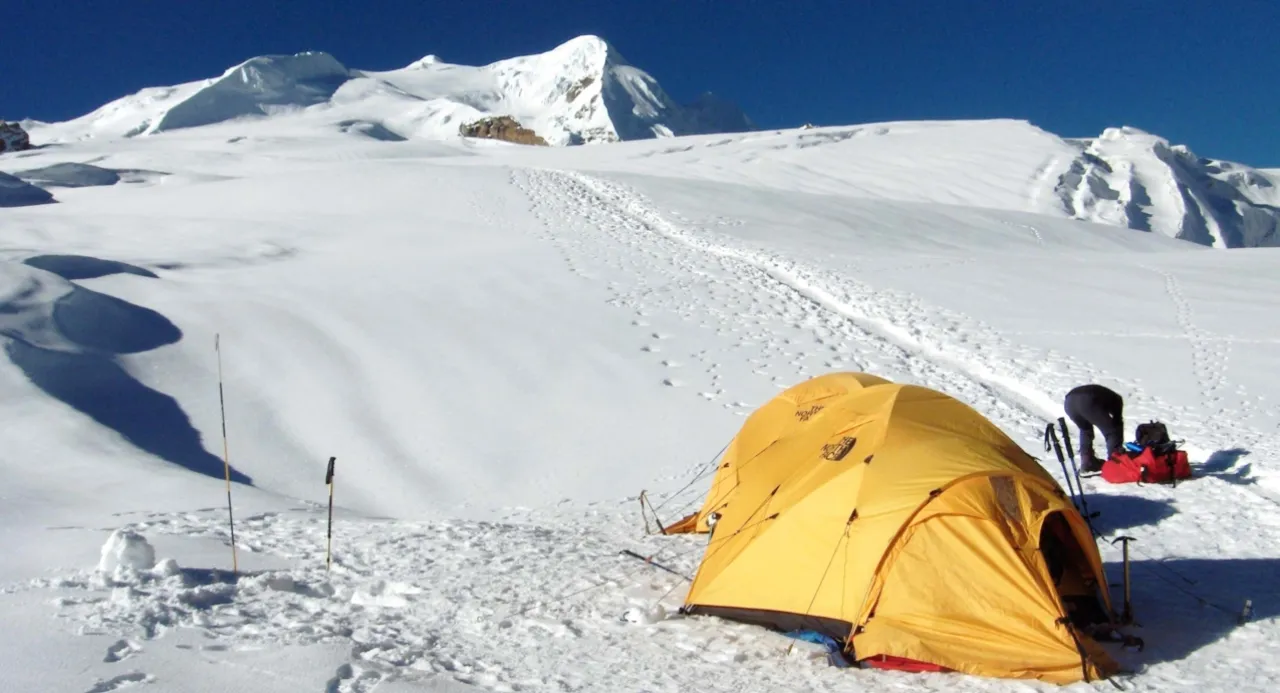
MERA PEAK (6,467m) – The Highest Trekking Peak of Nepal
In case if you are looking to try out one of the Himalayan peaks of Nepal which is a straightforward and non-technical climb situated little bit away from the heavy crowd then you would like to try out Mera Peak (6,467 m) which is one of the highest officially permitted trekking peak in Nepal.
Mera Peak rises to the South of Everest and dominates the watershed between the heavily wooded Valleys of the Hinku and Hongu Drangkas. The area not much frequented by travellers like in the Everest Base Camp trail. The trail to Mera Peak base camp passes through pristine forest, local villages and provides some great views of the Himalayas. From the summit of Mera peak you can have stunning views of Kanchenjunga (8,586 m), Makalu (8,463 m) in the east, Everest (8,848 m) and Lhotse (8,516 m) to the north, and Ama Dablam and Cho Oyu (8,463 m) to the west. Also, the view of sunrise on Everest and Kanchenjunga from the Mera Peak upper slope is mesmerizing.
Overview:
Mera Peak (6,467 m) is one of the highest officially permitted trekking peak in Nepal. Graded alpine PD is physically demanding due to altitude but in terms of climbing it is a non-technically straightforward climb. It offers an exhilarating challenge but are easier to summit than other major mountaineering adventures.
The ascent to Mera Peak from the Mera La (Base Camp) is gradual and sustained, and there is relatively steep section to Mera’s central summit of around 40 degrees. In case of heavy snowfall, the route can be long and challenging. This trip is ideal for those with moderate mountaineering experience, a good level of fitness and a keen sense of adventure.
Trekking Peak:
Nepal Mountaineering Association (NMA) has designated several peaks between 5,000 to 7,000 meters as a trekking peak. These peaks still pose significant challenges with the altitude but requires limited technical climbing experience.
Mera Peak (6,467m): Trip Route
The Mera Peak (6,467m) trip begins with a short and exciting flight to the mountain airstrip at Lukla
Routes Options:
Option 1: Mera Peak Upper Route (Shorter, More Challenging)
This direct route is best suited for experienced high-altitude trekkers. After flying into Lukla, the trek ascends quickly over the Zatrawa La Pass (4,620m) with limited acclimatization time. The return follows the same trail, making it shorter but more intense.
Option 2: Mera Peak Lower Route (Gradual, Better Acclimatization)
This route offers a gradual ascent, giving trekkers more time to adjust to altitude. The trail winds through beautiful villages, rhododendron forests, streams, terraced fields, and Buddhist monasteries. It’s culturally immersive and physically safer due to better acclimatization. The return trip usually takes the faster upper route.
Climbing: A couple of nights at Khare for acclimatization and perfecting your fixed rope and abseiling skills for final push towards the Summit. Then start our climb by establishing our camp at Base Camp (5,300m) on the east side of Mera La on a gravel flat below the ice. Next day is to high camp (5,800m) which is around 4 hours walk on gently slanted snow slopes Then, if the weather permits, it’s a day to summit. Start early morning around 0200 hours with headlights on with continuing up the ridge then ascend steeply to the east of the left-hand ridge before moving to the right to make the summit easier. Our staff will fix safety ropes to the bottom of the last part of the summit climb. During this time, we take a bit of rest at the South Col observing the amazing sunrise over the Himalayas. Then ready for the final push taking the steepest part of the climb of the last section with the help of Jumar. Finally, on the top with a spectacular view of Mt. Everest (8,848m), the highest mountain in the world, Mt. Kanchenjunga (8,586m), the third highest, Mt. Makalu (8,463m) , the fifth highest mountain of the Universe and several other peaks.
Later, we descend slowly and carefully supported by the ropes fixed by our crew. Then we reach Khare where we take a rest after a stressful and exciting trip. From there Mera Peak climb returns to Lukla from the Upper route and then flies to Ramechhap or Kathmandu.
Overnight at the lodge.
Mera Peak Climb (6,467m): Highlights
- Summit the Highest Trekking Peak (6,476m) allowed in Nepal
- Panoramic views of Mt. Everest 8,848m, Kanchenjunga 8586m, Makalu 8485m, Lhotse 8516m, and Cho Oyu 8,150m
- Scenic sunrise over the eastern Himalayas
- Trek through diverse terrains: alpine forests, glaciers, high passes, and local settlements
- Cultural immersion with Sherpa villages and Buddhist heritage
- Ideal for beginners and experienced climbers alike
Island Peak
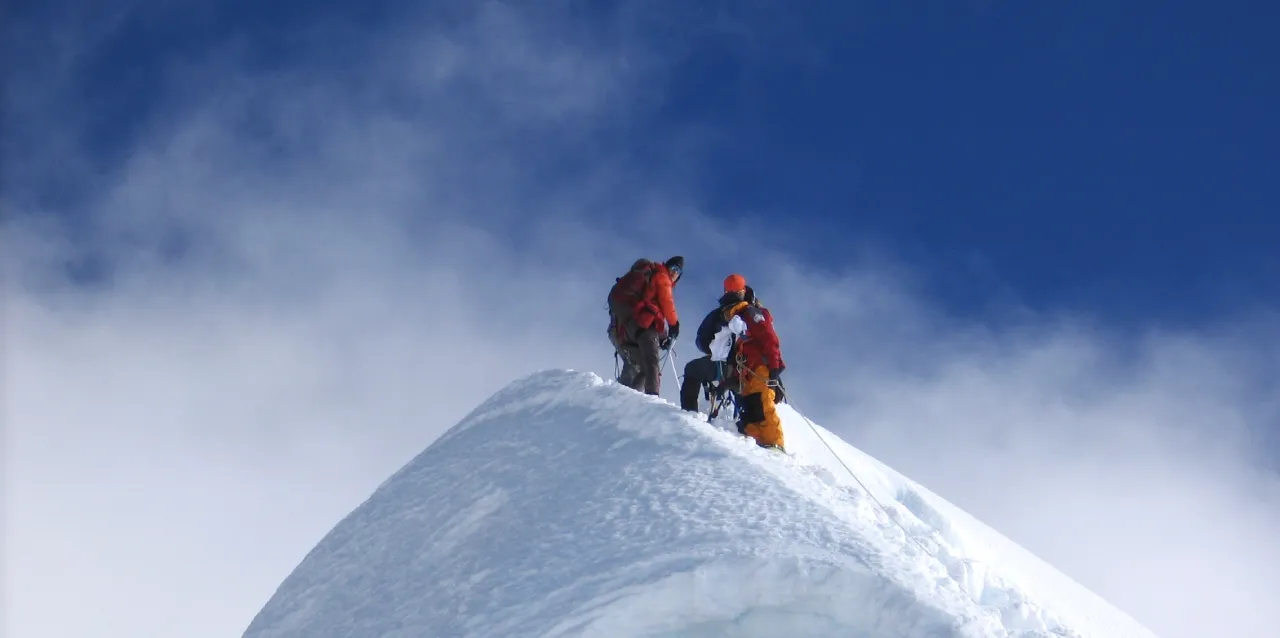
Overview: Island Peak Summit with Everest Base Camp Trek
Island Peak (6,189m) Summit with Everest Base Camp Trek is one of the most iconic and rewarding journeys in the Everest region. This classic expedition offers a perfect mix of high-altitude trekking and non-technical mountaineering, ideal for adventurous travelers dreaming of conquering one of the Himalayan peaks.
The journey to Island Peak begins with a scenic trek to Everest Base Camp (5,364m), passing through traditional Sherpa villages, ancient monasteries, and vibrant chortens, all set against the backdrop of towering Himalayan giants. The trail helps your body gradually acclimatize, while offering breathtaking views of Ama Dablam, Thamserku, Lhotse, and Everest itself.
A magical sunset hike to Kala Pather (5,545m) offers a close-up view of Mount Everest glowing under golden skies highlight for any trekker. After soaking in the majesty of Everest Base Camp, the route leads you across the formidable Kongma La Pass (5,535m) to reach the base of Island Peak (Imja Tse)—a gateway to your ultimate Himalayan summit.
Island Peak Summit: A Gateway to Himalayan Mountaineering
Standing tall at 6,189 meters, Island Peak is a prominent trekking peak located just a few miles from Mt. Everest. It lies nestled among the mighty Lhotse, Imja, and Ama Dablam, offering a thrilling ascent for climbers looking to experience high-altitude alpine climbing.
Although non-technical, the climb does demand basic snow and ice climbing skills. From the base, climbers ascend a rocky ridge, cross a glacier, and tackle a 45° ice slope leading to a narrow summit ridge. The effort is immense, but the panoramic views of Makalu (8,475m), Baruntse (7,720m), and the entire Khumbu range make it all worth it.
Island Peak Summit: Highlights
- Explore 2000 years old Kathmandu City having ancient palaces and spiritual spots
- Trek through Sherpa heartlands, crossing suspension bridges, chortens, and monasteries with fluttering prayer flags
- Experience the raw beauty of the Khumbu Glacier, icefalls, and alpine forests
- Witness stunning sunset views over Everest from Kala Pather
- Brief climbing course by our expert Climbing guide before climbing the peak
- Summit 6,189 m Himalayan peak with professional support
- Incredible views of the several peaks including Mt. Pumori (7,161 m), Mt. Lobuche West (6,145m) Mt. Nuptse (7,861m), Mt. Lhotse (8,516m) and the giant Mt. Everest (8,848m)
- Acclimatization periods in between trek days.
- Support of your expedition by experienced staff.
- Another difficulty you may face on this trip is the weather. The climate should also be favorable to climbers for them to have a successful ascent.
Island Peak Summit: Challenges
- Island summit is a non-technical summit that has some difficulties, such as climbing an ice wall and traversing a glacier.
- Use of jumar/ascenders for 120m vertical ascent on 40–70° ice slopes
- Island Peak may not present much of a challenge to experienced hikers and climbers, but it can be physically and mentally taxing for anyone with little to no mountaineering experience.
- Another challenge you may face on this trip is the weather. The climate should also be favorable to climbers for them to have a successful ascent.
- Weather plays an important role not just for climbing but also for flight to fly to Lukla as the airport is in a mountainous terrain where the weather can change very quickly.
- As this trip reaches above 6000 m the altitude is another challenge
Peak Climbing
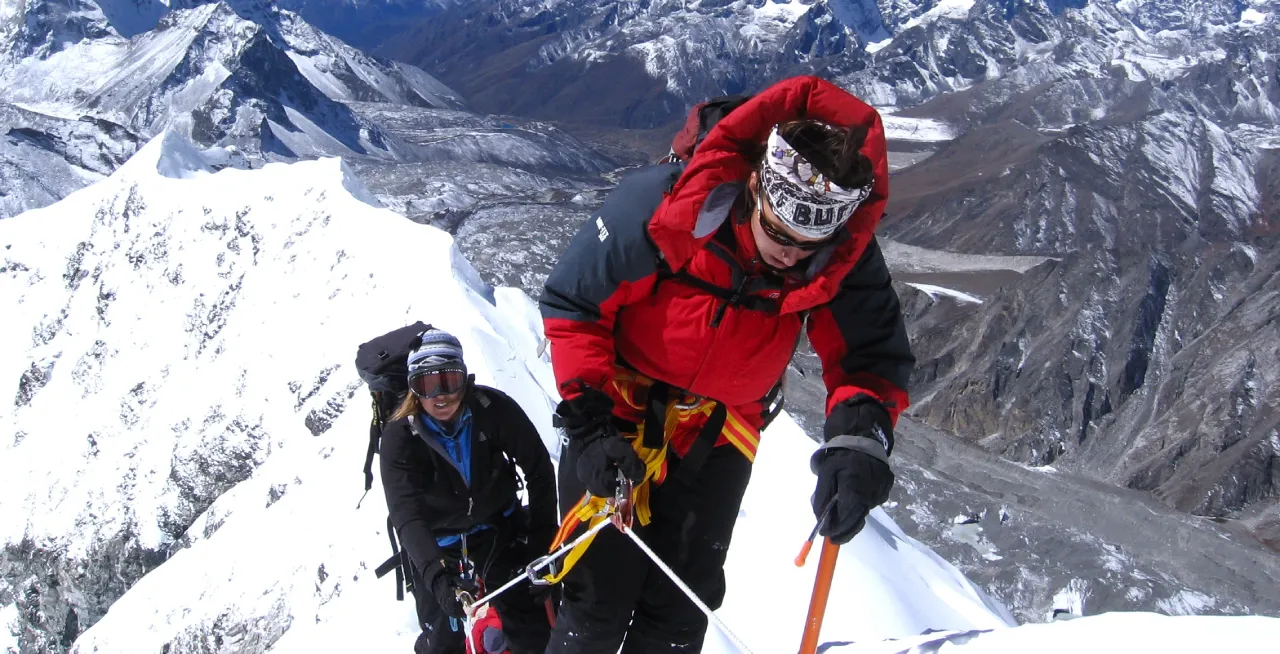
PEAK CLIMBING IN NEPAL:
The vast numbers of snowcapped peaks offer the best choices for Himalaya expedition and climbing in Nepal. Peaks range from excellent introductions to Himalayan mountaineering to some extremely challenging climbs. These peaks are not higher than 6,500 m and situated close to some popular and accessible trekking routes. Some amazing climbs of several days can easily be incorporated into any of the wonderful treks in these areas and so the name Trekking Peaks came about.
The category was created by the Nepal Mountaineering association as an intermediate stage between hiking and all-out mountaineering. They are often close to major peaks, with astounding views from their summits. Climbing them gives you the exhilaration of pitting yourself against Himalayan conditions and altitudes, so don’t underestimate the challenge. It is essential to note that these are still considerable mountains, taller than almost anything in North America or Europe. Don’t be fooled by the name ‘trekking peak’ – most require a little scrambling over snow and ice so make sure you are familiar with the use of crampons and ice axes.
Climbing peaks in Nepal is governed by rules and regulation. The Nepal Mountaineering Association has produced a small booklet containing the regulations governing the ascent of trekking peaks. There are certain requirements governing trekking peaks, such as the need for a registered sirdar and for a recognized agency to get your peak permit.
CLIMBING STYLES:
Although there are straightforward routes on many of these peaks, they certainly should not be underestimated. All peak climbing in the Himalayan Kingdom of Nepal requires the use of rope, axe and crampons; ice screws, snow stakes (pickets) and often a small selection of nuts and pegs (pitons) may be useful. Many of the climbs cross seriously crevassed ground and should not be attempted without a firm grounding in the fundamentals of glacier rope-work and crevasse rescue.
CLIMATE:
Well climbing in Nepal can be done almost all the year round between October and May but the best time will be from October to November, the high season for climbing and trekking, the conditions are usually ideal with clear skies and stable weather, although you might experience the unconsolidated remains of heavy snowfall left over from the monsoon.
CLIMBING GRADE:
This is intended to give an indication of the overall difficulty of a climb – and we have considered a combination of factors such as technical difficulty, the length or duration of the climb, altitude – since this has a significant influence on the grade of the climb, and objective dangers such as the route’s exposure. The difficulty of climbing any Himalayan peak can vary from year to year according to the prevailing conditions, thus the given grades for our climbing trips are only intended as a rough guide.
F: Easy scree or gentle snow or short slopes up to 30 d
PD: Scrambling ground, slopes maybe 40 d
AD: Some pitched climbing on rock, snow/ice 45-50 d
D: Sustained pitched climbing on rock, ice up to 50-60 d
TD: Serious technical climbing, vertical ice
ED1: Expect sustained vertical or overhanging sections
ED2: The ED series is open ended, and gets harder with each generation
CLIMBING EQUIPMENTS:
It is important to have proper climbing equipment for climbing trip in Nepal. There are plenty of shops in Kathmandu where you can purchase good quality climbing gears. In case if you are interested in just hiring the option is always there.
Some of the technical gear you will be requiring is Plastic Boots, Crampoons, Harness, Helmet, Ice Axe, Ascenders, Descenders, Gloves, Gaiters, ropes, snow bar, ice screws
DEALING WITH EMERGENCY:
Climbers should be aware that there is very little in the way of rescue organization for handling trekker’s/climbing emergencies in Nepal. Though our guides are trained in first aid and can deal with most of the basic ailments that occurs during a trek but in case of serious problem one has to be helicopter out to the nearest place where there are adequate medical facilities. One needs to have a proper Insurance coverage i.e. helicopter rescue, medical and accidental policy as the cost of rescuing can go very high. If the landing site is far away, then we will have to use either porters or yak/mule to transport it to a place where you could be rescued. You must be aware that you are traveling in a very remote part of the world where there are difficulties of communication and getting an instant medical attention.
ALTITUDE RELATED PROBLEM:
Trekking/Climbing in the Himalayas can often affect a trekker/climber with altitude related discomfort either physically or mentally if ascending beyond the safer limits of 3000 m above sea level. Complaints of discomfort could either be mild or acute and they vary from person to person. Decreasing supply of oxygen in the atmosphere as one ascent higher, followed by lesser intake of oxygen by one’s body results in such discomfort.
Far Out including its staff are absolutely aware of this problem and hence for us it’s a big deal to allow ample time in between trek days to let your body acclimatize well. If affected, a person may show any/some of the following symptoms and complaints of such symptoms are collectively known as Acute Mountain Sickness (AMS).
- Headache that responds to pain killers but then returns
- Loss of appetite
- Nausea
- Shortness of Breath
- Cough
- Palpitation
- Dizziness/light-headedness
- Unusual Tiredness/Weariness
- Swelling of the limbs & face
- Disturbed Sleep
- Poor Coordination
- Slurring of Speech
If such discomforts worsen a person could often become irrational and difficult to reason with making her/his ability to make sensible decisions increasingly impaired – one compelling reason for never trekking alone at higher altitudes. Therefore, we urge you to communicate with our guide/your group leader at all times should you experience any of these symptoms so that these can be effectively monitored.
INSURANCE:
We strongly recommend that you insured yourself before taking a trekking trip to Nepal. Your insurance policy should cover travel insurance, medical, accidental and helicopter rescue in case of emergency.
PEAK PERMIT FEE:
There are 27 climbing peaks regulated by the Nepal Mountaineering Association (NMA). A total of 33 Peak Permits were managed by NMA until the new regulation came into effect. Hence the NMA regulated peaks are termed as ‘Trekking Peaks’.
GROUP “A” and “B“:
(Mar/Apr/May)= US$ 250 net per person
(Sept/Oct/Nov)= US$ 125 net per person
(Dec/Jan/Feb/Jun/Jul/Aug)= US$ 70 net per person
Singu Chuli (Fluted Peak) and Chulu East:
(Mar/Apr/May)= US$ 400 net per person
(Sept/Oct/Nov)= US$ 200 net per person
(Dec/Jan/Feb/Jun/Jul/Aug)= US$ 100 net per person
GARBAGE DEPOSIT:
The amount of US $ 500.- per peak should be deposited to NMA as garbage deposit fee to obtain the climbing permit for all 33 NMA Peaks. The refund shall be made as per the provisions made by NMA.