


Which Langtang Route Is Right for You? Find Out The Difficulty of Each Routes.
Introducing the Langtang Trek
Langtang is one of Nepal’s most underrated trekking regions in Nepal. It’s close to Kathmandu, genuinely wild, and far less crowded than Everest Base Camp or Annapurna. But here’s what most guides won’t tell you upfront: Langtang is not one trek.
Depending on which route you choose, you could be doing a moderate walk through rhododendron forests and yak pastures, or crossing a 5,122m glaciated mountain pass with crampons on your feet and nothing but ridgeline on either side.
The Langtang Trek difficulty changes completely based on your route.
This guide breaks down each Langtang route by actual difficulty based on altitude, terrain, walking hours, and physical demand, so you can choose the one that matches your experience and fitness, not just your ambition.
Already Know You Want the Challenge? Far Out’s Langtang Ganja La Pass Trek is a 13-day expedition crossing one of Nepal’s most rewarding high passes. Limited group sizes. Expert local guides. Departure dates are available in spring and autumn.
View the Langtang Ganja La Pass Trek → Or keep reading to find the right route for your fitness and experience level.
Quick Answer: How Difficult Is the Langtang Trek?
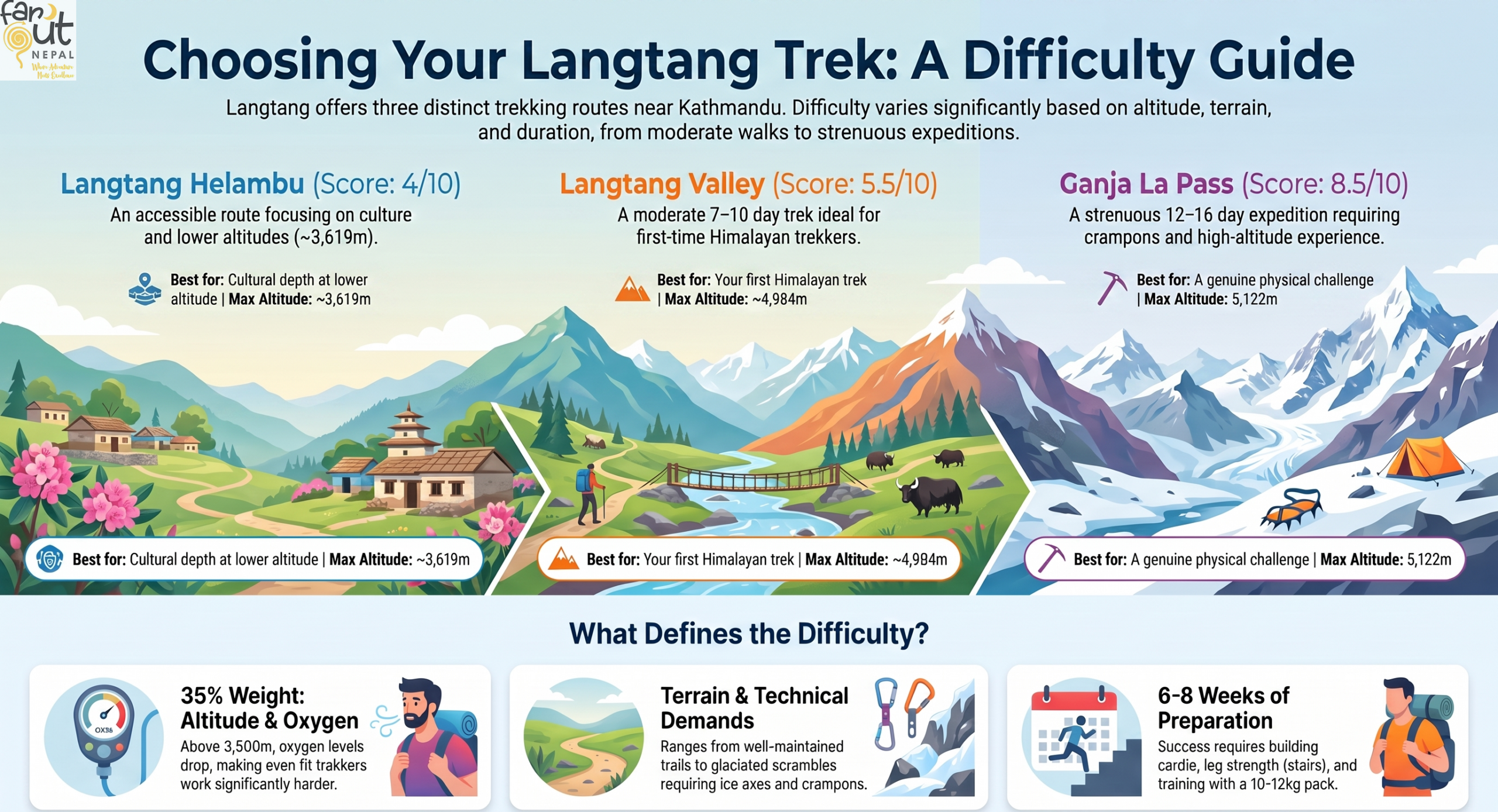
Langtang Valley is a moderate trek. Most reasonably fit people with no prior high-altitude experience can complete it. The Langtang Ganja La Pass trek is strenuous. It involves a technical high pass crossing above 5,000m and is best suited to experienced trekkers. Langtang Helambu sits in the middle, with moderate terrain at a lower altitude, ideal for those prioritising culture over challenge.
| Route | Difficulty | Duration | Max Altitude | Best For |
| Langtang Valley | Moderate | 7–10 days | ~4,984m (Tserko Ri) | First-time Himalayan trekkers |
| Langtang Ganja La Pass | Strenuous | 12–16 days | 5,122 m (Ganja La) | Experienced trekkers |
| Langtang Helambu | Moderate | 7–11 days | ~3,619m (Thadepati) | Cultural trekking, lower altitude |
The short version: if you’ve never trekked above 4,000m before, start with Langtang Valley. If you’ve done that and want something that genuinely pushes you, Ganja La is the answer.
What Actually Makes a Langtang Trek Difficult?
Here’s the framework we use to assess every route. The five factors, each weighted by real-world impact.
Altitude and Oxygen
Altitude is the single biggest variable in Himalayan trekking difficulty. Above 3,500m, your body starts working harder to extract oxygen from thinner air. Symptoms of altitude sickness, like headache, nausea, fatigue, and poor sleep, can affect even fit trekkers. The higher you go, the longer your body needs to adjust.
Weight: 35% of total difficulty
Trail Terrain
Terrain adds physical demand beyond just elevation. Rocky paths, loose scree, steep ascents & descents, and glaciated sections all add to the difficulty. A 400m climb on a well-cut switchback trail feels completely different from a 400m scramble over boulders. Pass crossings introduce exposed sections where route-finding and footing matter.
Weight: 20% of total difficulty
Duration and Accumulated Fatigue
A trek doesn’t have to be technically hard to wear you down. Back-to-back trekking days build cumulative fatigue that shorter outings don’t prepare you for. Recovery time, or lack of it, determines whether you feel strong on day 8 or wrecked.
Weight: 20% of total difficulty
Recovery and Acclimatisation Days
Built-in rest days aren’t laziness, but physiology. Routes that include acclimatisation days (like an extra night at Kyanjin Gompa) are meaningfully easier on your body than compressed itineraries that push altitude gain every day.
Weight: 10% of total difficulty
Season and Weather Conditions
Langtang in October is a different beast from Langtang in February. Trail conditions, wind, snow on passes, and visibility all change the difficulty equation substantially. Season affects Ganja La the most. In winter, the pass becomes a serious mountaineering objective, not a trekking one.
Weight: 15% of total difficulty
The Far Out Difficulty Index combines these five factors to score each route out of 10. You’ll see the score at the end of each route section below.
Langtang Valley Trek Difficulty
The Langtang Valley trek is the most popular route in the region. It delivers proper Himalayan scenery, genuine altitude experience, and a real sense of remoteness without putting beginners in over their heads.
Who Is This Route For?
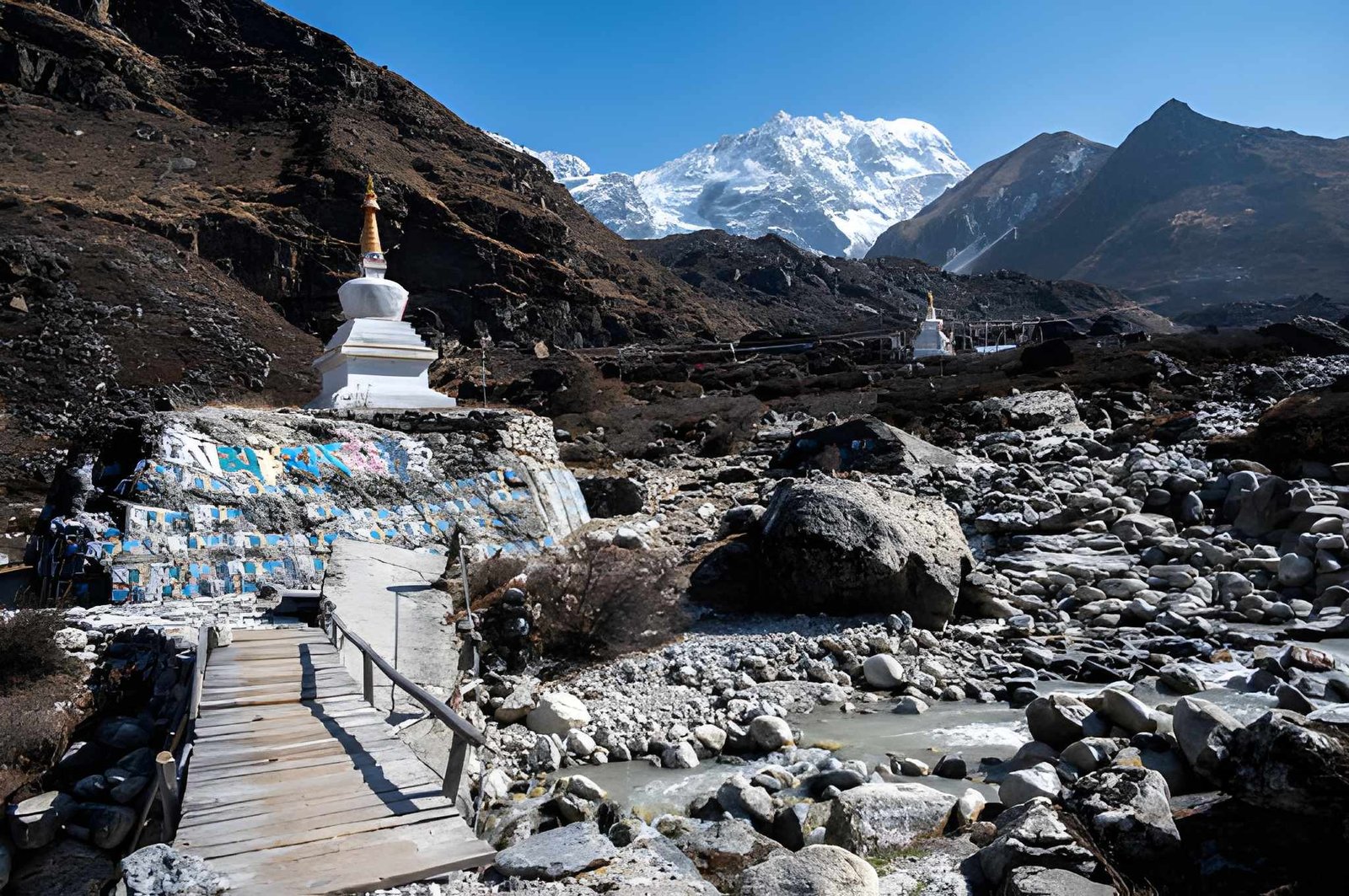
Langtang Valley is built for people taking their first serious step into high-altitude trekking. You don’t need prior Himalayan experience. You do need a baseline of fitness. Remember that this isn’t a walk in the park, but if you can comfortably hike for 5–6 hours with a daypack, you’re in the right territory.
Walking Hours
Expect 5–7 hours of walking per day on most active trekking days. The trail from Syabrubesi to Langtang Village gains altitude steadily through dense forest before opening into the wide, glacier-flanked valley. Days feel long but rarely desperate.
The side trip to Tserko Ri (4,984m) is the hardest single day on the route. This trip involves a steep 4–5 hour ascent from Kyanjin Gompa that rewards you with one of the best viewpoints in the entire Himalayan region. Your legs will know about it.
Altitude Experience
You’ll spend most of the trek between 2,000m and 3,800m, with the Kyanjin Gompa area sitting at around 3,870m. The ascent is gradual enough that most trekkers acclimatise well with a properly paced itinerary.
The Tserko Ri summit is the altitude ceiling for this route. At just under 5,000m, you’ll feel the thin air. But as it’s a day hike, you will descend back to sleep lower.
Common Challenges
- The first day out of Syabrubesi is long and involves significant elevation gain through humid forest
- Sleep quality drops noticeably above 3,500m for most trekkers
- Cold nights at Kyanjin Gompa catch people unprepared
- The trail after the 2015 earthquake has been rerouted in sections. Some segments are steeper than older maps suggest.
Can Beginners Do Langtang Valley?
Yes, but with preparation. Trekkers who arrive with zero fitness training will struggle. Those who’ve spent 6–8 weeks building cardio and leg strength will find it challenging but achievable. No technical skills are required. A guide is recommended but not mandatory for this route.
Who should avoid it: Anyone with unmanaged heart or respiratory conditions, or those who cannot commit to proper acclimatisation pacing.
Far Out Difficulty Score: 5.5 / 10
- Altitude: manageable with correct pacing.
- Terrain: well-maintained.
- Duration: 7–10 days leaves room for rest.
- Verdict: moderate, achievable for most fit adults.
Langtang Ganja La Pass Difficulty
Ganja La is where Langtang stops being a trekking destination and starts being an expedition. The pass sits at 5,122m and requires you to cross a glaciated, technically demanding section that simply doesn’t exist on the Valley route. If Langtang Valley is a confident walk, Ganja La is a test.
Why Ganja La Feels Different
The difference isn’t just altitude, but everything that comes with altitude this high. The air above 5,000m contains roughly half the oxygen of sea level. Your pace slows involuntarily. Simple tasks take more effort. The psychological weight of a remote, high-altitude environment is real and worth acknowledging before you commit.
Ganja La also takes you through sections where there are no teahouses, no shortcuts, and no easy exits. That remoteness is part of its appeal, but it changes the nature of every decision you make on the trail.
The Pass Crossing
The Ganja La crossing itself is the centrepiece of the route. You’ll typically begin the ascent before dawn from high camp, cross the pass in the morning before the weather deteriorates, and descend steeply into the Helambu valley on the other side.
The ascent involves scrambling over loose rock and, depending on the season, snow and ice. Crampons and ice axes are required in shoulder seasons. They are not “optional” or “just recommended.” The descent on the Helambu side is long and steep, with significant elevation loss in a single day.
Altitude and Recovery
After crossing Ganja La at 5,122m, your body needs recovery time. A good itinerary builds in acclimatisation days at Kyanjin Gompa before the crossing attempt, not as a luxury, but a requirement. Trekkers who skip acclimatisation days on this route are taking a serious risk with altitude sickness at the worst possible point on the trek.
Remote Sections
Between Kyanjin Gompa and the first Helambu teahouses, you are genuinely remote. Supply logistics, rescue access, and communication are all more complicated than on the Valley route. This changes the risk profile significantly and is the primary reason this trek requires an experienced guide and should not be attempted solo.
Who Should Attempt Ganja La?
- Trekkers with prior experience above 4,500m
- People who have completed at least one multi-day high-altitude trek
- Those who are comfortable with physical challenge and uncertainty
- Trekkers willing to turn back if conditions on the pass are dangerous
Who should not attempt it: First-time high-altitude trekkers, those with a history of altitude sickness, anyone trekking without a qualified guide, or anyone attempting it outside the main trekking windows (spring and autumn).
Far Out Difficulty Score: 8.5 / 10
- Altitude: high and technically demanding.
- Terrain: glaciated pass crossing.
- Duration: 12–16 days with real fatigue accumulation.
- Remoteness adds a difficulty multiplier.
- Verdict: strenuous, rewarding, not for the unprepared.
Ready to Attempt Ganja La?
Our 13-day Langtang Ganja La Pass Trek is built around proper acclimatisation, experienced mountain guides, and small group sizes — so you arrive at the pass prepared, not just hopeful.
See Full Itinerary, Dates & Pricing for the Langtang Ganja La Trek →
Questions before you commit? Send us a trek inquiry. We would love to help you decide if Ganja La is the right call for your fitness level.
Langtang Helambu Trek Difficulty
Helambu is the quietest of the three routes and the most culturally rich. It loops through Tamang and Sherpa villages at a lower altitude than the Valley route, connecting ancient trading paths that feel worlds away from the more trafficked parts of Nepal.
Terrain
Helambu involves rolling hills, forested ridgelines, and traditional village paths rather than the dramatic alpine terrain of the other routes. The trekking is rarely flat. There’s a lot of up and down, but the altitude ceiling is significantly lower, which changes the physical experience entirely.
Altitude
The highest point on most Helambu itineraries is Thadepati at 3,619m. This altitude sits well below the altitude where acclimatisation becomes a serious concern for most trekkers. Nights are spent lower still, which means sleep quality is better, and recovery is faster than on the Valley route.
Who It Fits
Helambu suits trekkers who want a genuine Himalayan experience without the altitude challenge. It’s ideal for those who have limited high-altitude experience, are travelling at times when the higher passes are less accessible, or simply want cultural immersion alongside nature. It also works well as a first Nepal trek before attempting something more demanding.
Far Out Difficulty Score: 4 / 10
- Altitude: low enough for most healthy adults.
- Terrain: challenging in sections but no technical elements.
- Verdict: accessible, rewarding, and the best entry point into the Langtang cluster.
Which Langtang Trek Should You Choose?
Still deciding? Here:
| If you want… | Best Route | Why |
| Your first Himalayan trek | Langtang Valley | Achievable altitude, well-supported trail, real mountain experience |
| A genuine physical challenge | Langtang Ganja La Pass | Technical pass, remote terrain, full expedition feel |
| Cultural depth at a lower altitude | Langtang Helambu | Village life, lower altitude ceiling, quieter trails |
| The most dramatic scenery | Langtang Ganja La Pass | Valley + pass + Helambu descent covers three distinct landscapes |
| A shorter itinerary | Langtang Valley or Helambu | Both are manageable in 7–10 days |
| Something most trekkers haven’t done | Langtang Ganja La Pass | Low foot traffic, high reward, rarely crowded |
One honest note: the Ganja La route is frequently underestimated. Trekkers who assume it’s “just like the Valley but longer” arrive underprepared. It’s a different category of trek.
How to Prepare for a Langtang Trek
The most common cause of a cut-short Langtang trek is not altitude. It’s arriving underprepared physically. Here’s what actually makes a difference.
Cardio Base
Build your aerobic capacity over 6–8 weeks before departure. Running, cycling, or swimming. Anything that keeps your heart rate elevated for 30–60 minutes. For Ganja La specifically, you want a strong cardio base because your heart works harder at altitude even on rest days.
Leg Strength and Endurance
Stairs are your best training tool. Find a building, a hill, or a stadium and use it. For long descents, eccentric leg strength (the muscles working as you go downhill) is specifically worth training. Squats and lunges help here.
Pack Training
Train with your loaded trekking pack. A 10–12kg pack changes everything about how your body moves over long trekking days. Don’t arrive having only ever trained in running shoes.
Sleep and Recovery
Don’t underestimate pre-trek fatigue. Arriving in Kathmandu already tired from travel and then immediately starting a demanding trek is a pattern that catches people out. Build in at least one rest day in Kathmandu before you begin.
Final Verdict: Is Langtang Trek Difficult?
There’s no single answer, as there’s no single Langtang trek.
Langtang Valley is moderate. With preparation, most fit adults can complete it and come back wanting more.
Langtang Ganja La Pass is strenuous. It earns that description. It’s one of the more demanding non-technical Himalayan routes available to trekkers, and it rewards the people who show up ready for it with an experience that very few people on earth have had.
Langtang Helambu is accessible. It’s the best first step into this part of the Himalayas.
The right trek isn’t the hardest one. It’s the one that matches where you are right now, so you can come back and do the others.
Find Your Langtang Trek
| I want… | Start here |
| My first Himalayan experience | Langtang Valley Trek → |
| A serious high-pass challenge | Langtang Ganja La Pass Trek → |
| Culture at a lower altitude | Langtang Helambu |
| Help choosing the right route | Send us an inquiry → |
Not sure which route fits your fitness level? Drop us a message, and we’ll give you an honest answer. No hard sell, just a straight recommendation based on your experience and timeline. Contact Us →