


Manaslu Circuit Trek Difficulty: How Hard Is It Really?
How Difficult Is the Manaslu Circuit Trek?
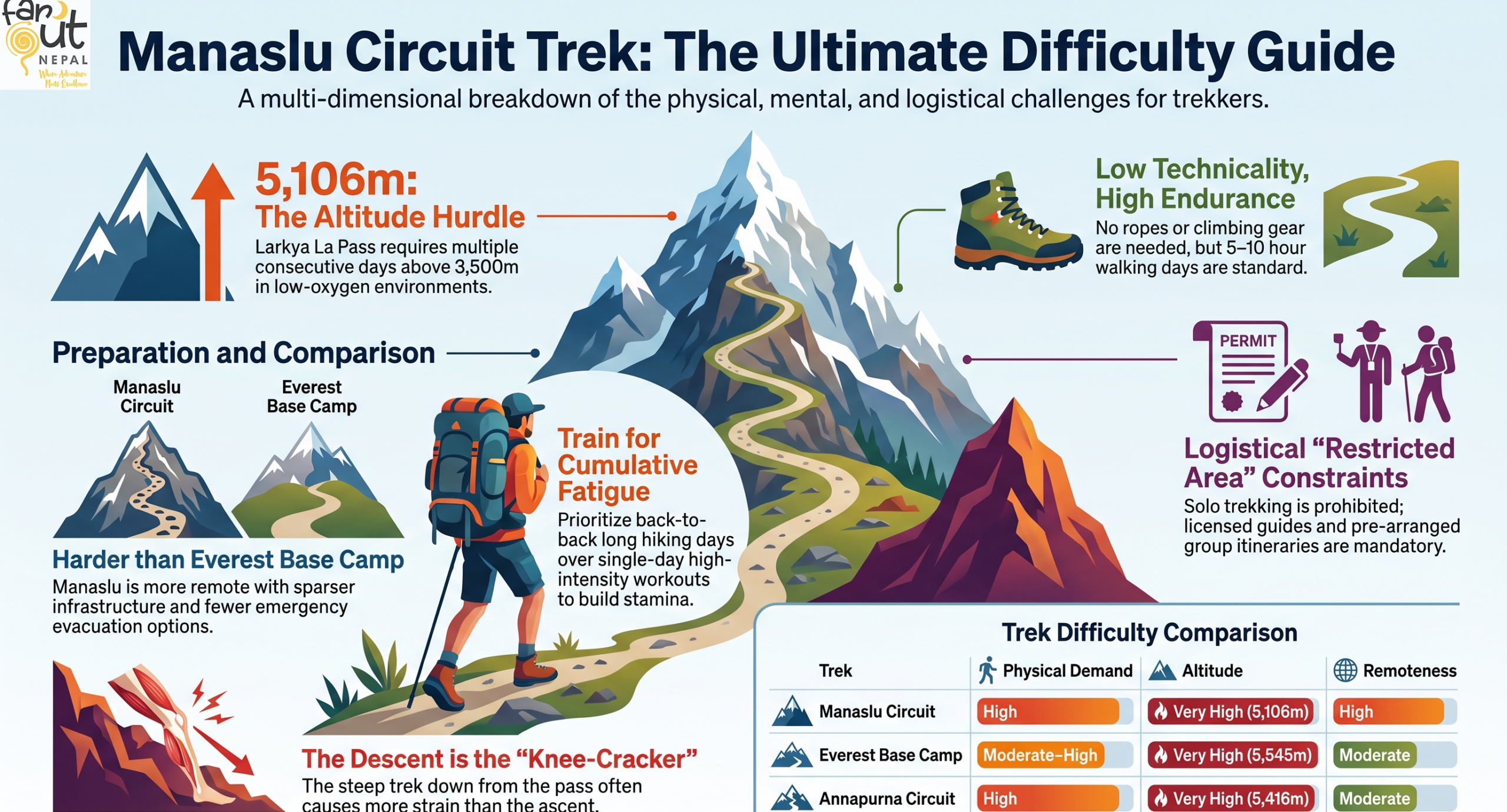
The Manaslu Circuit Trek is considered a challenging high-altitude trek rather than a technically difficult one. Most trekkers complete it without any climbing experience, but its long duration, remote setting, and the crossing of Larkya La Pass (5,106 m) demand solid physical fitness, proper acclimatization, and mental endurance. It is not a trek for a first-ever multi-day hike, but it is achievable for a well-prepared, moderately fit trekker.
Quick Difficulty Scorecard
| Factor | Difficulty |
| Physical Fitness | ★★★★☆ |
| Altitude | ★★★★★ |
| Technical Skills | ★☆☆☆☆ |
| Terrain | ★★★☆☆ |
| Trek Duration | ★★★★★ |
| Remoteness | ★★★★☆ |
| Mental Endurance | ★★★★☆ |
Altitude and trek duration are the two dominant difficulty drivers. But technical skill-wise, the trek is genuinely easy, since there is no climbing, no rope work, and no glacier travel involved.
What Makes the Manaslu Circuit Trek Challenging?
The difficulty of the Manaslu Circuit comes from several distinct factors stacking on top of each other, rather than any single obstacle.
-
Altitude:
Trekkers spend multiple consecutive days above 3,500 m before crossing the Larkya La Pass at 5,106 m. In this trek, reduced oxygen availability makes every physical effort, like walking, digesting, and even sleeping, harder than it would be at the same exertion level closer to the sea.
-
Long Consecutive Trekking Days:
Daily trekking typically runs 5–7 hours, rising to 7–8 hours as the route gains altitude, with the Larkya La crossing itself often taking 8–10 hours. The difficulty compounds because there are few full rest days between efforts. So, it’s the accumulation that actually wears trekkers down, not a single specific day.
-
Larkya La Pass:
At 5,106 m, this is the trek’s single hardest obstacle: a long, cold, early-morning crossing with no teahouses on the pass itself. This means the trekkers commit to several hours of exposed, high-altitude walking with no option to shelter partway through.
-
Restricted-Area Logistics:
Manaslu is a government-designated restricted area, meaning that every trekker must travel with a licensed guide and in a group of at least two people. Solo trekking isn’t permitted. That adds a logistical layer beyond the physical one. Therefore, itineraries must be arranged in advance through a registered agency, leaving less freedom to improvise on the route or pace mid-trek than on more loosely regulated trails.
-
Trail Conditions:
The path includes rocky sections, uneven and narrow stretches above the treeline, exposed scree near the pass, and multiple suspension-bridge river crossings over the Budhi Gandaki. None of it is technical, but all of it demands sustained attention and sure footing, especially when fatigued.
-
Weather:
Weather shifts the trek’s difficulty more than almost any other single factor. Snow or high wind can close Larkya La Pass outright, monsoon rain turns lower sections slippery and landslide-prone, and even in the more stable autumn and spring windows, temperatures at higher camps swing sharply between warm midday sun and freezing night.
Breaking Down the Difficulty
Rather than a single “moderate to challenging” label, the trek’s difficulty is better understood across five distinct dimensions.
-
Physical Difficulty: High.
Back-to-back days of 5–8 hours with a loaded daypack, over undulating and occasionally steep terrain, demand sustained cardiovascular endurance and leg strength rather than single bursts of exertion.
-
Technical Difficulty: Low.
No ropes, crampons, or climbing technique are required anywhere on the route, including at Larkya La Pass. It’s a high, cold walk, not a climb.
-
Mental Challenge: High.
Remoteness, consecutive demanding days, and the psychological weight of a single committing pass crossing. This trek has no easy turning-back point once you start, and tests your mental resilience as much as your physical stamina.
-
Altitude Challenge: Very high.
This is the trek’s most significant single factor. The extended time above 3,500 m raises AMS risk regardless of fitness, since altitude sickness is driven by the rate of ascent and individual physiology, not conditioning.
-
Logistical Challenge: Moderate.
The mandatory-guide system, limited teahouse infrastructure compared to Everest or Annapurna, and reduced emergency-evacuation options in remote stretches all add planning difficulty on top of the physical trek.
Which Parts of the Manaslu Circuit Are the Most Difficult?
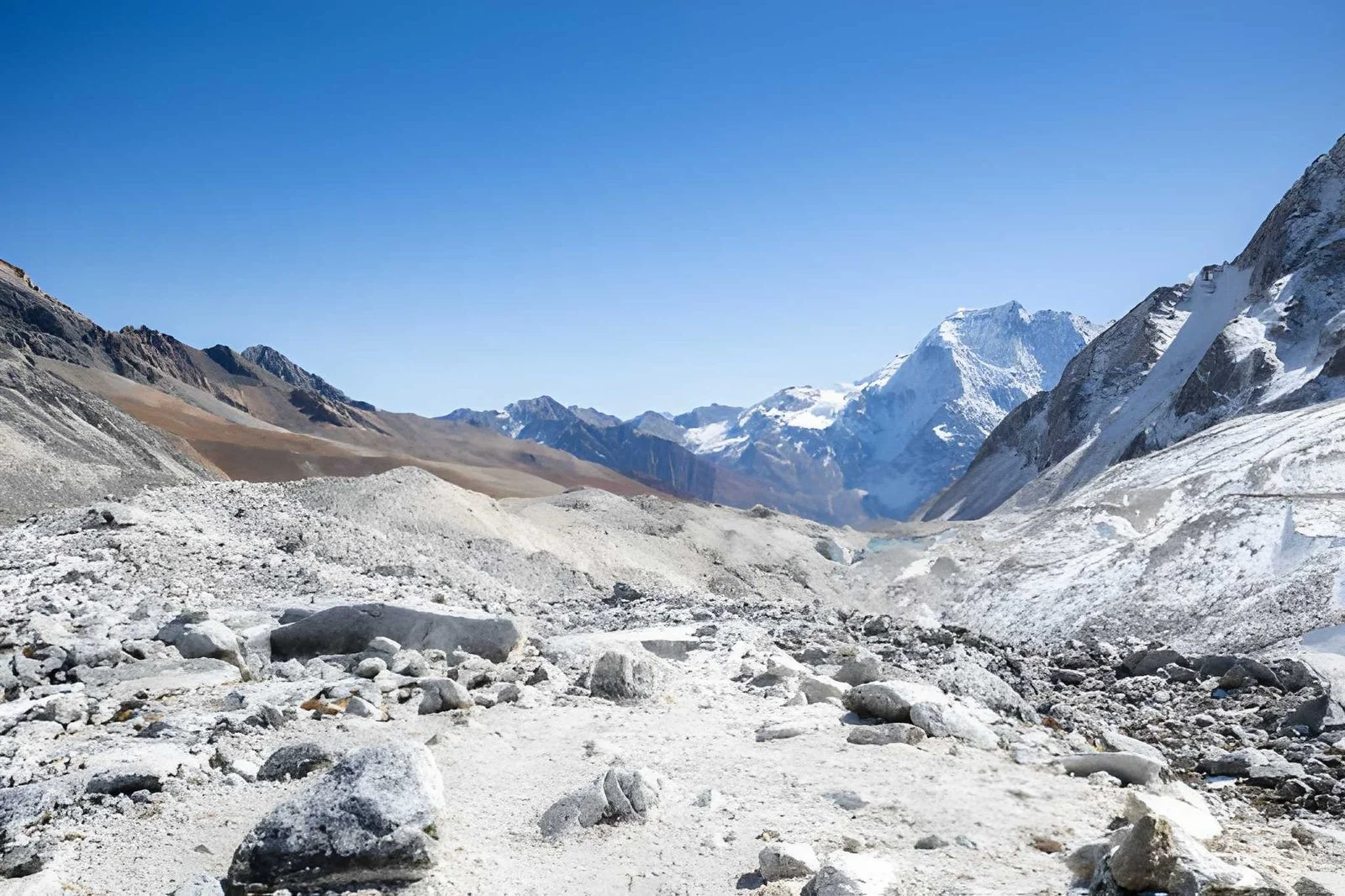
Difficulty is not evenly distributed across the trek, since it builds up across distinct stages.
-
Early Trek (Machha Khola to Jagat / Deng)
Lower-altitude river-valley walking along the Budhi Gandaki, with humid conditions, steep stone staircases, and long suspension-bridge crossings. It can be physically tiring, but it has not yet been affected by altitude.
-
Middle Trek (Namrung to Sama Gaun)
Altitude begins noticeably affecting energy here. Sama Gaun is the main acclimatization village, with an extra rest day built into most itineraries. This is where pacing starts to matter more than raw fitness.
-
Approach to the Pass (Samdo to Dharamsala)
Samdo and Dharamsala (Larkya Phedi) sit at high altitude with sparse facilities. Sleep quality typically declines here, and acclimatization strategy becomes as important as physical conditioning.
-
Larkya La Pass Crossing
The hardest single day. An early, cold start, hours of sustained high-altitude walking with no shelter along the way, and a long final descent to Bimthang combine physical, altitude, and mental difficulty into one day.
-
After the Pass (Bimthang to Dharapani)
A long, steep descent that shifts the physical strain from lungs and cardiovascular effort to knees and quadriceps. Recovery demands are real here. Sustained downhill walking on tired legs is a common source of minor strains and blisters, and this stage is where earlier pacing choices show their consequences most clearly.
Far Out Nepal Guide Insight: Many trekkers assume Larkya La Pass is the hardest part because of its elevation. In practice, our guides often see fatigue accumulate over several consecutive days beforehand. This means that pacing and acclimatization in the days before the pass often matter more than the pass crossing itself.
Who Is This Trek Suitable For?
Suitability depends more on trekking background than age or general fitness alone.
✓ First Himalayan Trek
Possible with strong general fitness and at least one prior multi-day hiking trip, but this shouldn’t be your first overnight trek of any kind.
✓ Regular Weekend Hiker
Generally well-suited, provided training includes longer, consecutive-day hikes rather than only single-day outings, to build tolerance for cumulative fatigue.
✓ Everest Base Camp Finisher
Well-prepared. EBC builds relevant altitude tolerance and multi-day endurance, though Manaslu’s terrain is rougher and its infrastructure is more limited.
✓ Annapurna Circuit Finisher
Very well-suited. Annapurna Circuit shares a similar high-pass structure (Thorong La), making Manaslu a natural next step.
✓ Trail Runner
Cardio fitness helps with daily exertion, but altitude tolerance doesn’t correlate with running fitness. Even strong runners must acclimatize on the same schedule as everyone else.
✓ Older Trekkers
Achievable with realistic pacing and a slightly more conservative itinerary; age alone isn’t disqualifying, but recovery time between demanding days matters more.
How Fit Do You Need to Be for the Manaslu Circuit Trek?
You need good cardiovascular endurance and reasonable leg strength to handle 5–8 hours of walking on multiple consecutive days, though no elite athletic conditioning is required. Training should focus on stamina under sustained load rather than short bursts of intensity.
Trek-specific preparation that matters more than generic advice:
- Stair climbing with a loaded backpack: This closely simulates the steep stone-staircase sections in the lower valley
- Consecutive long hikes (two or more demanding days back-to-back): Helps build tolerance for cumulative fatigue rather than single-day fitness
- Elevation-gain training: Hikes with meaningful vertical gain condition the legs for daily ascent/descent in a way that flat-ground cardio doesn’t
- A multi-week progression building toward your longest expected trekking day, rather than a single peak-fitness weekend before departure
Is Altitude the Biggest Challenge on the Manaslu Circuit?
Yes. Altitude is the single largest difficulty factor on the trek, more significant than terrain or trekking hours. Reduced oxygen availability above 3,500 m increases physical effort for the same exertion, disrupts sleep quality, and raises the risk of Acute Mountain Sickness (AMS) regardless of how fit you are.
Acclimatization, or the process of allowing the body to adapt to lower oxygen levels at higher elevations, is managed through built-in rest days (notably at Sama Gaun), a gradual ascent profile, and close guide monitoring of symptoms in the days leading up to Larkya La Pass.
For symptoms, prevention, and emergency response → [See our Altitude Sickness guide]
Is the Manaslu Circuit Trek Technically Difficult?
No. The Manaslu Circuit involves no climbing, no ropes, no crampons, and no glacier travel anywhere. It’s just a high-altitude walk over rock and snow rather than a technical mountaineering crossing. The difficulty comes entirely from endurance, altitude, and remoteness, not technical skill.
Myth vs. Reality
Myth: You need mountaineering or climbing experience to attempt this trek.
Reality: The challenge comes from sustained endurance and altitude adaptation, not technical climbing ability.
Manaslu Circuit Trek vs Other Popular Treks (Pure Difficulty Comparison)
| Trek | Physical Demand | Altitude | Technical Skill | Remoteness |
| Manaslu Circuit | High | Very High (5,106 m) | Low | High |
| Everest Base Camp | Moderate–High | Very High (5,364–5,545 m) | Low | Moderate |
| Annapurna Circuit | High | Very High (5,416 m) | Low | Moderate |
| Annapurna Base Camp | Moderate | Moderate | Low | Low–Moderate |
| Langtang Valley | Moderate | Moderate | Low | Low |
Manaslu is generally more demanding overall than Everest Base Camp, despite EBC’s slightly higher summit point (Kala Patthar), because it involves more consecutive high-altitude days, sparser teahouse infrastructure, and mandatory guided travel through a restricted area.
Compared to the Annapurna Circuit, Manaslu is broadly comparable in physical and altitude demand but notably more remote, with fewer teahouses and less flexibility to adjust plans mid-route.
How to Make the Manaslu Circuit Trek Easier
| Problem | Solution |
| Altitude | Follow the built-in acclimatization days, ascend gradually, and communicate symptoms to your guide early |
| Fatigue | Train with consecutive long hikes before departure to build tolerance for cumulative, multi-day exertion. |
| Cold | Use proper layering, especially for the pre-dawn Larkya La start, when temperatures are at their lowest |
| Long days | Pace conservatively from the start. Adopt a slower, steadier rhythm in the early days to preserve energy for the pass. |
Common Mistakes on the Manaslu Circuit Trek
- Walking too fast early on. Pushing pace in the lower valley often costs energy reserves higher up.
- Not eating enough. Appetite drops at altitude, but caloric intake needs to stay high to support daily exertion.
- Carrying too much weight. An overloaded daypack adds unnecessary strain to already-demanding terrain.
- Ignoring early altitude symptoms. Mild headaches or nausea are warning signs, not something to push through.
- Underestimating recovery after the pass. The descent to Bimthang is where accumulated fatigue and knee strain most often catch trekkers off guard.
Final Verdict: Is the Manaslu Circuit Trek Right for You?
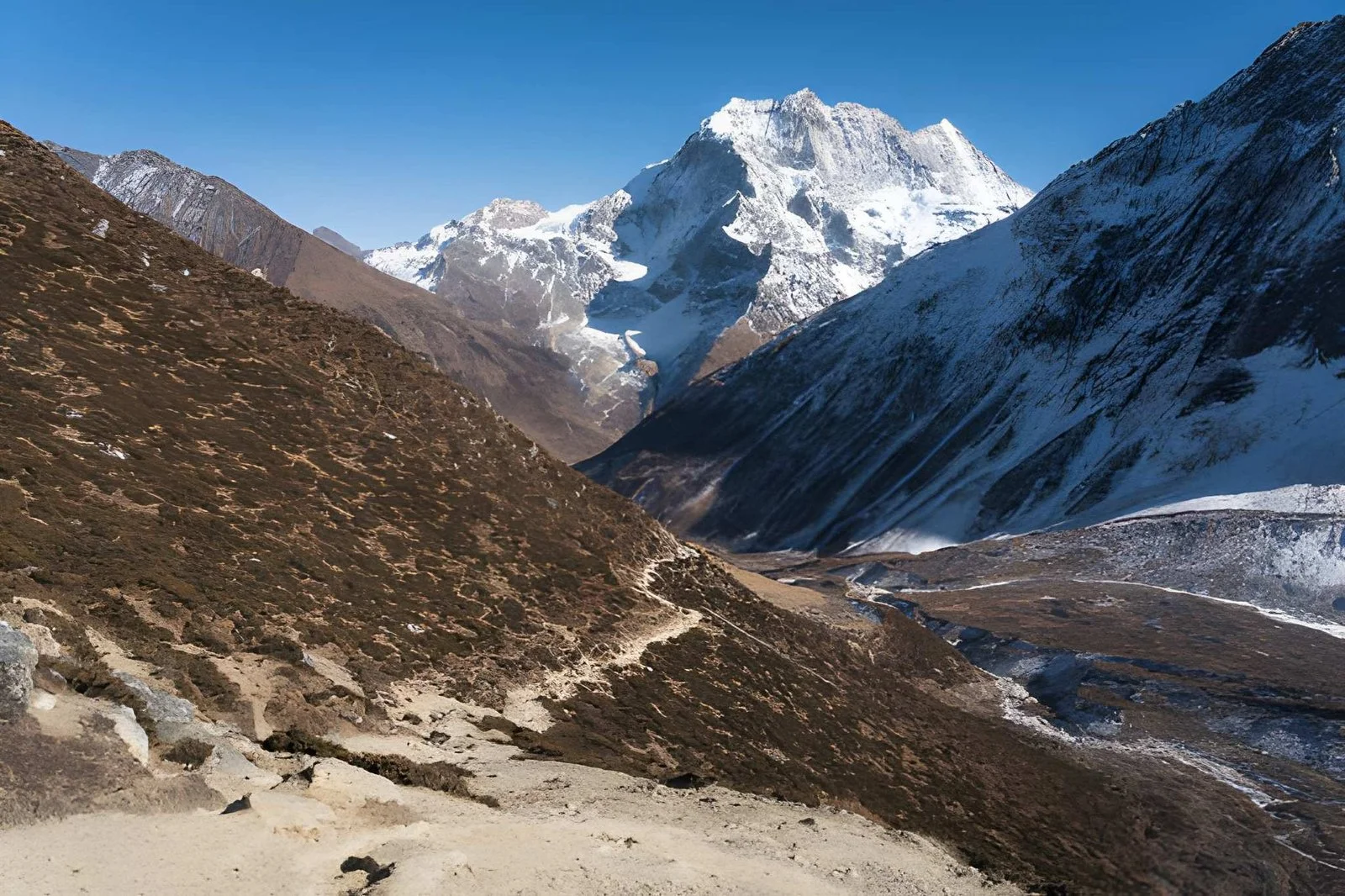
The Manaslu Circuit rewards trekkers who arrive reasonably fit, mentally prepared for a multi-day commitment, and realistic about what altitude does to effort and sleep. It suits experienced weekend hikers, EBC or Annapurna Circuit graduates, and fit first-timers with at least one prior multi-day trek. It’s less suited to those seeking their very first overnight hike or expecting a technical mountaineering challenge, since the difficulty here is endurance and altitude, not climbing skill.
If this difficulty profile matches what you’re looking for, the next step is logistics: itinerary length, trekking window, and choosing the right support on the ground. → Explore our Manaslu Circuit Trek itineraries and departure dates.
Frequently Asked Questions
Can beginners do the Manaslu Circuit Trek?
Yes, beginners can complete the Manaslu Circuit Trek if they have good physical fitness and can prepare properly. While the trek does not require technical climbing skills, it is considered challenging due to its high altitude, long trekking days, and remote location. Choosing a well-paced itinerary with sufficient acclimatization and trekking with an experienced guide significantly improves your chances of completing the trek safely.
Is the Manaslu Circuit Trek harder than the Everest Base Camp?
Yes, the Manaslu Circuit Trek is generally considered more difficult than the Everest Base Camp Trek. Although both are high-altitude treks, Manaslu involves longer consecutive trekking days, greater remoteness, fewer facilities, and the challenging crossing of Larkya La Pass (5,106 m). These factors make it more physically and mentally demanding for most trekkers.
What is the hardest day on the Manaslu Circuit Trek?
Crossing Larkya La Pass is widely regarded as the hardest day of the Manaslu Circuit Trek. The day usually involves 8–10 hours of trekking, beginning before sunrise and reaching the trek’s highest point at 5,106 metres. Thin air, cold temperatures, and a long descent to Bimthang combine to make it the most physically demanding stage of the journey.
How many hours do you walk each day on the Manaslu Circuit Trek?
Most days on the Manaslu Circuit Trek involve 5–7 hours of walking, although some stages take 7–8 hours or more. The Larkya La Pass crossing is typically the longest day, often lasting 8–10 hours depending on weather, trail conditions, and individual pace. Walking times also vary with the itinerary and acclimatization schedule.
Do I need climbing or mountaineering experience?
No, the Manaslu Circuit Trek does not require climbing or mountaineering experience. The standard route follows established trekking trails and does not involve ropes, technical climbing, or glacier travel. However, trekkers should be prepared for steep ascents, rocky terrain, and several consecutive days of hiking at high altitude.
Can I do the Manaslu Circuit Trek without training?
It is possible, but it is not recommended. The trek is physically demanding, and a lack of preparation can increase fatigue and make it more difficult to cope with high altitude. Training with regular hikes, cardiovascular exercise, strength workouts, and consecutive walking days for at least 8–12 weeks beforehand can significantly improve your trekking experience.
Is the Manaslu Circuit Trek more difficult because of the altitude or the terrain?
For most trekkers, altitude is the greatest challenge on the Manaslu Circuit Trek. While the trails include steep climbs, rocky paths, and uneven terrain, they are not technically difficult. As the elevation increases, reduced oxygen levels make everyday trekking feel considerably more strenuous, making proper acclimatization far more important than technical hiking ability.
What fitness level is required for the Manaslu Circuit Trek?
The Manaslu Circuit Trek requires a good level of cardiovascular fitness and the ability to hike for multiple consecutive days. You do not need to be an elite athlete, but you should be comfortable walking 5–8 hours a day on steep, uneven mountain trails. Building endurance, leg strength, and hiking stamina before the trek will make the experience safer, more enjoyable, and less physically demanding.