

Region: Everest Region
Everest Three Pass Trek
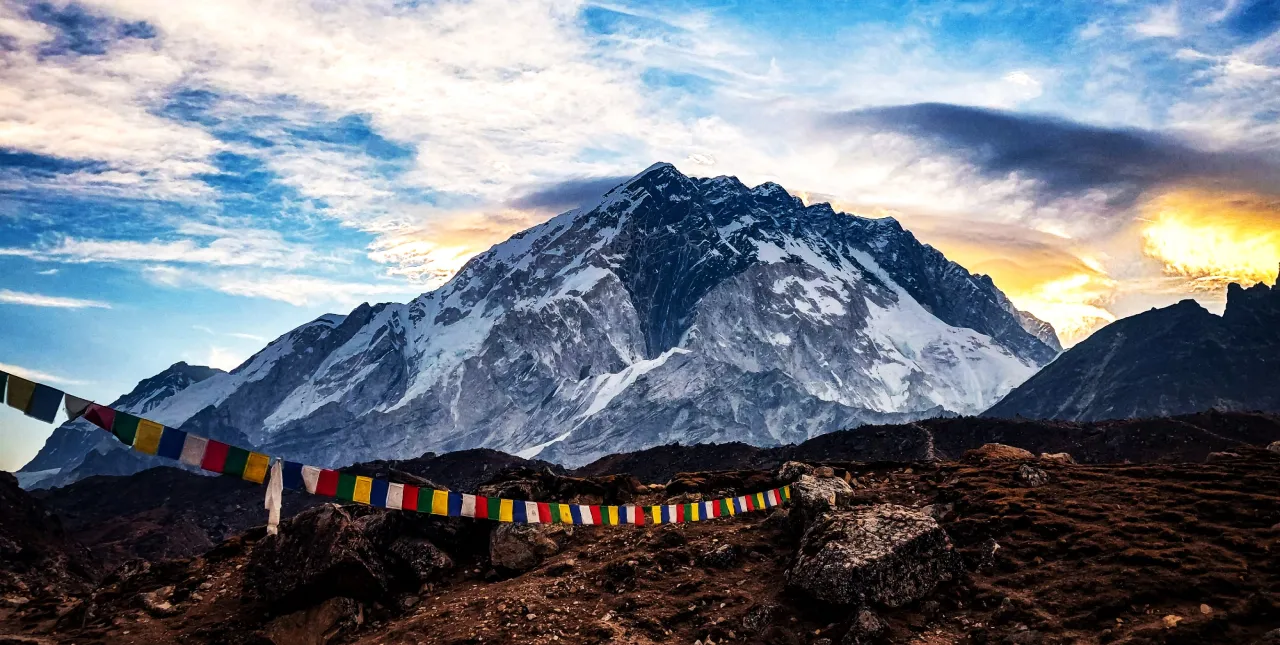
The Everest Three Pass Trek
The Everest Three Passes Trek is the most complete and challenging trekking circuit in the Everest region, combining Everest Base Camp, Gokyo Lakes, and three high-altitude Himalayan passes into a single continuous loop. It is designed for trekkers who want to go beyond the standard Everest Base Camp route and experience a more diverse, physically demanding, and immersive Himalayan journey.
Unlike traditional treks that follow and return the same way, this route forms a full circuit through the Khumbu region, crossing glaciers, high passes, and remote valleys while offering constant views of the world’s highest peaks, like Mount Everest (8,848m). It combines high-altitude adventure, cultural immersion, and technical endurance in one expedition.
Everest Three Passes Trek Route
The Everest Three Passes Trek follows a circular route through the Khumbu region, typically starting with a flight to Lukla and gradually ascending through major Sherpa settlements before entering high-altitude terrain and crossing three major Himalayan passes.
Typical Route Flow
Lukla → Phakding → Namche Bazaar → Dingboche → Chukhung → Kongma La Pass → Lobuche → Everest Base Camp → Kala Patthar → Dzongla → Cho La Pass → Gokyo Valley → Gokyo Ri → Renjo La Pass → Thame → Namche Bazaar → Lukla
Route Progression Explained
The trek begins with gradual acclimatization in Namche Bazaar before ascending toward Dingboche and Chukhung, with significant altitude exposure. From here, trekkers cross Kongma La Pass, the highest and most physically demanding of the three passes, before reaching Everest Base Camp and Kala Pather.
The route then continues toward the Gokyo Valley via Cho La Pass, which involves glacier crossings and more technical terrain. After exploring the Gokyo Lakes and climbing Gokyo Ri for panoramic views, the final challenge is Renjo La Pass, which offers one of the most scenic viewpoints in the entire Everest region.
From Thame, the route descends gradually back toward Namche Bazaar and eventually returns to Lukla, completing the full circuit.
Which Everest Pass Is the Hardest?
Each of the three high passes presents a different type of challenge, and understanding their difficulty helps set realistic expectations for the trek.
Kongma La Pass (5,535m): Physically the Hardest
Kongma La is the highest and most physically demanding pass on the route. It involves steep ascents, remote terrain, and limited facilities, making it a true endurance test at extreme altitude.
Cho La Pass (5,420m): Technically the Most Challenging
Cho La is considered the most technical section of the trek, often requiring crossing glacier sections and icy terrain. Conditions can become especially difficult after snowfall.
Renjo La Pass (5,360m): Long but Most Scenic
Renjo La is generally less technical but involves a long ascent and descent. It rewards trekkers with some of the most spectacular panoramic views of the entire Gokyo and Everest region.
Understanding the difficulty of each pass helps trekkers prepare mentally and physically for the varying challenges of the journey.
Everest Base Camp vs Everest Three Passes Trek
Many trekkers compare the Everest Three Passes Trek with the classic Everest Base Camp Trek when deciding which route to choose. While both share iconic highlights such as Everest Base Camp and Kala Patthar, the overall experience differs significantly in scope, difficulty, and terrain variety.
Comparison Overview
| Feature | Everest Three Passes Trek | Everest Base Camp Trek |
| Route Type | Full circuit loop | Out-and-back route |
| Everest Base Camp | Included | Included |
| Gokyo Lakes | Included | Not included |
| High Passes | 3 (Kongma La, Cho La, Renjo La) | None |
| Difficulty Level | Challenging | Moderate |
| Crowds | Less crowded | More crowded |
| Terrain Variety | Very high | Moderate |
Which One Should You Choose?
Choosing the right Everest trek depends on your experience, fitness level, and sense of adventure. Since most Everest trekking routes reach high elevations, good physical fitness and proper acclimatization are essential.
The Everest Base Camp Trek is the classic choice for trekkers seeking an unforgettable Himalayan experience. While it involves challenges related to altitude and rugged terrain, the route is straightforward and reaches Everest Base Camp and Kala Patthar (5,545m) within approximately 13–14 days.
The Everest Three Passes Trek is a more demanding adventure, crossing three high mountain passes above 5,345m. With longer trekking days and a duration of around 17 days, it is best suited for experienced trekkers looking for a greater challenge. This spectacular circuit combines the highlights of Everest Base Camp and the stunning Gokyo Valley, offering a more comprehensive and rewarding Everest experience.
In short: Choose the Everest Base Camp Trek for a classic Everest journey, or the Everest Three Passes Trek for a more challenging and diverse Himalayan adventure.
Key Trekking Challenges to Consider
- Physical Difficulty: Long trekking days over steep ascents and descents, often on rocky and uneven terrain
- Altitude Difficulty: Multiple crossings above 5,000m, increasing the risk of altitude sickness without proper acclimatization
- Technical Difficulty: Non-technical trekking, but includes glacier crossings and snow-covered passes such as Cho La
- Mental Fatigue: Extended duration and repetitive high-altitude effort can be mentally demanding
- Experience Requirement: Best suited for trekkers with prior multi-day high-altitude trekking experience.
Everest Base Camp Trek Via Gokyo
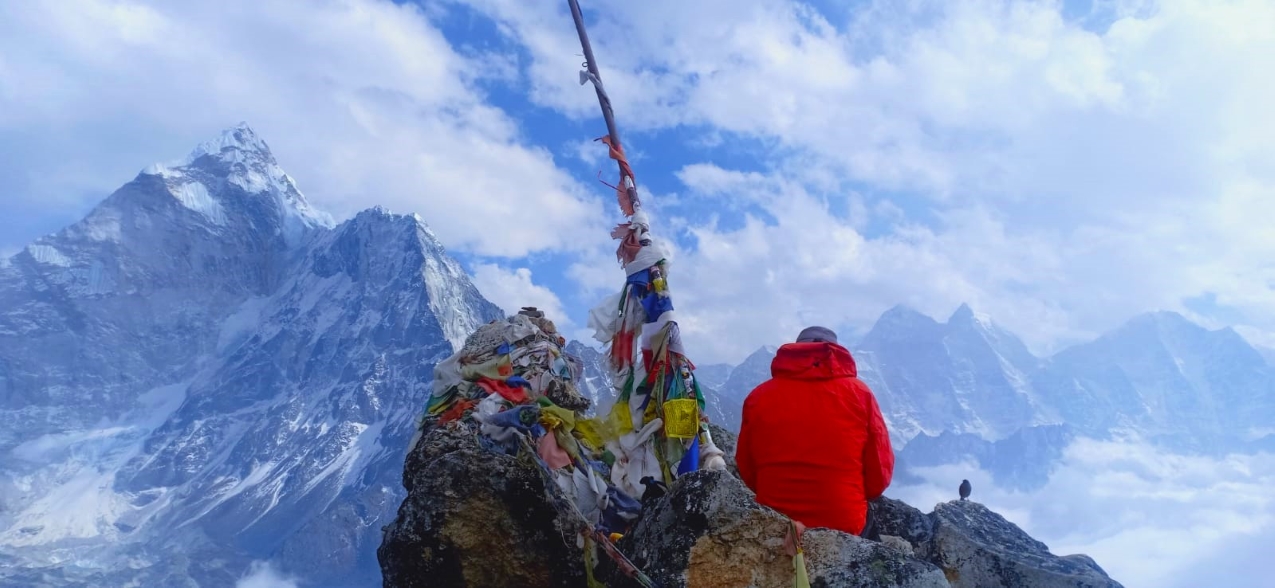
Everest Base Camp Trek via Gokyo Lakes & Cho La Pass
The Everest Base Camp Trek via Gokyo Valley is one of the most breathtaking and adventurous alternatives to the classic EBC trek. It combines the serenity of the Gokyo Valley with the iconic Everest Base Camp, offering trekkers a rare blend of pristine glacial lakes, golden alpine pastures, and towering Himalayan peaks, including Mt. Everest (8,848m), Lhotse, Cho Oyu, and Makalu.
The Gokyo Valley is well-renowned for the Ngozumpa Glacier, the largest glacier in the Himalayas, and its series of emerald lakes born beneath the dramatic Himalayan peaks. Adding to that, Everest Base Camp is the ultimate destination for adventurers. Along the way, trekkers encounter Sherpa villages, ancient monasteries, fluttering prayer flags, and breathtaking panoramic views, offering both adventure and cultural immersion.
Gokyo Lakes & Gokyo Ri
The Gokyo Lakes are among the most stunning glacial lakes in the Himalayas, showing you why this trek is truly unique. Nestled in the high-altitude Gokyo Valley, these lakes offer trekkers a combination of natural beauty, serenity, and cultural significance, forever etched in their minds:
- Six Turquoise Glacial Lakes: The trail passes Gokyo, Thonak, and Ngozumpa Lakes, each shimmering in brilliant shades of turquoise and reflecting the Himalayan towers in the backdrop. These lakes are not only breathtaking but are also considered sacred by local Sherpas and Tibetan Buddhists, with many pilgrims performing rituals during festivals.
- Emerging from the Ngozumpa Glacier: These lakes are fed by the largest glacier in Nepal & the Himalayas, the Ngozumpa Glacier, providing dramatic moraine landscapes and crystal-clear waters. Trekkers walk along glacial moraines and scattered icebergs, offering a sense of thrilling adventure and high-altitude wilderness.
- Unique Ecosystem: The lakes are home to rare Brahminy ducks, Himalayan frogs, and alpine flora, which change with the seasons. In spring, rhododendrons bloom along lower trails, while autumn offers clear skies perfect for photography.
- Photographer’s Paradise: With reflections of Everest, Cho Oyu, Lhotse, and Makalu in the calm waters, the lakes provide one of the most iconic Himalayan photo opportunities, especially during sunrise and sunset.
Gokyo Ri vs Kala Patthar: Which Viewpoint Should You Choose?
Gokyo Ri and Kala Patthar are both breathtaking viewpoints on the Everest Base Camp trek, but each offers a different kind of experience. Choosing between them depends on what you value most: panoramic diversity with opportunities for photography or a close-up view of Everest.
| Feature | Gokyo Ri | Kala Patthar |
| Altitude | 5,360 m | 5,545 m |
| Crowd Levels | Moderate with quieter trails | Higher as it is the Classic EBC route |
| View Scope | 360° panorama of multiple Himalayan peaks | Close-up, dramatic view of the Everest South Face |
| Best Time for Photography | Sunrise with soft lighting, minimal crowds | Sunset with golden-hour highlights on Everest |
| Difficulty of Ascent | Moderate | Moderate to Challenging |
| Unique Appeal | Tranquil and panoramic | Iconic Everest-focused experience |
Ngozumpa Glacier Experience
Walking along the Ngozumpa Glacier is a defining adventure of the Gokyo route:
- Moraine Crossing: Trekkers traverse rocky ridges and moraine fields that extend from the glacier, offering a hands-on experience of glacial terrain rarely seen on standard EBC routes.
- High-Altitude Challenge: The terrain requires steady footing, proper footwear, and careful pacing, giving trekkers a real sense of adventure at extreme elevations.
- Unique Scenic Contrast: The contrast of turquoise lakes against icy moraine and rugged peaks is striking and creates photo opportunities that are unique to this route.
- Photography & Reflection: The glacier offers mirror-like surfaces after snowfall or rain, providing rare reflections of surrounding peaks. Sunrise and sunset light dramatically enhance the icy landscape.
The combination of Gokyo Lakes, Gokyo Ri, and the Ngozumpa Glacier is what makes the Everest Base Camp trek via Gokyo a must-try, exclusive, high-altitude adventure.
Cho La Pass: Difficulty, Terrain & Trekking Insights
The Cho La Pass (5,420 m) is the highest and most challenging point on the EBC via Gokyo trek. It connects the Gokyo Valley with the Khumbu region, offering trekkers an adventurous experience across glaciers, moraines, and high-altitude ridges. Crossing the pass is not only physically demanding but also highly rewarding, with unparalleled Himalayan vistas in all directions.
| Feature | Details |
| Altitude | 5,420 m |
| Difficulty | Moderate to Challenging |
| Terrain | Glacier, moraine, scree, rocky ridges |
| Time Required | 5–7 hours, depending on weather and trekking speed |
| Seasonal Risks | Snow, ice, possible closure in winter/early spring |
| Equipment Needed | Trekking poles, crampons, and layered clothing |
| Acclimatization | Recommended at Gokyo and Tangnag before crossing |
| Physical Requirements | Stamina, balance, and previous trekking experience at high altitudes are recommended |
While challenging, proper preparation, acclimatization, and professional guidance make it achievable for experienced trekkers. Crossing this pass is one of the defining experiences that sets the EBC via Gokyo trek apart from the classic route.
Route Overview: 16-Day Circular Trek from Lukla
Our carefully designed 16-day itinerary balances ample time for both adventure and acclimatization, ensuring trekkers fully experience the region’s scenic and cultural richness.
- Day 1–3: Lukla → Phakding → Namche Bazaar (acclimatization)
- Day 4–6: Namche Bazaar → Gokyo Valley → Gokyo Ri ascent
- Day 7–8: Gokyo → Cho La Pass → Dzongla (glacier crossing)
- Day 9–11: Gorak Shep → Kala Patthar → Everest Base Camp
- Day 12–16: Return via Tengboche Monastery → Lukla → Ramechhap → Kathmandu
Altitude & Trekking Hours Table:
| Segment | Altitude Gain | Trekking Hours | Notes |
| Lukla → Namche | 3,440 m | 5–6 | Steep ascent, suspension bridges |
| Namche → Gokyo | 4,790 m | 6–7 | Gradual acclimatization, lake views |
| Gokyo Ri → Cho La Pass | 5,420 m | 7–8 | Glacier crossing, high pass challenge |
| Gorak Shep → Kala Patthar | 5,545 m | 3–4 | Sunset views over Everest |
| Kala Patthar → EBC | 5,340 m | 2 | Base camp experience |
Challenges of the Everest Base Camp Trek via Gokyo Valley
- High Altitude Demands: The trek reaches 5,545m (Kala Patthar), 5,420m (Cho La Pass), and 5,340m (EBC). At these elevations, altitude sickness symptoms like headaches, nausea, and fatigue are common, making acclimatization critical.
- Cho La Pass Crossing: Cho La Pass (5,420m) involves steep, rocky, and often icy terrain. Snow can increase difficulty, requiring good fitness and trekking experience.
- Glacial Terrain: The route crosses the Ngozumpa Glacier, with uneven moraines, slippery ice, and occasional crevasses. Careful footing is essential.
- Remote Sections: Gokyo Valley and Cho La are quieter and more isolated than the classic EBC route. Facilities are basic, and medical access is limited.
- Unpredictable Weather: The weather can change quickly with snow, wind, and temperature drops. Lukla/Ramechhap flights are also prone to delays.
- Physical Endurance: Expect 5–8 hours of daily trekking with steep ascents. The longer route adds cumulative fatigue.
- Cold Exposure: Nights in Gokyo, Dzongla, and Gorak Shep are freezing, requiring proper gear and preparation.
Everest Base Camp Trek
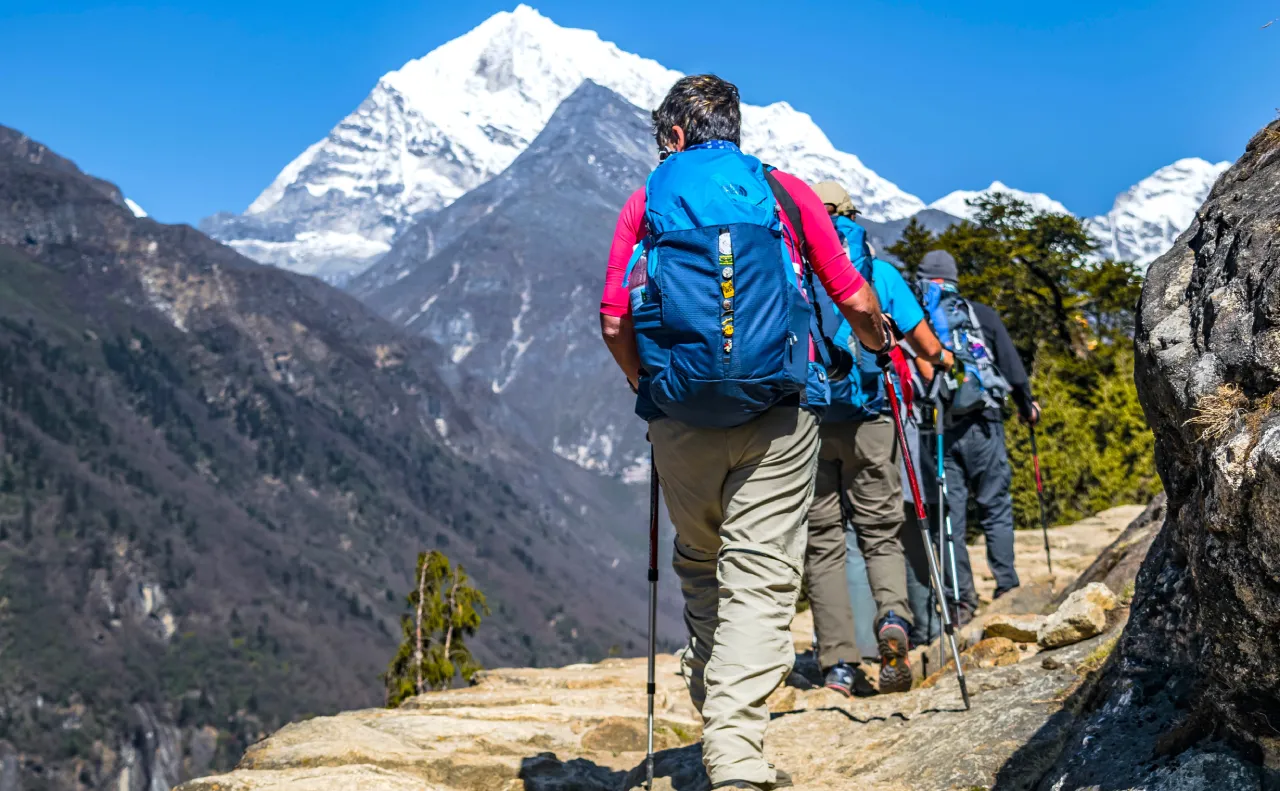
The Everest Base Camp Trek is considered one of the most iconic high-altitude adventures in the world. Since the 1920s, trekkers and thrill-seekers from across the globe have dreamed of standing at the foot of Mt. Everest (8,849 m), the highest peak on Earth, while being surrounded by the awe-inspiring giants of the Himalayan Range.
This journey is more than a trek; it is a unique and profound encounter with nature, culture, and personal endurance.
Uniquely traversing the Khumbu region, you will experience a tapestry of breathtaking landscapes and rich cultural heritage: vibrant Sherpa villages, intricately carved mani walls, ancient chortens, colourful prayer flags, and centuries-old Buddhist monasteries.
Swaying suspension bridges cross the glacial rivers that test your courage, while panoramic views of the snow-clad peaks create monumental moments that are forever etched in your mind and spirit.
Our 17-day classic Everest Base Camp Trek itinerary flies you in and out of Lukla, with carefully planned acclimatisation stops, ensuring safety and comfort while you explore these high altitudes.
Highlighting the EBC Trek: Duration, Distance & Maximum Altitude
- Duration: 17 Days (13 days trekking + Kathmandu & Ramechhap)
- Distance: Approximately 130–140 km round trip for the classic route
- Highest Altitude covered: 5,545 m/18,192 ft at Kala Pathar, with Everest Base Camp at 5,340 m/17,500 ft
- Difficulty: Very demanding / High-altitude trek requiring good fitness and preparation
This trek involves 5–7 hours of walking per day across steep trails, high ridges, and rugged terrain, making proper preparation and acclimatisation essential.
Where is Everest Base Camp Located?
Everest Base Camp is located in Nepal’s Khumbu region, within the boundaries of Sagarmatha National Park. Nestled at the foot of the Khumbu Icefall, it serves as the launching point for climbers attempting to summit the world’s highest point.
Trekkers typically begin their journey with a scenic flight from Ramechhap to Lukla (2,860 m), followed by trekking through the picturesque Sherpa villages, suspension bridges, and high Himalayan landscapes until reaching the base of the world’s tallest mountain.
Classic Everest Base Camp Trek Itinerary
Our 17-day Everest Base Camp Trek itinerary takes you through some of the most iconic landscapes of the Khumbu region & even those places you may have never heard of before:
- Flight to Lukla (2,860 m): Begin with an early morning flight from Ramechhap to Lukla (2,860m), the gateway to the trek. Marvel at the views of Kusum Kanguru Peak (6,367m) as you start your trek.
- Namche Bazaar (3,450 m): Cross the Dudh Koshi River via suspension bridges and ascend to this vibrant Sherpa town, which is a key acclimatisation stop.
- Dingboche (4,360 m): Trek through Phortse village (3,800 m), enjoy sweeping views of Ama Dablam, while spending two nights acclimatising here.
- Kala Patthar (5,545 m): Witness an unforgettable sunset over Mt. Everest, perfect for photography and reflection.
- Pyramid (5,050m): Pass by the famous Pyramid International Laboratory (5,050m), a unique high-altitude scientific research station studying climate change and Himalayan environments in the heart of the Khumbu Valley.
- Everest Base Camp (5,340 m): Arrive at the Khumbu Icefall, the bustling hub for mountaineers during the climbing season.
Our itinerary, while following the classic Everest Base Camp route, thoughtfully incorporates selected alternative sections that offer fewer crowds, better acclimatisation, and deeper cultural immersion.
Challenges of the Everest Base Camp Trek
While this trek is immensely rewarding, it requires careful planning and awareness of potential challenges:
- High-Altitude Risks: Trekking reaches 5,545 m poses the potent risk of altitude sickness. Severe cases may require emergency evacuation.
- Unpredictable Flights: Flights to and from Lukla are heavily weather-dependent, with delays and cancellations for several days being quite common.
- Access to Lukla: Although we try our best to get direct flights to Lukla from Kathmandu (the best option), due to flight congestion in Kathmandu airport, the flights to Lukla nowadays mostly operate from Ramechhap (Manthali Airport).
- Road to Ramechhap: A 6-hour drive, with alternating good and bad road stretches along the route.
- Accommodation Limitations: Lodges in Ramechhap are basic and limited. Weather-related flight delays (sometimes stretching up to two days) can impact the availability of accommodation.
- Trail Retracing: The standard trekking route requires retracing your steps back along the same path, which some trekkers may find repetitive.
Mera Peak
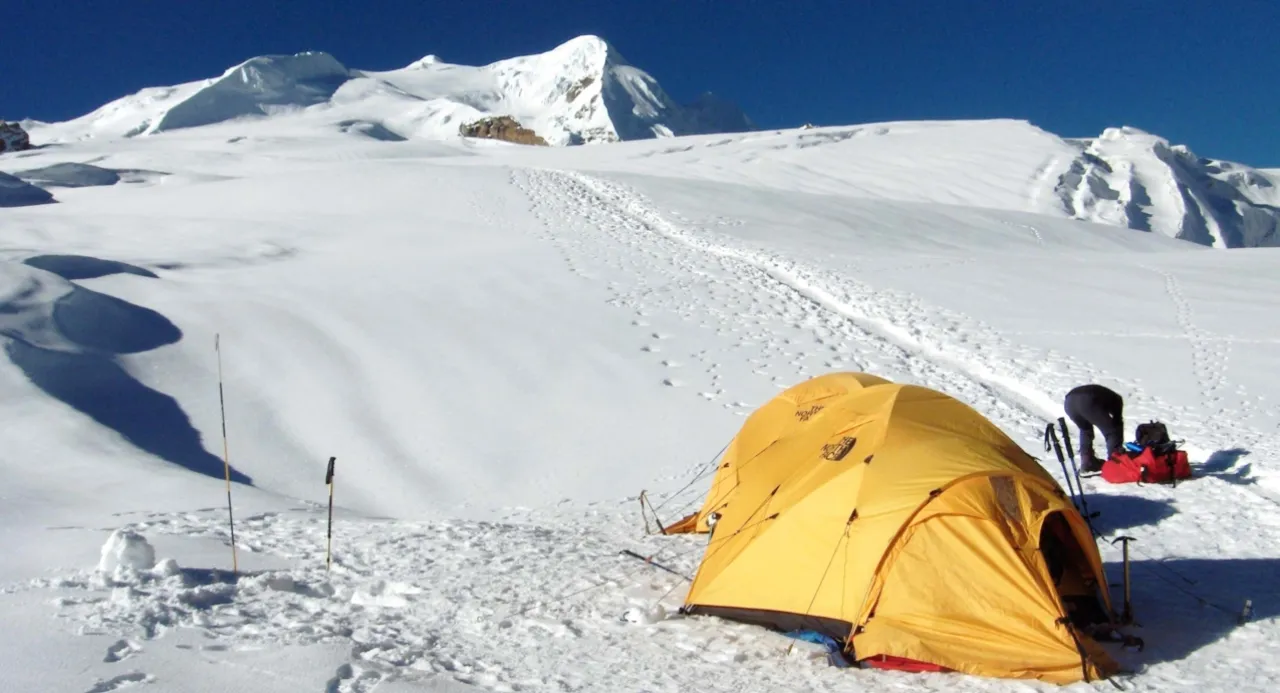
MERA PEAK (6,467m) – The Highest Trekking Peak of Nepal
In case if you are looking to try out one of the Himalayan peaks of Nepal which is a straightforward and non-technical climb situated little bit away from the heavy crowd then you would like to try out Mera Peak (6,467 m) which is one of the highest officially permitted trekking peak in Nepal.
Mera Peak rises to the South of Everest and dominates the watershed between the heavily wooded Valleys of the Hinku and Hongu Drangkas. The area not much frequented by travellers like in the Everest Base Camp trail. The trail to Mera Peak base camp passes through pristine forest, local villages and provides some great views of the Himalayas. From the summit of Mera peak you can have stunning views of Kanchenjunga (8,586 m), Makalu (8,463 m) in the east, Everest (8,848 m) and Lhotse (8,516 m) to the north, and Ama Dablam and Cho Oyu (8,463 m) to the west. Also, the view of sunrise on Everest and Kanchenjunga from the Mera Peak upper slope is mesmerizing.
Overview:
Mera Peak (6,467 m) is one of the highest officially permitted trekking peak in Nepal. Graded alpine PD is physically demanding due to altitude but in terms of climbing it is a non-technically straightforward climb. It offers an exhilarating challenge but are easier to summit than other major mountaineering adventures.
The ascent to Mera Peak from the Mera La (Base Camp) is gradual and sustained, and there is relatively steep section to Mera’s central summit of around 40 degrees. In case of heavy snowfall, the route can be long and challenging. This trip is ideal for those with moderate mountaineering experience, a good level of fitness and a keen sense of adventure.
Trekking Peak:
Nepal Mountaineering Association (NMA) has designated several peaks between 5,000 to 7,000 meters as a trekking peak. These peaks still pose significant challenges with the altitude but requires limited technical climbing experience.
Mera Peak (6,467m): Trip Route
The Mera Peak (6,467m) trip begins with a short and exciting flight to the mountain airstrip at Lukla
Routes Options:
Option 1: Mera Peak Upper Route (Shorter, More Challenging)
This direct route is best suited for experienced high-altitude trekkers. After flying into Lukla, the trek ascends quickly over the Zatrawa La Pass (4,620m) with limited acclimatization time. The return follows the same trail, making it shorter but more intense.
Option 2: Mera Peak Lower Route (Gradual, Better Acclimatization)
This route offers a gradual ascent, giving trekkers more time to adjust to altitude. The trail winds through beautiful villages, rhododendron forests, streams, terraced fields, and Buddhist monasteries. It’s culturally immersive and physically safer due to better acclimatization. The return trip usually takes the faster upper route.
Climbing: A couple of nights at Khare for acclimatization and perfecting your fixed rope and abseiling skills for final push towards the Summit. Then start our climb by establishing our camp at Base Camp (5,300m) on the east side of Mera La on a gravel flat below the ice. Next day is to high camp (5,800m) which is around 4 hours walk on gently slanted snow slopes Then, if the weather permits, it’s a day to summit. Start early morning around 0200 hours with headlights on with continuing up the ridge then ascend steeply to the east of the left-hand ridge before moving to the right to make the summit easier. Our staff will fix safety ropes to the bottom of the last part of the summit climb. During this time, we take a bit of rest at the South Col observing the amazing sunrise over the Himalayas. Then ready for the final push taking the steepest part of the climb of the last section with the help of Jumar. Finally, on the top with a spectacular view of Mt. Everest (8,848m), the highest mountain in the world, Mt. Kanchenjunga (8,586m), the third highest, Mt. Makalu (8,463m) , the fifth highest mountain of the Universe and several other peaks.
Later, we descend slowly and carefully supported by the ropes fixed by our crew. Then we reach Khare where we take a rest after a stressful and exciting trip. From there Mera Peak climb returns to Lukla from the Upper route and then flies to Ramechhap or Kathmandu.
Overnight at the lodge.
Mera Peak Climb (6,467m): Highlights
- Summit the Highest Trekking Peak (6,476m) allowed in Nepal
- Panoramic views of Mt. Everest 8,848m, Kanchenjunga 8586m, Makalu 8485m, Lhotse 8516m, and Cho Oyu 8,150m
- Scenic sunrise over the eastern Himalayas
- Trek through diverse terrains: alpine forests, glaciers, high passes, and local settlements
- Cultural immersion with Sherpa villages and Buddhist heritage
- Ideal for beginners and experienced climbers alike
Island Peak
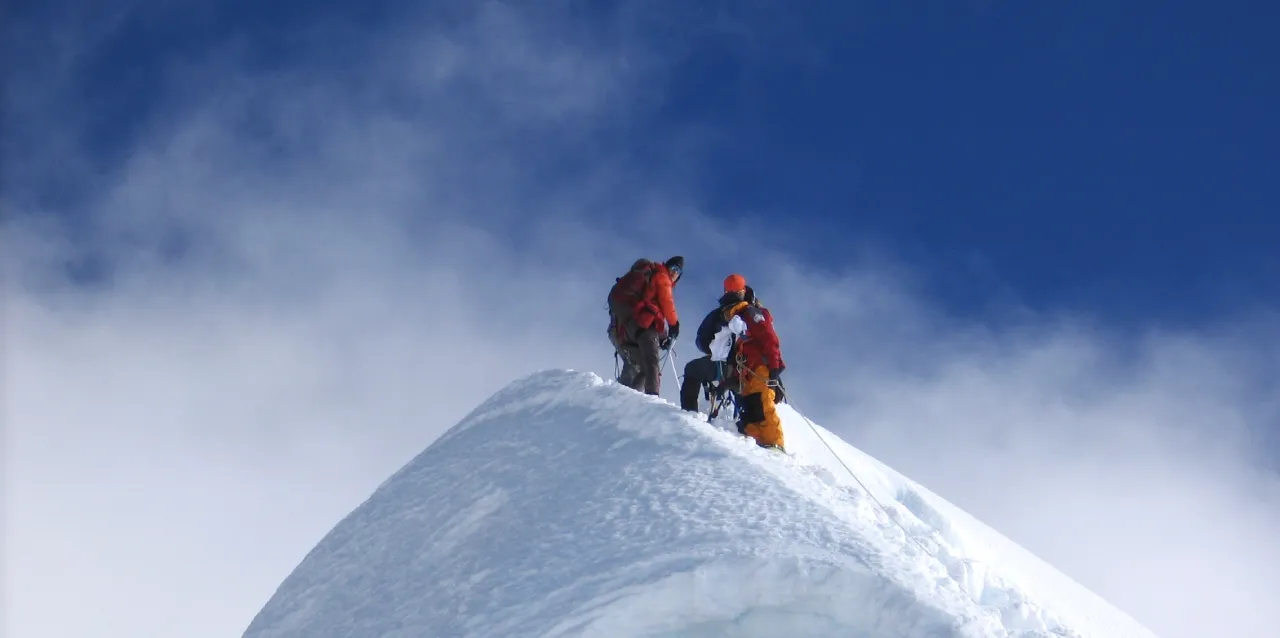
Overview: Island Peak Summit with Everest Base Camp Trek
Island Peak (6,189m) Summit with Everest Base Camp Trek is one of the most iconic and rewarding journeys in the Everest region. This classic expedition offers a perfect mix of high-altitude trekking and non-technical mountaineering, ideal for adventurous travelers dreaming of conquering one of the Himalayan peaks.
The journey to Island Peak begins with a scenic trek to Everest Base Camp (5,364m), passing through traditional Sherpa villages, ancient monasteries, and vibrant chortens, all set against the backdrop of towering Himalayan giants. The trail helps your body gradually acclimatize, while offering breathtaking views of Ama Dablam, Thamserku, Lhotse, and Everest itself.
A magical sunset hike to Kala Pather (5,545m) offers a close-up view of Mount Everest glowing under golden skies highlight for any trekker. After soaking in the majesty of Everest Base Camp, the route leads you across the formidable Kongma La Pass (5,535m) to reach the base of Island Peak (Imja Tse)—a gateway to your ultimate Himalayan summit.
Island Peak Summit: A Gateway to Himalayan Mountaineering
Standing tall at 6,189 meters, Island Peak is a prominent trekking peak located just a few miles from Mt. Everest. It lies nestled among the mighty Lhotse, Imja, and Ama Dablam, offering a thrilling ascent for climbers looking to experience high-altitude alpine climbing.
Although non-technical, the climb does demand basic snow and ice climbing skills. From the base, climbers ascend a rocky ridge, cross a glacier, and tackle a 45° ice slope leading to a narrow summit ridge. The effort is immense, but the panoramic views of Makalu (8,475m), Baruntse (7,720m), and the entire Khumbu range make it all worth it.
Island Peak Summit: Highlights
- Explore 2000 years old Kathmandu City having ancient palaces and spiritual spots
- Trek through Sherpa heartlands, crossing suspension bridges, chortens, and monasteries with fluttering prayer flags
- Experience the raw beauty of the Khumbu Glacier, icefalls, and alpine forests
- Witness stunning sunset views over Everest from Kala Pather
- Brief climbing course by our expert Climbing guide before climbing the peak
- Summit 6,189 m Himalayan peak with professional support
- Incredible views of the several peaks including Mt. Pumori (7,161 m), Mt. Lobuche West (6,145m) Mt. Nuptse (7,861m), Mt. Lhotse (8,516m) and the giant Mt. Everest (8,848m)
- Acclimatization periods in between trek days.
- Support of your expedition by experienced staff.
- Another difficulty you may face on this trip is the weather. The climate should also be favorable to climbers for them to have a successful ascent.
Island Peak Summit: Challenges
- Island summit is a non-technical summit that has some difficulties, such as climbing an ice wall and traversing a glacier.
- Use of jumar/ascenders for 120m vertical ascent on 40–70° ice slopes
- Island Peak may not present much of a challenge to experienced hikers and climbers, but it can be physically and mentally taxing for anyone with little to no mountaineering experience.
- Another challenge you may face on this trip is the weather. The climate should also be favorable to climbers for them to have a successful ascent.
- Weather plays an important role not just for climbing but also for flight to fly to Lukla as the airport is in a mountainous terrain where the weather can change very quickly.
- As this trip reaches above 6000 m the altitude is another challenge
Everest Helicopter Tour
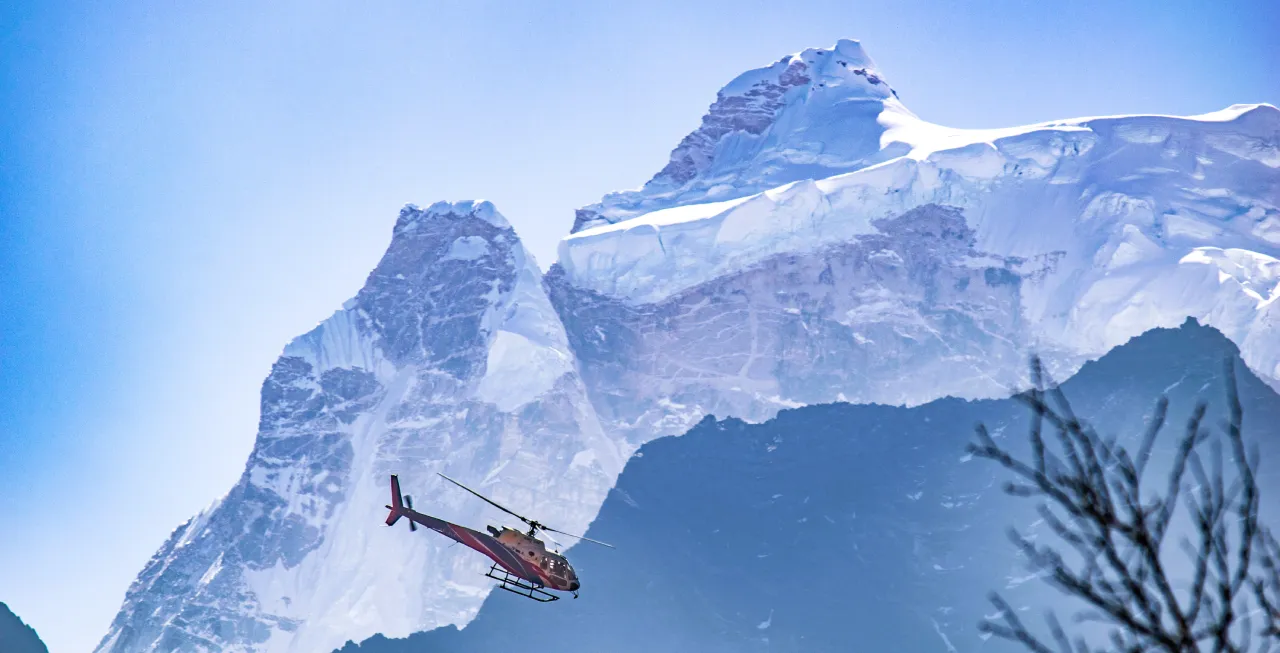
Private Charter Helicopter Flight with Far Out Nepal
Nepal, home to eight of the world’s fourteen peaks above 8,000 meters, is a paradise for adventurers and mountain lovers. The most thrilling way to witness the breathtaking beauty of these snowy giants in a short time is through an Everest Helicopter Tour.
Flying in an AS350 B3 helicopter, this tour offers an unforgettable aerial adventure over the Himalayas. Whether you are short on time or prefer a luxurious way to experience this exclusive helicopter tour is designed to create memories that last a lifetime.
Everest Helicopter: Highlights
- Around 4 hours adventure Helicopter flight from Kathmandu to EVEREST REGION (Khumbu Region) and back
- An aerial view of the green rolling hills as you fly towards the Khumbu region
- During the short stopover at Lukla you can witness Lukla which is the gateway to Everest Base Camp Trek
- First sweep through the helicopter flight to Gokyo Valley famous for five glacier lakes, Nepal longest glaciers with some fine view of the Himalayas
- Cross through Cho La Pass with amazing view of the high Himalayas
- You have a view aerial view of Khumbu Glacier, base camp of the highest peak of the world.
- The breathtaking view from Mt. Everest (8.848 m), Mt. Ama Dablam (6.856 m), Mt. Nuptse (7.861 m) and Mt. Pumori (7,165 m)
- Stop over at the highest point hotel in the world with delicious breakfast and 360 – degree stunning view of the lofty Himalayas
- Comfortable private journey with just three passengers having window seats throughout the trip with no hanging out at Pheriche which is at an elevation of 4371 m poshing a risk of altitude waiting for the other passenger to finish the flight
- Medical Oxygen in case of emergency
- Reliable Helicopter company with Experience Pilot to take you in once in lifetime experience.
Everest Helicopter Flight Route:
- The helicopter flight to Everest base camp begins in the early hours from Kathmandu Domestic Airport then flies eastward via Bhaktapur, hills of Nagarkot village.
- It then passes through Jiri village flying higher towards Lukla for refuelling.
- Stop at Lukla to refuel and take a Helicopter flight to Everest base camp.
- Then after a brief stop it flies Northwest towards Gokyo Valley cross Cho La pass towards Everest Base Camp
- After the overflow of Everest Base Camp and getting a superb view of the Himalayas it returns down to Syangboche where the Everest View Hotel is situated for the delicious breakfast.
- Here we spend some time having breakfast and enjoying the view of the lofty Himalayas.
- Then back to Lukla for refueling
- We then fly back to Kathmandu
Challenges & Important Considerations:
- Weather conditions must be favorable for a smooth experience.
- Physical fitness is necessary, and consulting a physician before flying is recommended.
- Total flight duration is approximately 4/5 hours including breakfast