

Bhutan Festivals: Your Complete Festival Calendar, Dates & Guide
Introducing the Festivals in Bhutan
Bhutan hosts over 150 festivals every year, and in all honesty, most travelers only ever hear about two or three of them. Ask someone about the Bhutanese festivals, and you’ll get “the one with the masks,” which is usually the extent of what they know. What most people don’t realize is that behind that single image lies a living calendar spread across all twenty of Bhutan’s districts, from the packed courtyards of Paro to a quiet valley where an entire village gets out to celebrate the arrival of a migrating bird.
We’ve watched many travelers walk into their first Tshechu unexpectedly and say that it was the single moment that made their trip by the end of it. This guide is built from that experience. It’s just not to hand you dates, but to help you actually choose the right festival, understand what you’re looking at once you’re standing in the crowd, and plan around it properly so nothing catches you off guard.
Whether you’re deciding which festival should anchor your entire itinerary or you just want to understand what a Tshechu is before you land in Paro, you’ll find the practical details here: booking timing, real etiquette, and what each festival actually feels like once you’re there.
Want to book a Bhutan Trip now, but a bit confused? Check out our Bhutan page and send us your enquiry now →
Bhutan Festivals at a Glance
| Quick Fact | Answer |
| Total annual festivals | 150+ |
| Largest festival | Thimphu Tshechu |
| Most popular with tourists | Paro Tshechu |
| Wildlife festival | Black-Necked Crane Festival |
| Best season | Spring & Autumn |
| Calendar system | Lunar (Bhutanese calendar) |
| Tourists allowed | Yes, at the vast majority of festivals |
Why Festivals Matter in Bhutan
In most countries, a festival is entertainment first and tradition second. In Bhutan, it runs the other way around.
Nearly every festival, or Tshechu, exists to honor Guru Rinpoche, the 8th-century saint credited with bringing Vajrayana Buddhism into the Himalayas. This isn’t a country where religion sits quietly in the background. It’s woven through daily life, and festivals are where that faith becomes visible, loud, and communal all at once.
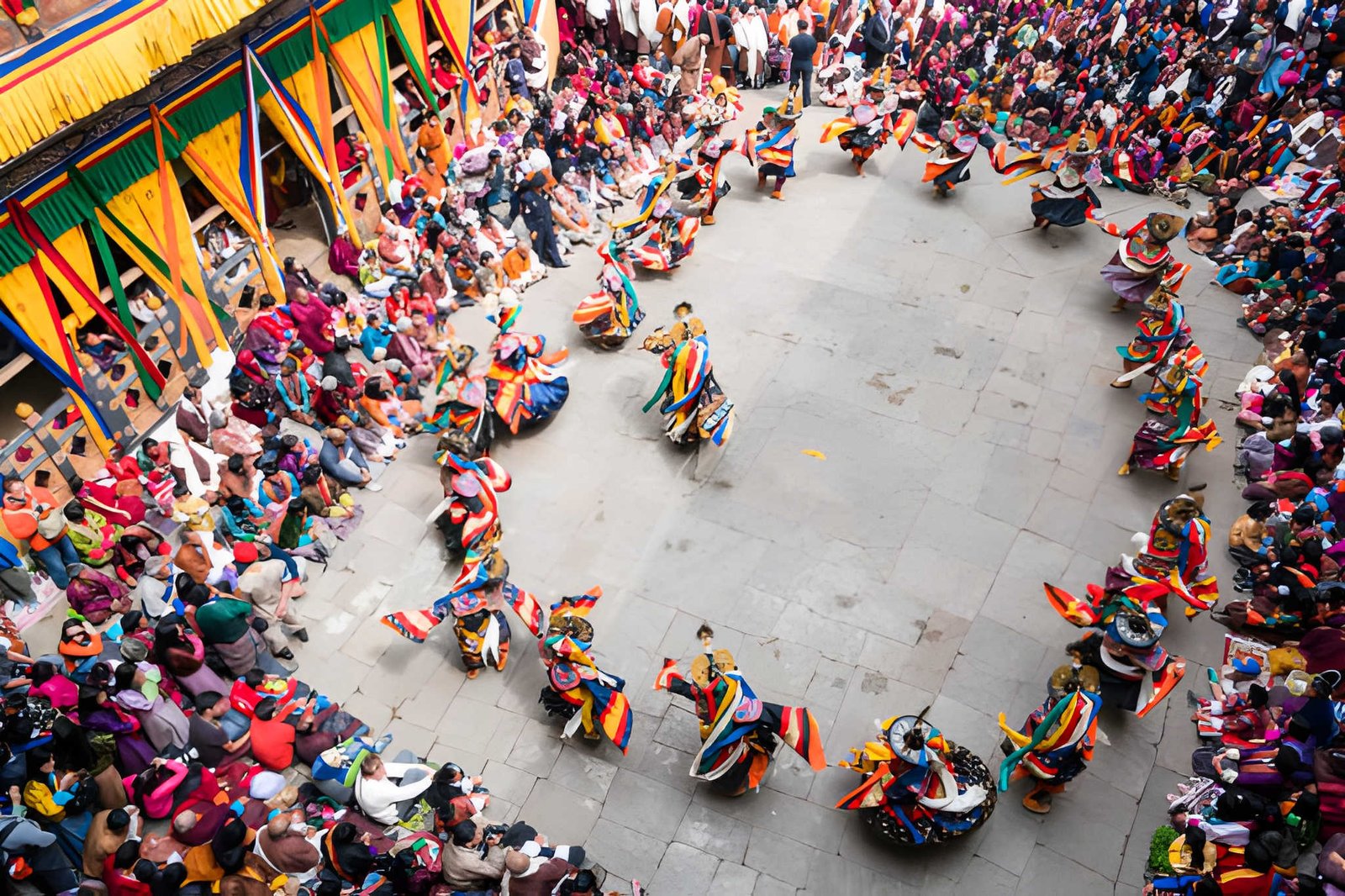
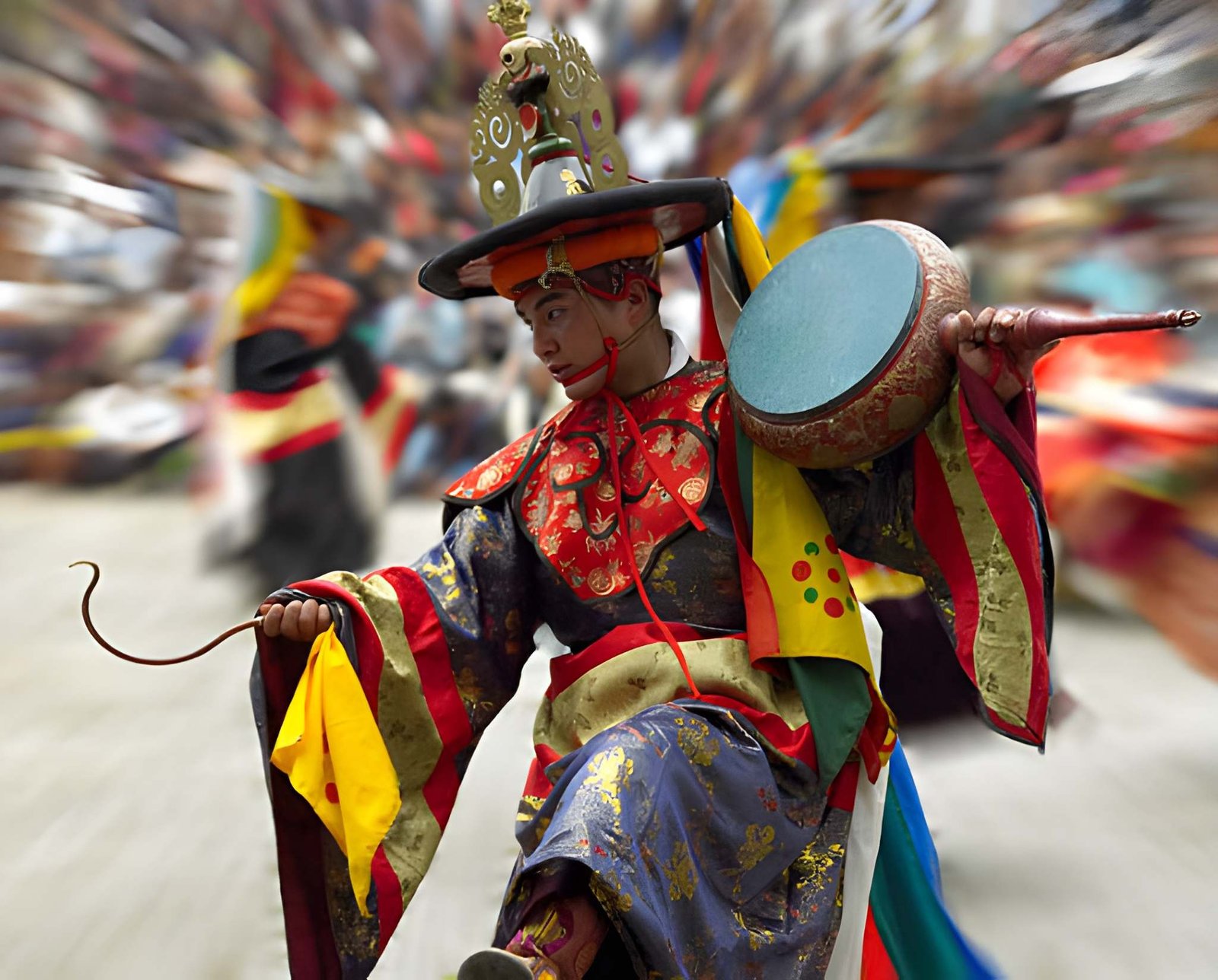
For weeks beforehand, monks retreat into prayer and meditation, rehearsing the Cham, which is the masked dances that reenact stories of enlightened beings overcoming evil. Locals genuinely believe that simply witnessing these dances brings blessings. Some even say it moves you a step closer to enlightenment just by watching.
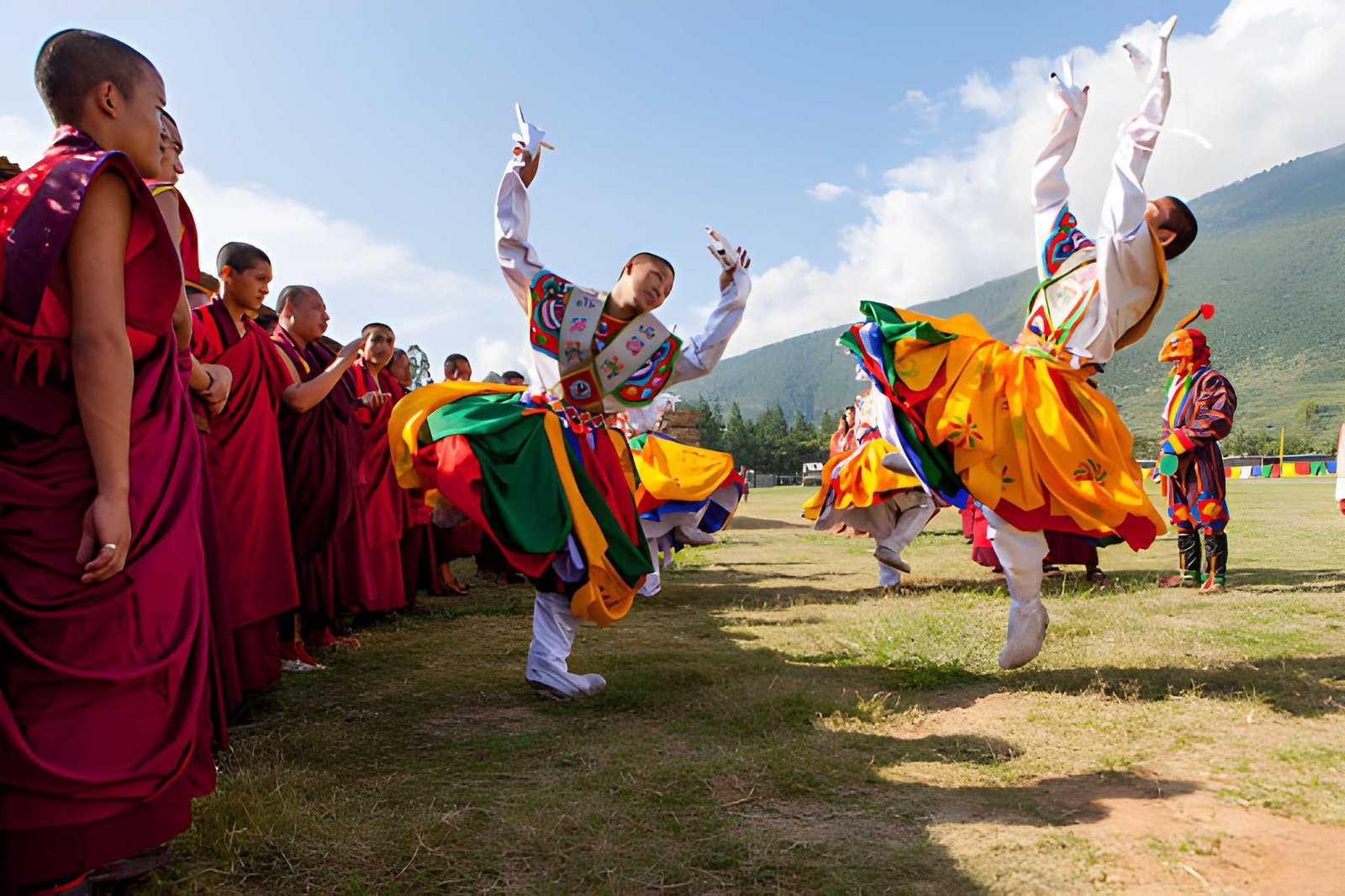
But we’d be doing the festivals a disservice if we made them sound purely solemn, because they’re every bit as social as they are sacred. Entire villages shut down for the day. Families put on their finest gho and kira, pack picnic lunches into traditional bamboo baskets, and spend the whole day at the dzong or monastery courtyard, catching up with relatives they might only see once a year.
In a country that deliberately limits tourism to protect its culture, festivals are one of the few places where you see that culture performed in full, exactly as it’s always been. Not staged for visitors, just happening around you.
That combination of real devotion sitting right alongside genuine community joy is why almost all travelers tell us their festival day was the single most memorable part of the whole trip. More than the mountains. More than the dzongs themselves.
Understanding Bhutanese Festivals
Before we get into dates and logistics, it helps to actually understand what you’re looking at. Because “it’s that one festival with masked dancing” only gets you so far once you’re standing in that courtyard.
What is a Tshechu?
A Tshechu is an annual Buddhist festival held in each of Bhutan’s districts. This always falls on the tenth day of a month in the Bhutanese lunar calendar. The date itself honors Guru Rinpoche, and the festival typically runs three to five days, centered on Cham, performed by the monks and the laypeople who act out Buddhist teachings and legends rather than simply retelling them.
What is a Drubchen?
A Drubchen is a period of intensive group meditation, sometimes lasting seven to ten days, believed to generate powerful spiritual protection for the whole community. Some Drubchens are paired directly with a Tshechu. Punakha is the clearest example of this, where the meditation comes first, and the festival dances follow, in this case reenacting a real historical event from Bhutan’s past.
Why do festival dates change every year?
This catches almost every first-time visitor off guard. Bhutanese festivals follow the lunar calendar, not the Gregorian one, which most of us plan our travel around. Because lunar months don’t map neatly onto fixed solar dates, a festival that falls in early September one year can shift to late September, or even October, the next.
Only two festivals on the entire calendar buck this trend and land on the same Gregorian date every single year: the Black-Necked Crane Festival (November 11) and the Royal Highland Festival (October 23–24). Everything else needs checking for the specific year you’re traveling.
Who can attend Bhutan festivals?
Tourists are genuinely welcomed at the overwhelming majority of Bhutan’s festivals. This isn’t a case of tolerated attendance; locals are generally happy to have visitors there. A small number of specific rituals within certain festivals, or particular moments like a midnight ceremony, are reserved for monks or locals only. The public dances, the unfurling of sacred thongdrels, and the general festival atmosphere can be enjoyed by everyone.
Bhutan Festival Calendar
Rather than working strictly month by month, we find it’s more useful to think in seasons. That’s how most travelers actually plan around festivals in practice, and it makes clearer sense of why certain months cluster together the way they do.
| Festival | Location | Approx. Dates | Duration |
| Punakha Drubchen & Tshechu | Punakha | Late Feb | 5–6 days |
| Paro Tshechu | Paro | March–April | 5 days |
| Ura Yakchoe | Ura, Bumthang | April–May | 5 days |
| Haa Summer Festival | Haa Valley | July | 2 days |
| Matsutake Mushroom Festival | Ura, Bumthang | August | 3 days |
| Thimphu Tshechu | Thimphu | Late September | 3 days |
| Royal Highland Festival | Laya | October 23–24 (fixed) | 2 days |
| Jambay Lhakhang Drup | Bumthang | Late October | 4 days |
| Black-Necked Crane Festival | Phobjikha Valley | November 11 (fixed) | 1 day |
| Druk Wangyel Tshechu | Dochula Pass | December 13 | 1 day |
Most of these shift each year slightly with the lunar calendar. As mentioned earlier, only the Black-Necked Crane Festival and the Royal Highland Festival hold their Gregorian dates every year. Everything else here is an approximate seasonal window rather than a fixed date.
The Bhutan Festivals By Months
Spring (March–May) is festival season in its purest form, and if we’re being honest, it’s our favorite window for traveling. Paro Tshechu draws crowds from across the country during this stretch, and it happens to overlap with rhododendrons blooming across the hillsides. So, you basically get the festival and the scenery working together rather than competing for your attention.
Summer (June–August) is quieter on the festival front, but far from empty. The Haa Summer Festival gives you a genuine look at nomadic herder culture in one of Bhutan’s most scenic and least-visited valleys, and by August, Ura’s Matsutake Mushroom Festival turns a wild mushroom harvest into a proper community celebration, food stalls and all.
Autumn (September–October) is the other major festival window, anchored by Thimphu Tshechu. This is Bhutan’s largest and most attended festival, full stop. The festival is followed not long after by the Royal Highland Festival in Laya and then Jambay Lhakhang Drup, famous for a midnight fire ceremony you won’t see replicated anywhere else in the country.
Winter (November–December) has fewer festivals, but the ones it has are unlike anything else on this list. The Black-Necked Crane Festival in Phobjikha Valley pairs conservation with culture in a way no other festival does, and Druk Wangyel Tshechu at Dochula Pass stands out for being performed by the Royal Bhutan Army rather than monks or villagers.
Bhutan Festival Dates 2026–2027
- For 2026, Thimphu Tshechu runs from September 21 to 23
- Punakha Drubchen & Tshechu falls in late February 2026 (roughly the 22nd through the 28th), and Jambay Lhakhang Drup lands around October 26–29, 2026.
- For 2027, Paro Tshechu runs from 18 to 22 Mar and expect Thimphu Tshechu from October 10–12, and Punakha Drubchen from 13th -15th Feb & Tshechu from 16th -18th February.
- Festivals’ dates sometimes can change a bit; it would be worth double-checking directly with your operator or even us at Far Out Nepal.
Major Festivals in Bhutan
Here are the seven festivals that come up most often when travelers ask us where to start, enough to help you picture each one and decide which fits your trip.
Paro Tshechu
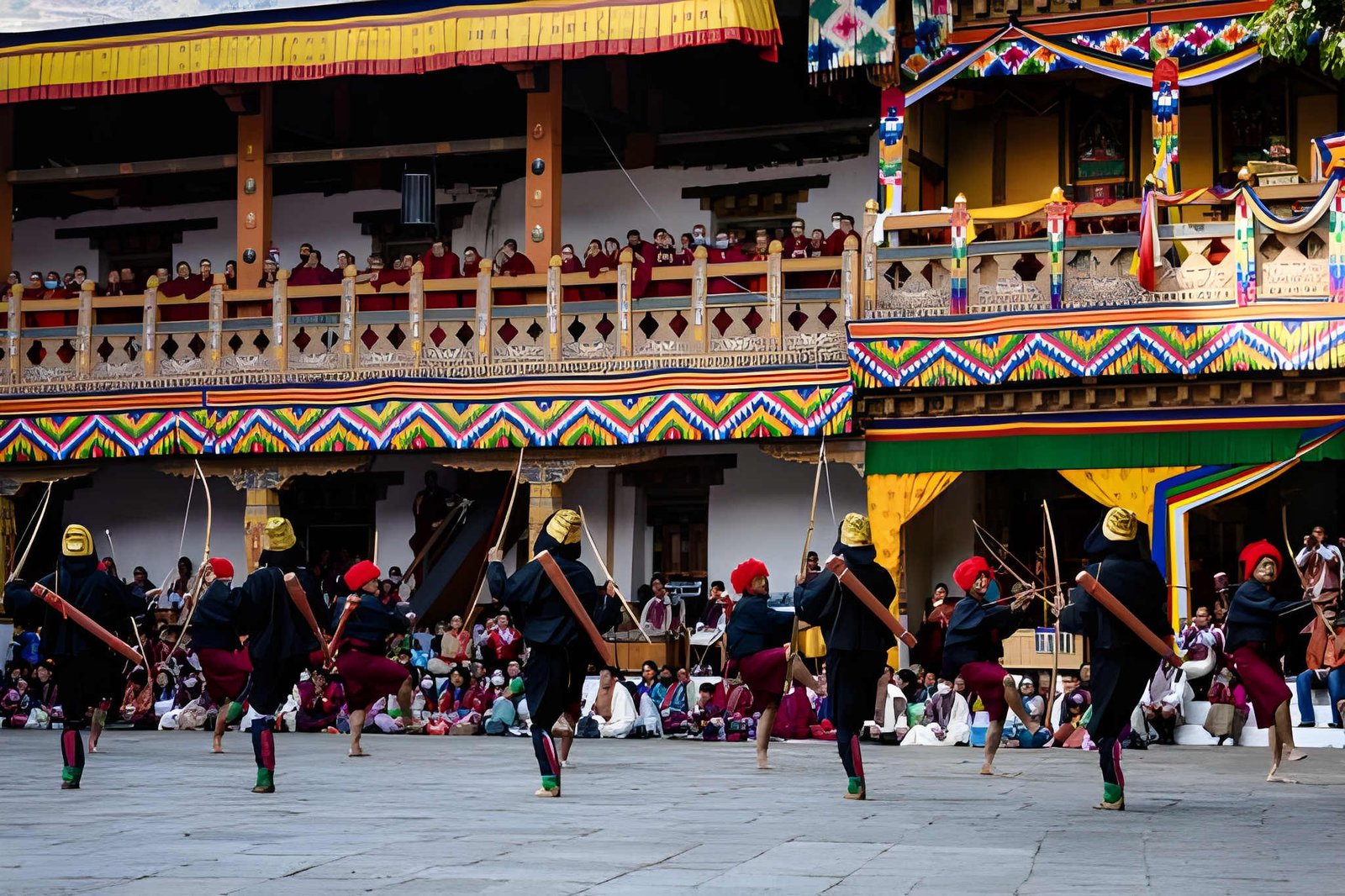
Bhutan’s most photographed festival. It’s held in the courtyard of the 17th-century Paro Dzong (Rinpung Dzong) each spring. It’s five days built toward a pre-dawn unveiling of a giant silk thangka depicting Guru Rinpoche, considered so sacred that it’s rolled away again before direct sunlight touches it.
If you’re only attending one festival in your lifetime, this is the one most Bhutanese themselves would point you toward.
Best for: first-time visitors, given how easily it pairs with a short Paro-based itinerary.
Thimphu Tshechu
Bhutan’s largest festival by attendance, held over three days at Tashichho Dzong in the capital. Thousands travel in from every corner of the country to attend, which makes it feel as much like a display of national identity as a religious event.
Best for: photographers, thanks to the sheer scale of costume, color, and crowd energy.
Punakha Drubchen and Tshechu
Combines a meditation retreat with a festival and culminates in a genuinely striking reenactment of a 17th-century military victory that helped unify Bhutan as one nation. The festival is completed with locals dressed in traditional armor performing the warrior dance.
Best for: culture enthusiasts who want real historical weight behind the spectacle.
Jambay Lhakhang Drup
Takes place at one of Bhutan’s oldest temples, tucked in the Bumthang Valley. The festival is best known for its Mewang fire ceremony and a midnight “naked dance” (not open to tourists) believed to bless fertility.
Best for: travelers seeking Bhutan’s more mystical, less touristed side.
Black-Necked Crane Festival
Unlike anything else on this list. This festival consists of a single day in Phobjikha Valley, celebrating the annual arrival of endangered, black-necked cranes, complete with a crane dance performed by local schoolchildren.
Best for: wildlife enthusiasts and conservation-minded travelers who want something genuinely different from a Tshechu.
Royal Highland Festival
Takes place at roughly 4,000 meters above sea level in Laya at one of Bhutan’s highest settlements. The festival was introduced in 2016 to celebrate the culture of Bhutan’s highland communities. Getting there means flying into Paro, driving several hours to Gasa, then trekking for around two days to Laya.
Laya sits in a restricted area, so a licensed operator handles the necessary permit alongside your visa.
Best for: adventurous travelers looking for something far off the beaten track.
Haa Summer Festival
A two-day celebration of nomadic herder life in the Haa Valley, blending traditional sport, craft, and food with far smaller crowds than the western festivals get.
Best for: travelers who seek authenticity rather than a spectacle.
Bhutan Festivals by Interest
We have made a shortcut to advise travelers on how they should approach this part of Bhutan’s culture.
| Traveler Type | Recommended Festival | Why |
| First-time visitor | Paro Tshechu | Easy access, iconic setting, spring scenery |
| Photographer | Thimphu Tshechu | Largest scale, most dramatic crowds and costumes |
| Wildlife enthusiast | Black-Necked Crane Festival | Rare conservation events paired with local culture |
| Spiritual traveler | Punakha Drubchen | Meditation retreats plus historical reenactment |
| Off-the-beaten-path traveler | Haa Summer Festival | Small crowds, authentic community life |
| Culture enthusiast | Jambay Lhakhang Drup | Ancient temple, deep ritual significance |
| Adventure traveler | Royal Highland Festival | High-altitude, remote highland culture |
If you can only build your trip around one festival, let your travel season decide first, then match it against what you’re hoping to feel like spectacle, stillness, wildlife, or something further off the map than most visitors ever get to.
Festival Types in Bhutan
Not every Bhutanese festival serves the same purpose, and knowing the difference helps you set the right expectations before you go. It’s a distinction worth keeping in mind as you plan, since a festival built around wildlife conservation is a genuinely different day out from a five-day religious Tshechu, even though both are referred to as “festivals”.
Religious festivals: Most Tshechus fall here and center on Guru Rinpoche and Vajrayana Buddhist teachings, expressed almost entirely through Cham dances performed by monks.
Cultural festivals: Celebrate regional identity and heritage rather than a specific religious event, with community, costume, and tradition taking center stage instead.
Nature festivals, like the Black-Necked Crane Festival, are relatively recent additions to the calendar, built around conservation and seasonal wildlife events rather than centuries-old religious observance.
Highland festivals, such as the Royal Highland Festival, showcase Bhutan’s nomadic and semi-nomadic communities living at extreme altitude. These festivals show a distinct world from the valley-based Tshechu tradition most travelers picture.
Knowing which category a festival falls into is a quick way to set your own expectations before you arrive. Imagine if you walk into a nature festival expecting the density of a Tshechu, and you might be surprised by how different the pace and crowd feel.
Planning Around Festivals
Festivals reward planning far more than most of Bhutan’s other attractions. Everything from hotel rooms to guide availability tightens up the closer you get to a major Tshechu, and we’ve seen travelers get caught out by leaving it too late.
Book early, especially for the big two.
For Paro and Thimphu Tshechu specifically, we recommend locking in flights, guides, and hotels at least six months ahead. Bhutan’s tourism model requires travel through a licensed operator, and experienced guides genuinely do get booked up during festival weeks.
Expect crowds at Paro and Thimphu.
These two draw the largest numbers, partly because both sit close to Paro International Airport, letting travelers attend on a shorter trip than festivals further east. If you’d rather trade crowd size for intimacy, the smaller regional festivals in Bumthang, Haa, or Laya offer the same spiritual weight with a fraction of the visitors.
Build in flex time for the further-flung festivals.
Festivals in eastern Bhutan can require ten days or more just to reach comfortably, while western festivals like Paro are workable in four. If a festival is the centerpiece of your trip, we often suggest adding four to five extra days to combine it with nearby sights like Tiger’s Nest Monastery or Punakha Dzong, rather than treating the festival as a standalone visit.
Accommodation gets tight fast.
Hotels in Paro and Thimphu fill up well ahead of their respective Tshechus, and while Bhutan’s growing hotel capacity means last-minute travel is more workable than it used to be, your choice of hotel narrows considerably the closer you book to the date. If you have a specific hotel or lodge in mind, it’s worth locking that in early rather than leaving it until closer to travel.
Some remote festivals require a permit, not just a booking.
The Royal Highland Festival is the clearest example. Laya sits in a restricted area of Gasa district, so foreign travelers can only visit as part of a licensed operator’s arrangements, who handle the trekking permit alongside your standard visa.
If a festival on your shortlist sits outside the well-trodden Paro–Thimphu–Punakha circuit, it’s worth asking directly whether a permit applies before building your dates around it.
Pack for the season, not just the festival.
Spring festivals mean cool mornings that warm up fast, so layers work better than heavy jackets. Autumn festivals can turn chilly once the sun dips behind the valley walls, so keep something warm on hand even during an otherwise mild day. If your festival sits at altitude, like the Royal Highland Festival in Laya, treat it the same way you’d treat a proper trek and make sure to properly acclimatize.
Festival Etiquette
This is the part most guides skim past, and it’s exactly where we’ve seen genuinely well-meaning travelers accidentally cause a moment of discomfort, not out of disrespect, of course, but not knowing the unwritten rules.
- Dress modestly: You don’t need to wear a gho or kira yourself, though some travelers do, and locals generally appreciate the gesture. What matters more is avoiding anything overly casual, sleeveless, or revealing. Think of it the way you’d dress for a significant religious ceremony back home, because that’s exactly what this is to the people around you.
- Photography has real limits: Public Cham dances are usually fine to photograph, and festival organizers expect it. But certain sacred moments, like the pre-dawn unveiling of a thongdrel at some festivals, or specific rituals inside a temple, are off-limits, sometimes for tourists entirely, sometimes just for cameras. When in doubt, watch what your guide does before raising your camera, or you know, just ask.
- Never enter a temple interior with shoes on, or without checking first: Many temple interiors are closed to photography altogether, and some restrict entry to certain areas for non-Buddhists. Your guide will know exactly where the line sits at each specific site. So, lean on them rather than guessing.
- Keep noise and movement to a minimum during prayer moments: Festivals have a carnival energy overall, and that’s genuinely part of the experience, but there are quieter moments of prayer or ritual where locals expect stillness. Take your cues from the people around you rather than the loudest part of the crowd.
- If invited to participate, a small offering of ngultrum is customary: You’ll sometimes see locals make small offerings during specific rituals. If a guide or local invites you to do the same, it’s a genuine gesture of respect to join in, not an expectation to spend more than a token amount.
- Let monks lead any interaction: If a monk or ritual performer approaches you or makes a dance move near where you’re standing, follow their lead rather than stepping forward or interacting first. This is their ceremony before it’s your spectacle.
- Children and families are welcome, and the etiquette is the same: Bhutanese families bring children of all ages to festivals, so there’s no special restriction here. But the same expectations around noise, dress, and photography that apply to adult visitors also apply to them.
None of this is complicated, and it isn’t meant to make you anxious about getting something wrong. Most of it comes down to simple observation. So, watch the family beside you, and you’ll usually know exactly what to do.
So, When Do I Visit Bhutan for the Festivals?
Spring and autumn aren’t just the best festival seasons, but the best overall seasons to visit Bhutan with clear skies, comfortable temperatures, and, in spring’s case, rhododendrons blooming across the trekking routes at the same time.
If festivals aren’t your focus, our full “Best Time to Visit Bhutan guide” breaks down weather, trekking conditions, and crowd levels month by month in more depth than we can cover here. It’s worth reading if you’re still deciding when to go before you’ve picked a festival at all.