
Activity: Trekking
Everest Panorama Trek
Overview: Everest Panorama Trek
Everest Panorama trek program is a 12-day tour in Nepal. A program primarily focusing on the adventure side with beautiful nature and culture. Starts with a day exploring 2000-year-old fascinating city of Kathmandu, then flies north towards the foothill of the mighty Everest to undertake 08 days popular medium graded Everest Panorama trek.
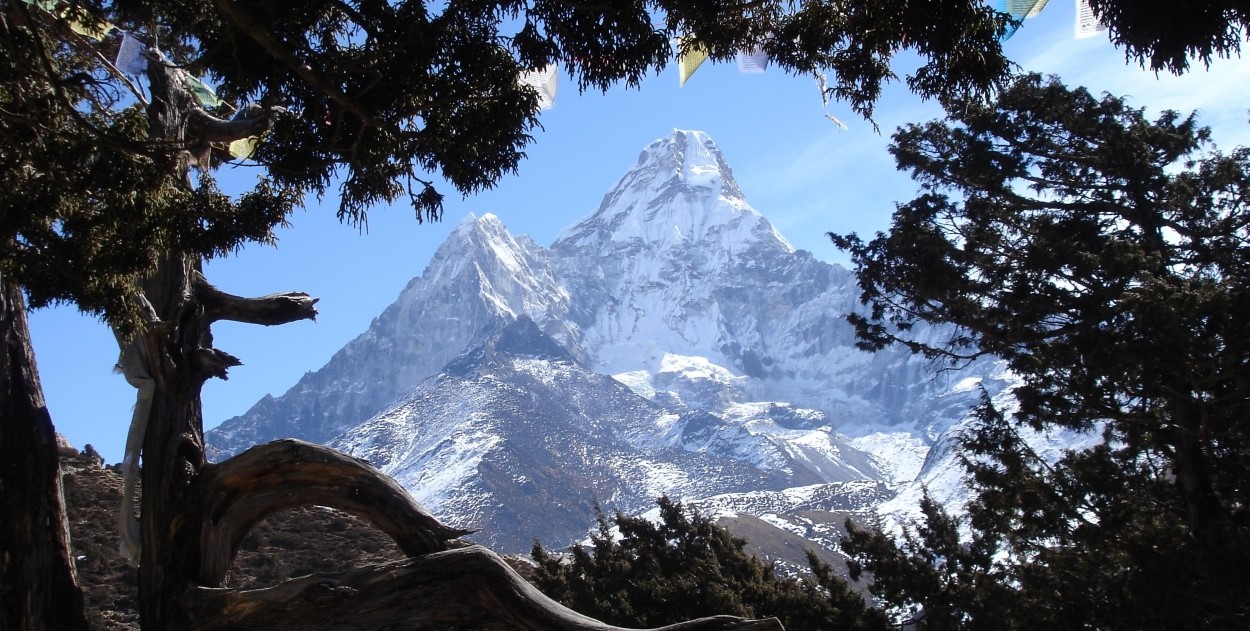
Everest Panorama Trek delivers the fascinating beauty of the Everest region without exposing yourself to the harsh challenges of an extreme high-altitude trek. The spectacular views of Everest, the highest peak of the world; Ama Dablam, another marvel of the Himalayas; Lhotse; Themserku and others. At the end of the journey, the Tengboche monastery blesses the weary traveller.
Dotted along the trail you have beautiful Sherpa villages, chorten, surrounded by fluttering prayer flags, with back drop view of the snowcapped peaks, the popular myth of “Shangri La’ will seem all too real. You will have an opportunity to interact, gain insights of their culture, their belief and their livelihood. Sherpas migrated from Tibet around 15th century still follow similar customs to the Buddhists of Tibet. Sherpas are now world-renowned mountain climbers.
Another great thing about this trek is since the lower section of the Everest region has some wonderful high class deluxe accommodation so one can trek advantage of it and trek it in a deluxe way with good accommodation and great food.
Highlights: Everest Panorama Trek
- Visit ancient Palaces
- Tour of age-old monastery, temples
- Panoramic view of the high Himalayas including the lofty Mt. Everest
- Pass through beautiful Sherpa Villages
- Monastery, Prayer Flags
- Museum
Challenges: Everest Panorama Trek
- The Everest Panorama trek reaches around 3,975 m although not that high compared to Everest Base Camp but still elevation above 2,500 m possesses a risk of altitude problem. So, we need to be a little bit careful.
- Most of the trek in the Everest Region depends on a flight to Lukla, these flights are very much weather dependent. As the airstrip being in a mountain region with the weather changing constantly, flights do get cancelled quite often sometimes it can be delayed for some hours whereas sometimes it can get cancelled for several days till weather gets better. This leads to disruption of program and requires adjusting the trip to other parts of Nepal or you might have to reschedule your international flight back home.
- Now a days during the season time most of the flights to Lukla operates from a town call Ramechhap, it is around 5 hour’s drive from Kathmandu. This is a small town with not many lodging facilities.
Program Route: Everest Panorama Trek
First two nights of Everest Panorama Trek will be spent in Kathmandu for preparation of the trek and exploring the interesting ancient palace, religion sites and local markets. Then we drive 5 hours to Ramechhap to catch up with 15 minutes flight to Lukla the starting point of our Everest Panorama trek. After we ascend slowly trekking up to the colourful and vibrant Sherpa capital, Namche Bazaar passing through several Sherpa villages, magnificent forest of rhododendrons, magnolia and giant firs. You will have plenty of time to relax and enjoy the grand surroundings. Then Everest Panorama takes us to Tengboche village famous for Tibetan Buddhist monastery of Tengboche and getting the panoramic view of the Himalayas. Then we retreat to Lukla to take a flight back to Kathmandu.
Everest Three Pass Trek
Everest Three Pass Trek: Overview
The Everest Three Pass Trek is the ultimate challenge for adventure enthusiasts seeking to experience more than the standard Everest Base Camp trail. This epic journey combines the crossing of three high-altitude passes—each exceeding 5,000 meters—five breathtaking summit viewpoints, and a visit to the base camp of the world’s highest peak, Mt. Everest. (8,848m)
Traversing diverse landscapes, including the well-trodden Khumbu trails and the remote Renjo La Pass region, the Everest Three Pass trek offers stunning vistas of the Himalayas, unparalleled cultural encounters in Sherpa villages, and a complete circuit trail without retracing steps. Despite the altitude and rugged terrain, the Everest Three Pass trek requires no technical climbing skills. With good fitness and prior trekking experience, adventurers can conquer this exhilarating challenge.
The Everest Three Pass Trek route can also be approached in reverse, starting west of Namche Bazaar via the Renjo La Pass to Gokyo, and then heading toward Everest Base Camp before descending to Lukla.
Everest Three Pass Trek: Highlight
- Support of your trek by our experienced staff.
- Good time for acclimatization in between trek period.
- Beautiful Sherpa villages and monasteries around Everest region.
- A visit to the famous Tengboche Monastery
- Crossing three high passes Kong Ma La (5,545 m), Cho La 5,420 m & Renjo La 5,370 m
- Summits three peaks i.e. Chhukung Ri (5,546 m), Kala Pathar (5,545 m) & Gokyo Ri (5,360 m)
- Fantastic sunset views over the Mt. Everest from Kala Patthar.
- Views of the entire south face of Mt. Everest.
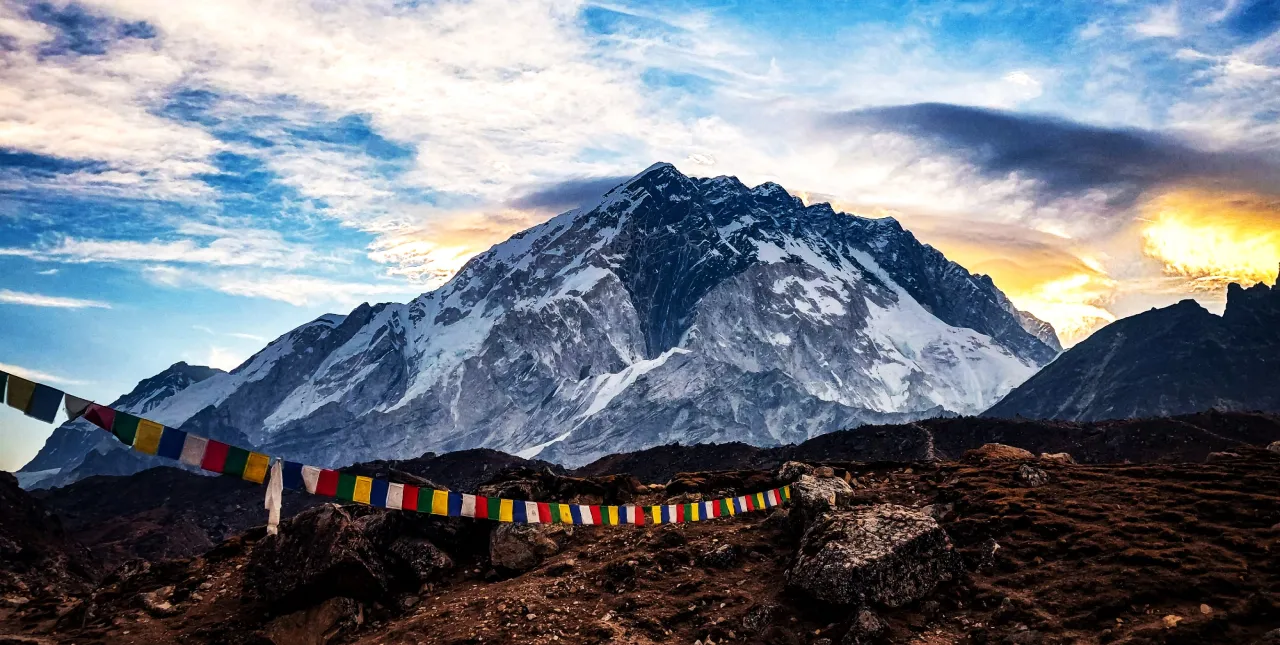
- Panoramic views of Mt. Pumori, Mt. Lobuche West (6,145m), Mt. Nuptse,Mt. Lhotse and Mt. Everest.
- A visit to the Everest Base Camp
- Sightseeing tours of Buddhist Monastery, Hindu Temple and Old Palaces
Everest Three Pass Trek: Trek Routes
The Everest Three pass treks can be approached from different trailheads within different time frame. Our 17 days Everest Three Pass trek program commences with an early morning flight to Lukla, from Ramechhap which is approximately 6 hours’ drive from Kathmandu. Then from Lukla trek traverse villages, rivers, mani walls, chortens, boulders with Tibetan mantras, prayer flags, with some view of Kusum Kangru Peak (6,367m).
Cross a suspension bridge floating above Dude Koshi River then a steep tough zigzag ascends to Namche (3,450m) bringing you to a zone where you may experience the effect of altitude. Namche is an acclimatization stopover village. Our Everest Three Pass Trek program spends two nights here allowing your body to acclimatize with an altitude before proceeding further higher.
Then, taking the less traveled upper trail, we gradually climb higher towards Dingboche, 4,360 meters, via Phortse village, 3,800 meters. There is a fantastic view of Mount Amadablam (6,814m) from the trail also one can visit the monastery in Pangboche. Spend another two nights in Dingboche acclimatizing before proceeding further higher. From Dingboche we can do a side trip like climbing Chukkung Ri (5,546 m) which provides excellent view of the high majestic Himalayas.
Everest Three Pass trek crosses the first pass Kongma La Pass (5,540m) to Pyramid for an overnight stay then proceed to Gorakshep. Crossing the Kongma La is a challenging one especially if there is a snowfall. Climb 5,545-meter-high Kalapathar in the afternoon to get the breath-taking sunsets with up-close views of the south face of the majestic Mount Everest.
Then next morning is to the base camp of the highest peak in the world, which is reached the following day by a constantly changing route to the bottom of Khumbu Icefall (5,340m). The base camp bustles with activity during expedition time as the climbing team participates in various activities. From the base camp the Everest Three Pass trek program retreat to Lobuje then trek west towards Gokyo valley to cross the second pass Cho La 5,420 m. Here we can see sacred lakes and spectacular panoramic view of the Himalayas from the top of Gokyo Ri 5,357m. The final stretch of the Everest Three pass trek travels through less trodden route crosses the last pass of the trek Renjo La (5,360 m) then return down to Lukla through different Sherpa villages thus accomplishing the beautiful and challenging trek.
Everest Three Pass Trek: Challenges to Consider
- High Altitude Risks: The trek reaches altitudes up to 5,545 meters, posing potential risks of altitude sickness. Proper acclimatization is crucial.
- Weather-Dependent Flights: Flights to and from Lukla are often delayed or canceled due to unpredictable weather.
- Ramechhap Flights: Most flights to Lukla now depart from Ramechhap, requiring a 4-5 hours early morning drive from Kathmandu.
- Unpredictable Weather: Weather changes can disrupt trekking plans or obscure mountain views, even during peak seasons.
- Challenging Terrain: Crossing snow-covered passes like Kongma La can be demanding, especially after snowfall.
Trekking

Voted as one of the best destinations for trekking in the world, the Himalayan region of Nepal is the ultimate goal for mountain lovers. Nepal’s unparalleled combination of natural beauty, challenges, cultural richness and friendly people attracts thousands of adventurers every year.
With the majestic Himalaya along with some highest pinnacles of the world spread from west to east of Nepal, the trek trail in the foothills of the Himalaya are bewildering. These are just not a pathways designed for recreational use, but a working transportation network for goods and people.
The trekking in Nepal is diverse in nature you have so much option to opt for. Your choice can be from one day hikes to witness breathtaking Himalayan views to multi days trek over stunning challenging mountain passes, from the busy well established lodge treks to completely off beaten treks where you need to spend the overnights in the camp far away from the civilization.
Nepal is also the land where you can trek almost any time of the year. Although post monsoon and spring time are the best time to trek in many parts of the region but there are some routes lying in the rain shadow area where trekking is excellent during monsoon season. Winter is cold so short and low altitudes can be undertaken.
Below, we have provided a quick guide to some of the great trekking options in Nepal. Please write to us if you are interested in any one of them. In case you are interested in designing your own package, please send us an email and we will help you figure things out.
Manaslu Circuit Trek
Overview of the Manaslu Circuit Trek
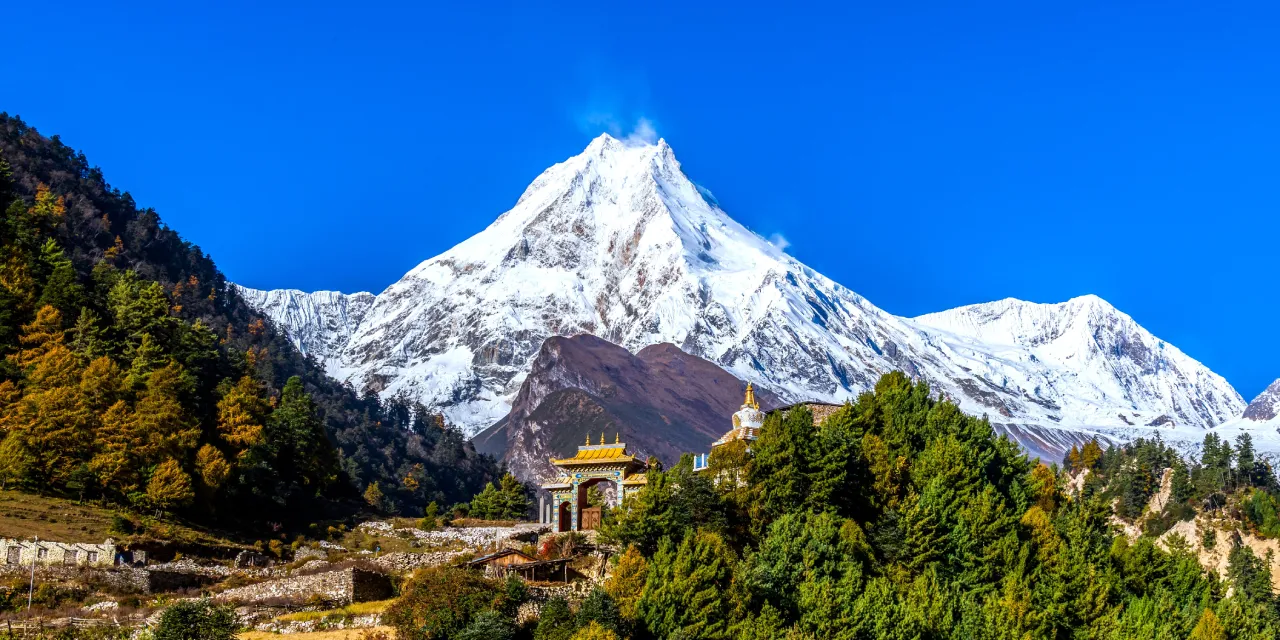
The Manaslu Circuit Trek is a rewarding 12 to 16-day journey through the remote west-central Nepal, circling the eighth-highest mountain in the world, Mount Manaslu (8,163m). Known for its raw beauty and limited crowds, this trek offers some of the most dramatic mountain scenery with a deep cultural experience in Nepal.
While the route does offer an unforgettable mountain adventure, it also takes you through a hidden world of the ethnic population inhabiting these valleys. You’ll walk past traditional villages where Gurung and Tibetan-influenced communities continue to live on for generations, while preserving their customs, architecture, and way of life. You’ll encounter a blend of Hindu and Tibetan Buddhist traditions, with monasteries, mani walls, and prayer flags woven into everyday life along the trail.
The landscape changes rapidly as you gain altitude. The trail begins in huge green forests and terraced farmland, gradually leading into alpine valleys and glacial moraines.
Although the Manaslu Circuit Trek has grown in popularity as an alternative to the Annapurna Circuit, it remains a restricted and less-traveled route. This keeps the experience quieter, more authentic, and closer to the true spirit of trekking in Nepal.
Widely regarded as one of the best treks in Nepal, the Manaslu Circuit is ideal for those seeking a challenging, culturally immersive, and off-the-beaten-path Himalayan adventure.
Manaslu Circuit Trek: Quick Details
Location: Nepal, in the remote Manaslu region (west-central Himalayas)
Distance: ~160–180 km (varies by route and side trips)
Difficulty: Moderate to challenging. Best suited for trekkers with good fitness and some high-altitude experience
Cost: $1,100–$2,700 (includes permits, guide, accommodation, and transport; varies by group size and service level)
Best Time to Trek: Spring (March to May) and Autumn (Mid-October to November) for stable weather and clear views
Trail Type: A bit remote trekking route with rugged trails, suspension bridges, alpine terrain, and high mountain passes
Permits Required: Restricted Area Permit (RAP), Manaslu Conservation Area Permit (MCAP), Annapurna Conservation Area Permit (ACAP)
Guide Requirement: Mandatory. Solo trekking is not allowed in the Manaslu region.
Group Join Available: Yes, with fixed departures and shared costs
Start planning your Manaslu Circuit Trek today or join a group departure for the best value.
Manaslu Circuit Trek Itinerary (13–16 Days)
The route follows the Budhi Gandaki River through deep gorges and traditional villages before opening into the high Himalayan landscapes of the Nubri Valley, eventually crossing the iconic Larke La Pass and linking with the Annapurna region.
Day 1–2: Arrival in Kathmandu → trek preparation and permits
Day 3: Drive from Kathmandu to Machha Khola (approx. 8–9 hours)
Day 4: Start trek from Machha Khola to Jagat along the Budhi Gandaki River
Day 5–7: Trek via Deng, Namrung, and Lho → enter the Nubri Valley
Day 8–9: Acclimatization and exploration around Samagaun (near Manaslu Base Camp)
Day 10: Trek to Samdo → gradual altitude gain
Day 11: Trek to Dharamsala (Larke Phedi), base of the pass
Day 12: Cross Larke La Pass (5,106m) → descend to Bimthang
Day 13: Trek through alpine forests to Tilje → join the Annapurna trail
Day 14: Drive back to Kathmandu via Besisahar
Manaslu Circuit Trek Packages & Cost
Knowing the costs upfront helps you budget wisely and choose a package that fits your style. The Manaslu Circuit Trek is a restricted-area trek, so a licensed guide is mandatory, and permits add to the overall cost. All our packages include permits, guide services, meals, accommodation, and transportation.
| Package (2026) | Accommodation | Meals | Guide | Transport | Extras | Estimated Cost (USD) |
| Premium | 5-star in Kathmandu; attached bathrooms along the trek, where available | Breakfast, lunch, dinner + afternoon tea and snacks | Senior licensed trekking guide | Private 4WD (4 participants) | Hot water bag from 4,000 m | $1,500–$1,900+ |
| Standard | 4-star in Kathmandu; attached bathrooms where available | Breakfast, lunch, dinner | Senior/Junior licensed trekking guide | Private 4WD (4 participants) | None | $1,100–$1,500 |
| Budget/Group Join | Non-star hotels in Kathmandu; basic teahouse rooms along the trek | Set-menu for breakfast, lunch, dinner | Junior licensed trekking guide | Shared vehicle transport | None | $900–$1,200 |
Cost Breakdown
- Permits: Manaslu Restricted Area Permit + Conservation Area Permit + Annapurna Conservation Area Permit (~$140–$180)
- Guide & Porter: $30–35/day for guide; $20–25/day for porter (optional)
- Accommodation & Meals: Included in packages; independent travelers ~$25–35/day for food
- Transport: Private jeep to trailhead and back ~$180–280 per vehicle (shared)
- Extras: Hot showers, charging, Wi-Fi ($3–8/day), tips for guides/porters
Challenges and Considerations for Manaslu Circuit Trek
The Manaslu Circuit Trek is breathtaking, but it demands preparation and awareness. Trekkers should understand the key challenges to stay safe and enjoy the journey.
- High-Altitude Risks: The trek reaches Larkya La Pass at 5,100 m, which can trigger altitude sickness as low as 2,500 m. Severe cases require immediate evacuation, sometimes by helicopter.
- Limited Medical Facilities: Medical support along the trail is minimal. Trekkers should carry a comprehensive first-aid kit, know basic altitude sickness management, and prioritize acclimatization at proper intervals.
- Road and Trail Conditions: The drive from Kathmandu to the trailhead is long and rugged, often affected by road construction or traffic. The trekking path is steep, rocky, and occasionally perched on cliffs, requiring caution and sure-footedness.
- Weather Dependency: Himalayan weather is unpredictable. Even in spring or autumn, sudden snow, heavy rain, or high winds can close passes or make trails hazardous, sometimes forcing retracing of steps.
- Seasonal Considerations: The best seasons for trekking are spring (March–May) and autumn (Mid-October–November) for clear skies and stable conditions. However, occasional poor weather may obscure views or slow progress.