

Destination: Nepal
Discover Nepal: A Land of Adventure, Culture, and Serenity
Nestled in the heart of the Himalayas, Nepal is more than just a paradise for trekkers and climbers—it is a land of ancient cultures, breathtaking landscapes, and warm hospitality. From towering snow-capped peaks to serene lakes and lush jungles teeming with wildlife, Nepal offers an unparalleled experience for every traveler.
Steeped in spiritual significance: Nepal is the birthplace of Lord Buddha, the apostle of peace and the Light of Asia. Here, Buddhism and Hinduism have coexisted in harmony for centuries, offering an abundance of sacred sites, from the grand stupas of Kathmandu to the revered Hindu temples along the banks of holy rivers.
A Cultural Gem
Kathmandu, the vibrant capital, is a treasure trove of history, art, and traditions. Wander through medieval palace squares, marvel at UNESCO-listed heritage sites, and immerse yourself in centuries-old rituals. Take part in the sacred kora around ancient stupas, listen to enchanting bhajans (devotional songs), and witness the mesmerizing evening Aarti at a revered Hindu temple.
A Wildlife Haven
Venture to southern Nepal, where the lush jungles of Chitwan National Park offer an unforgettable safari experience. Ride on elephant-back or take a jeep safari deep into the wilderness, where you might spot one-horned rhinoceroses, exotic bird species, and, if you’re lucky, the elusive Royal Bengal tiger.
An Adventurer’s Playground
For thrill-seekers, Nepal is the ultimate playground. Whether it’s hiking through scenic trails, conquering white-water rapids, mountain biking down rugged paths, soaring over Pokhara’s serene lakes while paragliding, or taking the ultimate leap with a bungee jump, the possibilities are endless.
Your Journey Begins Here
Nepal is a country that captivates the soul, where every visit leaves you longing for more. Join the Far Out team and embark on an unforgettable journey—one that blends adventure, culture, and tranquility into the perfect holiday experience.
Come explore, experience, and fall in love with Nepal!
Manaslu Circuit Trek
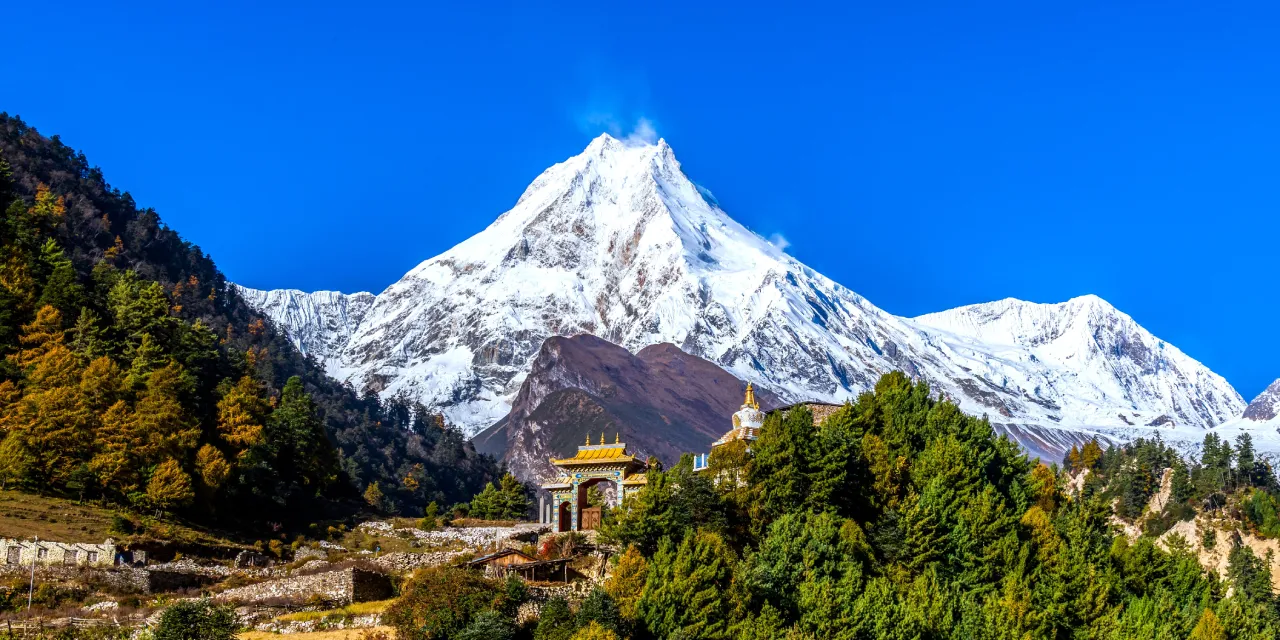
Overview of the Manaslu Circuit Trek
The Manaslu Circuit Trek is a rewarding 12 to 16-day journey through the remote west-central Nepal, circling the eighth-highest mountain in the world, Mount Manaslu (8,163m). Known for its raw beauty and limited crowds, this trek offers some of the most dramatic mountain scenery with a deep cultural experience in Nepal.
While the route does offer an unforgettable mountain adventure, it also takes you through a hidden world of the ethnic population inhabiting these valleys. You’ll walk past traditional villages where Gurung and Tibetan-influenced communities continue to live on for generations, while preserving their customs, architecture, and way of life. You’ll encounter a blend of Hindu and Tibetan Buddhist traditions, with monasteries, mani walls, and prayer flags woven into everyday life along the trail.
The landscape changes rapidly as you gain altitude. The trail begins in huge green forests and terraced farmland, gradually leading into alpine valleys and glacial moraines.
Although the Manaslu Circuit Trek has grown in popularity as an alternative to the Annapurna Circuit, it remains a restricted and less-traveled route. This keeps the experience quieter, more authentic, and closer to the true spirit of trekking in Nepal.
Widely regarded as one of the best treks in Nepal, the Manaslu Circuit is ideal for those seeking a challenging, culturally immersive, and off-the-beaten-path Himalayan adventure.
Manaslu Circuit Trek: Quick Details
Location: Nepal, in the remote Manaslu region (west-central Himalayas)
Distance: ~160–180 km (varies by route and side trips)
Difficulty: Moderate to challenging. Best suited for trekkers with good fitness and some high-altitude experience
Cost: $1,100–$2,700 (includes permits, guide, accommodation, and transport; varies by group size and service level)
Best Time to Trek: Spring (March to May) and Autumn (Mid-October to November) for stable weather and clear views
Trail Type: A bit remote trekking route with rugged trails, suspension bridges, alpine terrain, and high mountain passes
Permits Required: Restricted Area Permit (RAP), Manaslu Conservation Area Permit (MCAP), Annapurna Conservation Area Permit (ACAP)
Guide Requirement: Mandatory. Solo trekking is not allowed in the Manaslu region.
Group Join Available: Yes, with fixed departures and shared costs
Start planning your Manaslu Circuit Trek today or join a group departure for the best value.
Manaslu Circuit Trek Itinerary (13–16 Days)
The route follows the Budhi Gandaki River through deep gorges and traditional villages before opening into the high Himalayan landscapes of the Nubri Valley, eventually crossing the iconic Larke La Pass and linking with the Annapurna region.
Day 1–2: Arrival in Kathmandu → trek preparation and permits
Day 3: Drive from Kathmandu to Machha Khola (approx. 8–9 hours)
Day 4: Start trek from Machha Khola to Jagat along the Budhi Gandaki River
Day 5–7: Trek via Deng, Namrung, and Lho → enter the Nubri Valley
Day 8–9: Acclimatization and exploration around Samagaun (near Manaslu Base Camp)
Day 10: Trek to Samdo → gradual altitude gain
Day 11: Trek to Dharamsala (Larke Phedi), base of the pass
Day 12: Cross Larke La Pass (5,106m) → descend to Bimthang
Day 13: Trek through alpine forests to Tilje → join the Annapurna trail
Day 14: Drive back to Kathmandu via Besisahar
Manaslu Circuit Trek Packages & Cost
Knowing the costs upfront helps you budget wisely and choose a package that fits your style. The Manaslu Circuit Trek is a restricted-area trek, so a licensed guide is mandatory, and permits add to the overall cost. All our packages include permits, guide services, meals, accommodation, and transportation.
| Package (2026) | Accommodation | Meals | Guide | Transport | Extras | Estimated Cost (USD) |
| Premium | 5-star in Kathmandu; attached bathrooms along the trek, where available | Breakfast, lunch, dinner + afternoon tea and snacks | Senior licensed trekking guide | Private 4WD (4 participants) | Hot water bag from 4,000 m | $1,500–$1,900+ |
| Standard | 4-star in Kathmandu; attached bathrooms where available | Breakfast, lunch, dinner | Senior/Junior licensed trekking guide | Private 4WD (4 participants) | None | $1,100–$1,500 |
| Budget/Group Join | Non-star hotels in Kathmandu; basic teahouse rooms along the trek | Set-menu for breakfast, lunch, dinner | Junior licensed trekking guide | Shared vehicle transport | None | $900–$1,200 |
Cost Breakdown
- Permits: Manaslu Restricted Area Permit + Conservation Area Permit + Annapurna Conservation Area Permit (~$140–$180)
- Guide & Porter: $30–35/day for guide; $20–25/day for porter (optional)
- Accommodation & Meals: Included in packages; independent travelers ~$25–35/day for food
- Transport: Private jeep to trailhead and back ~$180–280 per vehicle (shared)
- Extras: Hot showers, charging, Wi-Fi ($3–8/day), tips for guides/porters
Challenges and Considerations for Manaslu Circuit Trek
The Manaslu Circuit Trek is breathtaking, but it demands preparation and awareness. Trekkers should understand the key challenges to stay safe and enjoy the journey.
- High-Altitude Risks: The trek reaches Larkya La Pass at 5,100 m, which can trigger altitude sickness as low as 2,500 m. Severe cases require immediate evacuation, sometimes by helicopter.
- Limited Medical Facilities: Medical support along the trail is minimal. Trekkers should carry a comprehensive first-aid kit, know basic altitude sickness management, and prioritize acclimatization at proper intervals.
- Road and Trail Conditions: The drive from Kathmandu to the trailhead is long and rugged, often affected by road construction or traffic. The trekking path is steep, rocky, and occasionally perched on cliffs, requiring caution and sure-footedness.
- Weather Dependency: Himalayan weather is unpredictable. Even in spring or autumn, sudden snow, heavy rain, or high winds can close passes or make trails hazardous, sometimes forcing retracing of steps.
- Seasonal Considerations: The best seasons for trekking are spring (March–May) and autumn (Mid-October–November) for clear skies and stable conditions. However, occasional poor weather may obscure views or slow progress.