

Destination: Nepal
Discover Nepal: A Land of Adventure, Culture, and Serenity
Nestled in the heart of the Himalayas, Nepal is more than just a paradise for trekkers and climbers—it is a land of ancient cultures, breathtaking landscapes, and warm hospitality. From towering snow-capped peaks to serene lakes and lush jungles teeming with wildlife, Nepal offers an unparalleled experience for every traveler.
Steeped in spiritual significance: Nepal is the birthplace of Lord Buddha, the apostle of peace and the Light of Asia. Here, Buddhism and Hinduism have coexisted in harmony for centuries, offering an abundance of sacred sites, from the grand stupas of Kathmandu to the revered Hindu temples along the banks of holy rivers.
A Cultural Gem
Kathmandu, the vibrant capital, is a treasure trove of history, art, and traditions. Wander through medieval palace squares, marvel at UNESCO-listed heritage sites, and immerse yourself in centuries-old rituals. Take part in the sacred kora around ancient stupas, listen to enchanting bhajans (devotional songs), and witness the mesmerizing evening Aarti at a revered Hindu temple.
A Wildlife Haven
Venture to southern Nepal, where the lush jungles of Chitwan National Park offer an unforgettable safari experience. Ride on elephant-back or take a jeep safari deep into the wilderness, where you might spot one-horned rhinoceroses, exotic bird species, and, if you’re lucky, the elusive Royal Bengal tiger.
An Adventurer’s Playground
For thrill-seekers, Nepal is the ultimate playground. Whether it’s hiking through scenic trails, conquering white-water rapids, mountain biking down rugged paths, soaring over Pokhara’s serene lakes while paragliding, or taking the ultimate leap with a bungee jump, the possibilities are endless.
Your Journey Begins Here
Nepal is a country that captivates the soul, where every visit leaves you longing for more. Join the Far Out team and embark on an unforgettable journey—one that blends adventure, culture, and tranquility into the perfect holiday experience.
Come explore, experience, and fall in love with Nepal!
Photography in the Himalayas

Photography in the Himalayas: A Paradise for Photographers
The Himalayas are a photographer’s dream land of stunning landscapes, rich cultural heritage, and diverse traditions. From breathtaking mountain vistas to vibrant street photography, the region offers endless opportunities to capture spectacular images.
Top Photography Destinations in the Himalayas:
- Nepal– A photographer’s haven with majestic peaks, ancient temples, and bustling cityscapes. Kathmandu’s street photography scene is unparalleled, while the Annapurna and Everest regions offer awe-inspiring mountain shots.
- India– A vast country with diverse photography themes: nature, culture, architecture, and wildlife. The Himalayan states of Himachal Pradesh, Uttarakhand, and Ladakh provide picturesque landscapes and vibrant traditions.
- Tibet– Known as the “Roof of the World,” Tibet’s landscapes feature snowcapped mountains, turquoise lakes, high-altitude nomads, and grand monasteries—a paradise for adventure photographers.
- Bhutan– Ideal for those seeking serene village life, spiritual monasteries, and colorful festivals. Bhutan’s well-preserved traditions offer an immersive photography experience.
Capture the Himalayas with Far Out Nepal
Far Out Nepal collaborates with professional photographers to craft exclusive photography itineraries. Whether you’re a beginner or a seasoned photographer, our guided tours ensure you capture the best of the Himalayas.
For more details, email us at [email protected]
Glimpse Of Nepal
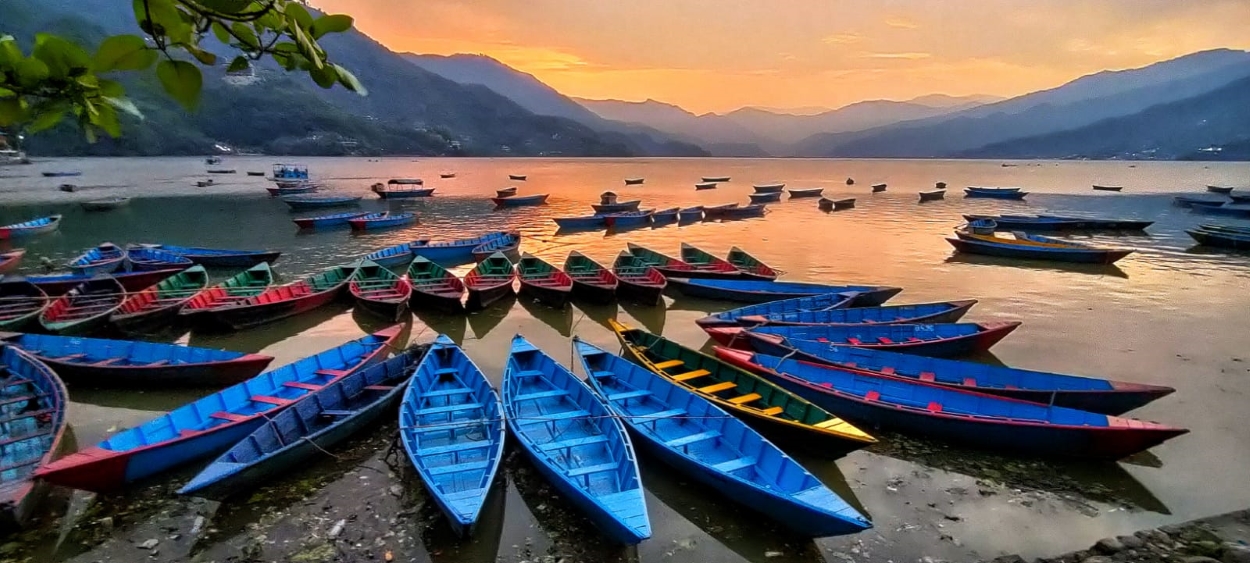
Nepal: Himalayas, Culture, Spiritual
Nepal, though compact in size, offers an extraordinary array of activities, landscapes, and cultural experiences for travelers. The nation is adorned with enchanting snow-capped peaks, ancient Buddhist stupas, revered Hindu temples, historic palaces, a blend of modernity, and warm-hearted people from diverse cultural backgrounds.
Glimpse Of Nepal: Overview
Our meticulously crafted Glimpse of Nepal tour is designed to immerse you in these multifaceted wonders. The journey encompasses the mid-hill and Terai regions, areas rich in Nepal’s history, politics, spirituality, architectural marvels, diverse flora and fauna, and awe-inspiring Himalayan vistas.
Kathmandu Valley: A Blend of History and Culture
Kathmandu, the capital of Nepal, boasts a history spanning over two millennia. The valley is home to three ancient cities—Kathmandu, Patan, and Bhaktapur—each featuring intricately designed palaces, temples, and courtyards. Major UNESCO World Heritage sites include:
- Swayambhunath Stupa (Monkey Temple) and Boudhanath Stupa, two of the world’s largest Buddhist stupas
- Pashupatinath Temple, a sacred Hindu site attracting thousands of devotees
- Durbar Squares of Patan, and Bhaktapur, showcasing exquisite Newari architecture
- Ason Market, a bustling hub reflecting the valley’s vibrant daily life
Australian Camp Trek:
A short, easy trek with an excellent view of the Himalayas is a great way to experience the rural areas of Nepal and to get the view of the mesmerizing views of the snowy peaks. This lies in the foothills of the Annapurna region.
Jungle Safari:
Chitwan south of Kathmandu is one of the few remaining undisturbed vestiges of the ‘Terai’ region rich in flora and fauna. A total of 68 species of mammals, 544 species of birds, 56 species of herpetofauna and 126 species of fish have been recorded in the park. The park is home to one of the last remaining populations of single-horned Asiatic rhinoceroses and one of the Bengal tiger’s last remaining habitats.
In addition to the above, one can experience the lifestyle of the Tharu Community, who inhabit in this area. Their unique customs, dances, and peaceful interaction with nature are hallmarks of their distinctive culture.
Glimpse of Nepal: Highlights
- Airport Assistance, Private Transfer, Hotel Check-in
- Cultural Heritage, Historic Temples, Local Market Tour,
- Special Aarti performance (prayer to the god) at the holy Hindu temple of Pashupatinath
- Ancient Architecture, Pottery Square, Buddhist Culture
- Himalayan Views, Scenic Trek, Sunset/Sunrise at Annapurna Range
- Dhampus Village, terrace rice fields, rhododendron forest
- Wildlife Safari, Tharu Village Visit, Cultural Dance
Glimpse Of Nepal:
Embark on this thoughtfully curated Glimpse of Nepal tour to experience the essence of Nepal’s cultural richness, natural splendors, and unparalleled hospitality.
Kathmandu With Nature
Nepal
Nepal is a land of majestic Himalayas, ancient stupas, temples, and fascinating palaces. It is a magical realm where one can embrace challenges, gain profound knowledge, and find inner peace. Nestled between China and India, this tiny Himalayan nation is a must-visit destination for its unmatched natural beauty and cultural wealth.
Kathmandu With Nature: Overview
Kathmandu With Nature is a 07 Day program in the 2000-year-old city which has rich history, well preserved culture, ancient historical monuments and special spiritual spots listed as World Heritage Sites. Program is designed to get the best experience of Kathmandu valley.
Tour takes you to ancient palaces that showcase the rich culture of the Newari people, explores centuries-old Buddhist and Hindu spiritual sites, and walk through narrow lanes lined with intricately carved houses and bustling local markets.
Additionally, Kathmandu with Nature program takes you beyond the city to tranquil villages and serene landscapes where you can experience Nepal’s rural charm and breathtaking Himalayan vistas.
Kathmandu: The Heart of Nepal
At an elevation of 1,300 meters above sea level, Kathmandu, the capital of Nepal, is not just the political center of the country but also a treasure trove of history and culture. Historically, the Kathmandu Valley was a vast lake, which, according to legend, was drained by the Buddhist saint Manjushree. This transformation gave rise to fertile lands that eventually became home to the valley’s first settlers.
Today, Kathmandu is a city where the old and new coexist harmoniously. Known as the “Playground of the Gods,” the valley is dotted with hundreds of temples, ancient palaces, and monuments. The city’s spiritual landscape is primarily influenced by Hinduism and Buddhism, creating a unique atmosphere that is palpable in every corner of the valley. Kathmandu is not just a city; it is a vibrant fusion of sacred traditions, bustling markets, and modern development.
Kathmandu Valley Tour: Highlight
- Explore ancient palaces, architectural masterpieces reflecting Nepal’s history and culture.
- Visit age-old Buddhist and Hindu spiritual sites.
- Circumambulate stupas to connect with Lord Buddha’s message of peace.
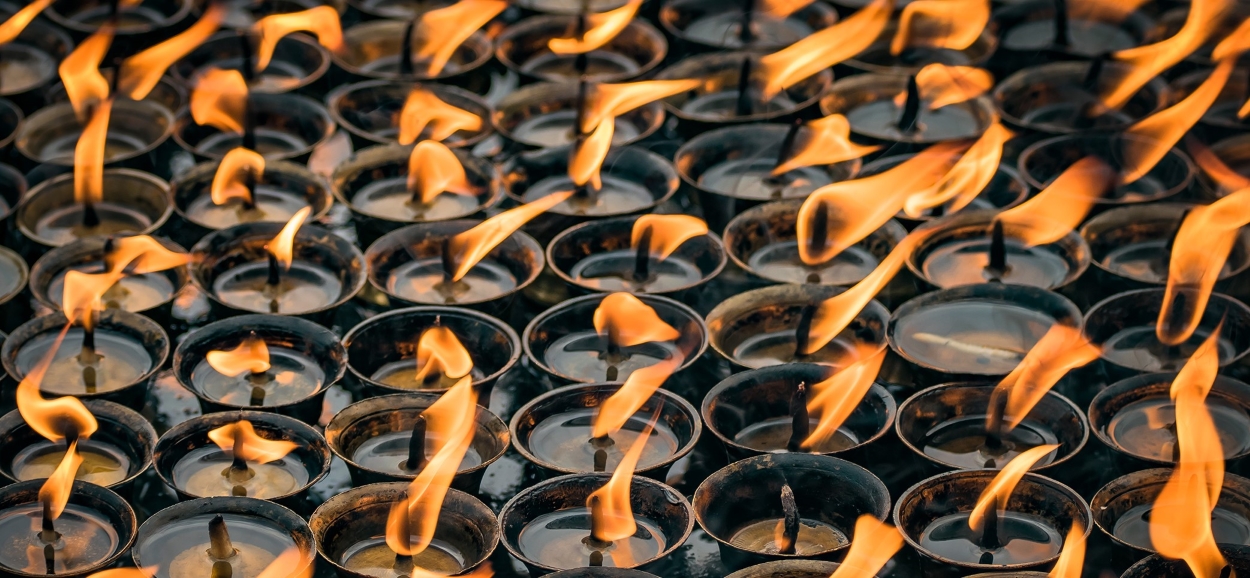
- Light butter lamps as an offering for loved ones.
- Discover a typical local village and experience Nepal’s rural lifestyle.
- Enjoy gentle hikes through picturesque landscapes.
- Take in panoramic views of the Himalayas (weather permitting).
Nepal Tour
Nepal the king of the Himalayas is just not the paradise for trek lovers but this small country nestled in the lap of the Himalayas is also home to exotic cultures, ancient religion, diverse wildlife, serendipitous lakes and rivers, and affable people. Although small in size Nepal has so much to see and explore travelers find it hard to accommodate everything in, that is the reason why many people returns back for many different activities.
It is the land where Lord Buddha the apostle of peace and light of Asia was born. Here the Buddhist and Hindu religions have fused it perfectly for centuries. There is no shortage of pilgrimage sites belonging to either of these two religions.
Kathmandu, the capital city is the epicenters of culture and art, and is home to the ancient Newari culture . While the city isn’t the biggest in the world, the number of fascinating historical sites located here, as well as the cultural festivities, means that there is always something to do.
Stroll through the medieval city squares enjoying the rich heritage site, join in the kora around centuries old stupas, hear the Bhajan and witnessed the Arati performed at the holy Hindu temple, enjoy the spectacular views of the Himalayas from the view point.
Southern Nepal boasts a significant number of national parks and wildlife areas. Particularly famous is the Chitwan national park. Here, travelers get the opportunity to partake in a jungle safari on an elephant’s back. Going deep into the heart of the jungle, travelers can expect to see a wide variety of animals, including the majestic rhinoceros. There is also the hope of catching a glimpse of the majestic Royal Bengal tiger.
In case if you want to spice up your tours with bit of adventure options are plenty. Day hike, white water rafting, kayaking, Mt. Biking, paragliding, bungee, swing can all be fused together creating it a perfect holiday.
Join the Far Out team and be part of this experience.
Everest Helicopter Tour
Private Charter Helicopter Flight with Far Out Nepal
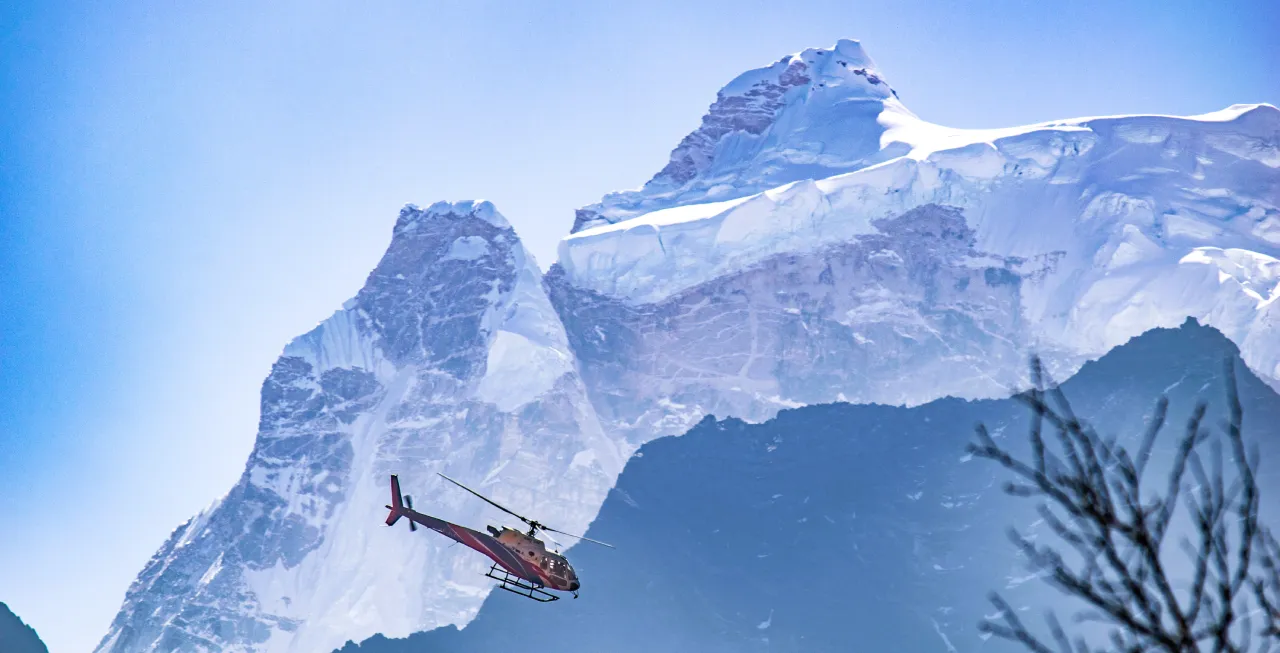
Nepal, home to eight of the world’s fourteen peaks above 8,000 meters, is a paradise for adventurers and mountain lovers. The most thrilling way to witness the breathtaking beauty of these snowy giants in a short time is through an Everest Helicopter Tour.
Flying in an AS350 B3 helicopter, this tour offers an unforgettable aerial adventure over the Himalayas. Whether you are short on time or prefer a luxurious way to experience this exclusive helicopter tour is designed to create memories that last a lifetime.
Everest Helicopter: Highlights
- Around 4 hours adventure Helicopter flight from Kathmandu to EVEREST REGION (Khumbu Region) and back
- An aerial view of the green rolling hills as you fly towards the Khumbu region
- During the short stopover at Lukla you can witness Lukla which is the gateway to Everest Base Camp Trek
- First sweep through the helicopter flight to Gokyo Valley famous for five glacier lakes, Nepal longest glaciers with some fine view of the Himalayas
- Cross through Cho La Pass with amazing view of the high Himalayas
- You have a view aerial view of Khumbu Glacier, base camp of the highest peak of the world.
- The breathtaking view from Mt. Everest (8.848 m), Mt. Ama Dablam (6.856 m), Mt. Nuptse (7.861 m) and Mt. Pumori (7,165 m)
- Stop over at the highest point hotel in the world with delicious breakfast and 360 – degree stunning view of the lofty Himalayas
- Comfortable private journey with just three passengers having window seats throughout the trip with no hanging out at Pheriche which is at an elevation of 4371 m poshing a risk of altitude waiting for the other passenger to finish the flight
- Medical Oxygen in case of emergency
- Reliable Helicopter company with Experience Pilot to take you in once in lifetime experience.
Everest Helicopter Flight Route:
- The helicopter flight to Everest base camp begins in the early hours from Kathmandu Domestic Airport then flies eastward via Bhaktapur, hills of Nagarkot village.
- It then passes through Jiri village flying higher towards Lukla for refuelling.
- Stop at Lukla to refuel and take a Helicopter flight to Everest base camp.
- Then after a brief stop it flies Northwest towards Gokyo Valley cross Cho La pass towards Everest Base Camp
- After the overflow of Everest Base Camp and getting a superb view of the Himalayas it returns down to Syangboche where the Everest View Hotel is situated for the delicious breakfast.
- Here we spend some time having breakfast and enjoying the view of the lofty Himalayas.
- Then back to Lukla for refueling
- We then fly back to Kathmandu
Challenges & Important Considerations:
- Weather conditions must be favorable for a smooth experience.
- Physical fitness is necessary, and consulting a physician before flying is recommended.
- Total flight duration is approximately 4/5 hours including breakfast
Australian Camp Day Hike
Australian Camp Day Hike: A Short Himalayan Adventure from Pokhara
The Annapurna Himalayan Range, located in north-central Nepal, is home to some of the world’s most majestic peaks, including Annapurna I (8,091 m)—the tenth-highest mountain globally. The region boasts 13 peaks over 7,000 meters and 16 over 6,000 meters, making it a dream destination for trekkers and mountain lovers alike.
This breathtaking range stretches approximately 55 kilometers, bordered by the Kali Gandaki Gorge to the west, Marshyangdi River to the northeast, and the Pokhara Valley to the south. Notably, Annapurna I was first climbed by a French Expedition in 1950 via the north face. Today, the entire massif lies within the Annapurna Conservation Area Project (ACAP) and is home to several world-famous trekking routes.
The Annapurna region attracts nearly two-thirds of all trekkers visiting Nepal, thanks to its accessibility, scenic beauty, and cultural richness.
Australian Camp Day Hike: Overview
The Australian Camp Day hike is an easy, scenic hike that offers panoramic mountain views, cultural immersion, and the tranquil beauty of the lower Himalayas. This short trek is ideal for families, beginners, and anyone with limited time looking for a rewarding trekking experience near Pokhara. It is around 26 Kms from Pokhara Valley.
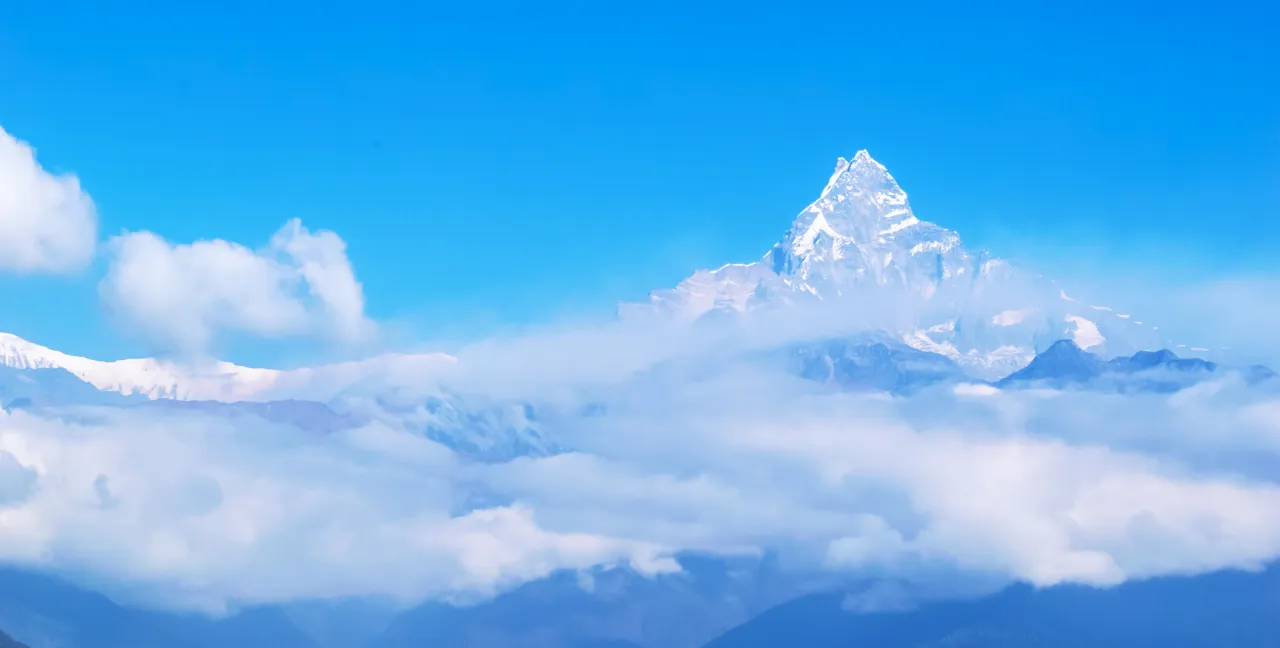
You’ll walk through rhododendron forests, terraced fields, and traditional Gurung villages, with constant views of Annapurna, Machhapuchhre (Fishtail), and Dhaulagiri ranges. A highlight of the trip is lunch at Australian Camp, surrounded by peaceful mountain scenery.
Australian Camp Day Hike: Highlights
- Scenic Trails: Hike through dense rhododendron forests, terraced fields, and beautiful hillside farms.
- Breathtaking Mountain Views: Witness awe-inspiring vistas of Annapurna, Dhaulagiri, and Machhapuchhre peaks.
- Gurung Culture: Walk through Dhampus village, a traditional Gurung settlement, offering rich cultural encounters.
- Quick Access: Just a 45-minute drive from Pokhara to the trailhead at Kande.
- No Altitude Risk: With a maximum elevation of 2,100 meters, there’s minimal risk of altitude sickness.
Australian Camp Day Hike: Conclusion:
If you’re seeking a short, scenic, and culturally rich trek in the Himalayas, the Australian Camp with Dhampus Trek is an unforgettable choice just a short drive from Pokhara. Perfect for beginners or those looking for a quick escape into nature with minimal preparation, this trek truly offers the best of Nepal in a day.
Upper Mustang Trek
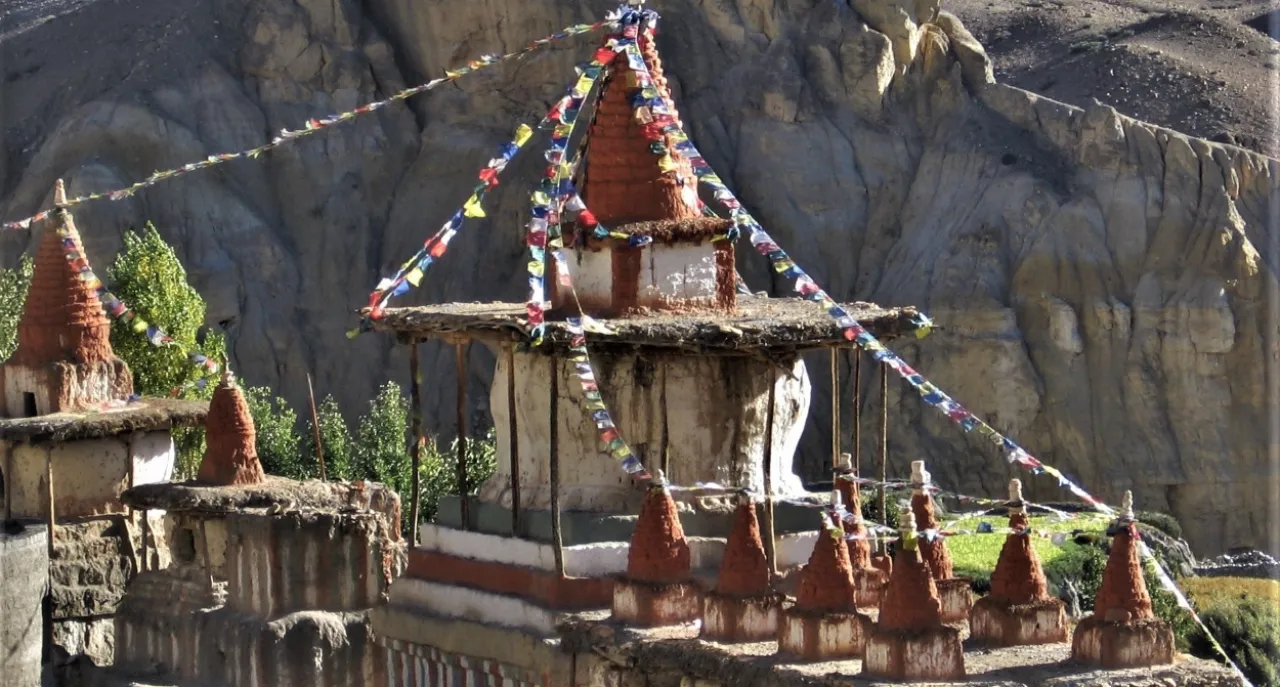
Overview: Upper Mustang via Nar Valley – A Hidden Gem in the Annapurna Region
The Upper Mustang trek via the Nar Valley in central Nepal is an ideal trek trip for approaching the walled city of Lo Manthang via a remote alternate trek trail escaping the previously well-traveled route, which has been somewhat disrupted by the road.
This trail is an ancient salt trade route connecting the two great mystical places Nar and Upper Mustang in a weeklong traverse through wild, uninhabited areas with crossing of the high Teri La Pass (5,560m)
The gorgeous valley with fortified Tibetan Villages of Nar to an arid and dry Upper Mustang enriches the experience of travelers with an ancient Tibetan cultures and Buddhist traditions. Upper Mustang trek via Nar valley allows you to have the experience of the off beaten trails, challenges of crossing of high pass, encountering remote villages with ancient Tibetan features which is well preserved till date, the age-old monasteries, exploration of 3 to 4 century ancient caves, amazing landscapes, rock formations and without missing the superb views of the Himalayas.
Nar Village: Nar at 4,110 m is a treasure trove of ancient Buddhist houses, monasteries some dating back over thousand years. Here one can witness the ancient settlement and experience the rich Tibetan culture in an undisturbed form. You can see the locals with traditional dress showcasing their distinct cultural identity. The dramatic mountain views and great alpine scenery surround the village. Mountains like Annapurna II, Gangapurna and Tilicho Peak can be seen during good weather days.
Teri La Pass (5,560m): Teri La (pass) at 5,560 m north of Upper Mustang and close to Damodar Mountain is a remote, adventurous serene high-walking crossing. Although categorized as an easy one but due to remoteness and altitude the crossing can be challenging one. But the challenges are rewarded with a breathtaking 360° Himalayan vista from the summit.
Lo Manthang: Lo Manthang in Upper Mustang is the ancient capital city of Upper Mustang with strong ancient Buddhist cultures, thousand years old monasteries, mysterious cave and amazing landscapes. Founded in 1380, it is also called the Walled City of Upper Mustang. Most of the local houses are built out of mud brick.
Once upon a time, the district of Mustang was a part of the Tibetan empire. Sheltered from hyper-commercialized forms of tourism, it is known as the last bastion of authentic Tibetan culture. The trek through this region therefore involves uncovering the hidden mysteries of this ancient world.
Highlights: Upper Mustang Trek via Nar Valley
- Visit Nar Village (4,110m) – a hidden Tibetan village with authentic Buddhist architecture, traditional lifestyles, and dramatic mountain backdrops.
- Cross the wild and remote Teri La Pass (5,560m) – a challenging yet rewarding high-altitude crossing with breathtaking views.
- Explore the mysterious caves and monasteries of Upper Mustang, some dating back to the 14th century.
- Discover Lo Manthang – the ancient capital of Mustang with its royal palace, monastic complexes, and rich Tibetan heritage.
- Traverse exotic landscapes filled with deep canyons, red rock cliffs, eroded formations, and colorful desert-like scenery.
- Trek through a part of the ancient salt trade route that once connected Tibet with Nepal.
Trek Route: Upper Mustang Trek via Nar Valley
Your adventure begins with a scenic drive from Kathmandu to Besisahar, followed by an off-road journey to Dharapani, the starting point of the trek. The trail ascends through Nar Valley, where you acclimatize and explore the village before heading toward the high, remote Teri La Pass. After crossing the pass, the trail descends into the magical terrain of Upper Mustang, culminating in Lo Manthang.
From Lo Manthang, you’ll return via Jomsom, visiting ancient cave systems and heritage sites along the way, before flying back to Kathmandu
Is This Trek for You?
If you’re seeking something beyond the typical Everest or Annapurna Circuit, and you’re ready to take on a remote, physically demanding trek through spiritual landscapes and untouched cultures, then Upper Mustang Trek via Nar Valley is the perfect journey.
Kanchenjunga Trek

Overview of the Kanchenjunga Trek
Explore the Remote Base Camps of the World’s Third-Highest Mountain
The Kanchenjunga Trek is a remote and adventurous Himalayan journey that takes you to both the North and South Base Camps of Mount Kanchenjunga (8,586 m). It can be done as a full circuit or shorter base camp variations, offering a challenging yet less crowded alternative to Everest and Annapurna treks.
Located in the far eastern region of Nepal near the Indian border, this trek is perfect for those seeking raw wilderness, fewer crowds, and a truly off-the-beaten-path experience.
This circular trekking route passes through the traditional homelands of the Rai, Limbu, and Sherpa communities, offering a rare blend of cultural depth and natural beauty. Along the way, you’ll encounter everything from lush subtropical forests and terraced hills to alpine meadows, glaciers, and high mountain passes.
The region lies within the pristine Kanchenjunga Conservation Area, a rich biodiversity hotspot home to rare wildlife such as the red panda, snow leopard, Himalayan black bear, clouded leopard, and Assamese macaque.
Despite its physical demands and remoteness, the Kanchenjunga Trek rewards you with unmatched solitude, dramatic landscapes, and one of the most authentic trekking experiences in Nepal.
Kanchenjunga Trek: Quick Details
- Location: Eastern Nepal, in the remote Kanchenjunga region near the Sikkim border(India)
- Duration: 18–26 days (depending on route and acclimatization days)
- Max Altitude: 5,143 m (North Base Camp – Pang Pema)
- Difficulty: Strenuous. Best suited for experienced trekkers with strong fitness and prior high-altitude exposure
- Cost: $1,800–$3,500 (varies by itinerary, group size, and service level)
- Best Time to Trek: Spring (March to May) and Autumn (Mid-October to November) for stable weather and clear mountain views
- Trail Type: Remote wilderness trek with long walking days, rugged terrain, river crossings, alpine landscapes, and glacier viewpoints
- Permits Required: Restricted Area Permit (RAP) and Kanchenjunga Conservation Area Permit (KCAP)
- Guide Requirement: Mandatory. Solo trekking is not allowed in the restricted Kanchenjunga region.
- Group Join Available: Yes, with fixed departures and shared cost options
Plan your Kanchenjunga Trek with local experts or join a group departure for a safer, more cost-effective adventure.
Kanchenjunga Trek Route Overview (18–26 Days)
The Kanchenjunga Trek follows a remote circular route in eastern Nepal, starting with a flight to Bhadrapur and a long drive to Taplejung. The trail gradually ascends through traditional villages, dense forests, and alpine landscapes before reaching both the North and South Base Camps of Mount Kanchenjunga, then looping back through the southern valleys.
Day 1–2: Arrival in Kathmandu → flight to Bhadrapur → drive to Taplejung (trek preparation and permits)
Day 3: Jeep drive to trek starting point → begin trek through lower hill villages.
Day 4–8: Trek through Sekathum, Amjilosa, and Gyabla → enter remote valleys and forests.
Day 9–11: Trek via Ghunsa → acclimatization and gradual altitude gain
Day 12–14: Trek to Pangpema (5,143 m) → North Base Camp with views of glaciers and peaks like Kumbhakarna
Day 15–17: Return to Ghunsa → transition toward southern route via high mountain passes
Day 18–20: Trek to Ramche and Oktang → South Base Camp with views of the Yalung Glacier and Kanchenjunga’s south face
Day 21–23: Descend through villages like Khebang → forests, terraced fields, and cultural settlements
Day 24–26: Drive back to Bhadrapur → flight to Kathmandu
This route offers a complete Himalayan experience, combining remote wilderness, cultural villages, and both base camps in one epic journey.
Challenges and Considerations: Kanchenjunga Trek
The Kanchenjunga Trek is an isolated wonderland, but it demands preparation and awareness. Trekkers should understand the key challenges to stay safe and enjoy the journey.
- High Altitude Risks (5,143 m+): The trek reaches extreme elevations at North Base Camp, increasing the risk of altitude sickness. Proper acclimatization, hydration, and pacing are essential for safety.
- Long & Physically Demanding Route: This is a strenuous 18 to 26-day circuit with long walking hours, steep ascents, and remote terrain. The trek is best suited for trekkers with strong fitness and prior high-altitude experience.
- Basic Accommodation & Limited Facilities: Expect simple teahouses with basic and minimal amenities. The remoteness of the region means comfort takes a backseat to authenticity.
- Challenging Access & Travel Logistics: Direct flights to Suketar (Taplejung) are unreliable, so most itineraries involve flying to Bhadrapur followed by a long, bumpy 7–9 hours drive to reach the trailhead.
- Unpredictable Mountain Weather: Conditions can change rapidly, especially at higher altitudes and near passes, requiring flexibility in itinerary and proper gear preparation.
Manaslu With Annapurna Trek
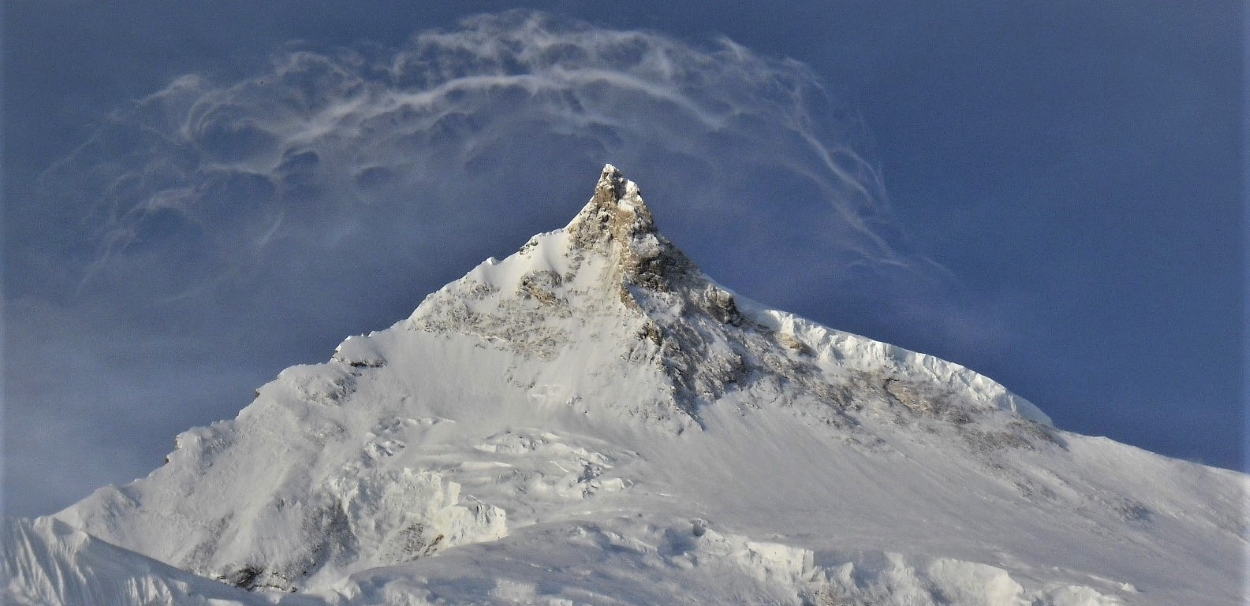
Manaslu With Annapurna Trek: Overview
Manaslu with Annapurna trek is a 23-day adventure in the central part of Nepal. This central region of Nepal is dominated by giant lofty Himalayas like Manaslu (8,163 m), Annapurna Ranges (8,091 m), and many other Himalayan Peaks. Basically, the program is traversing through the foothills of Mt. Manaslu (8,163 m) and Mt. Annapurna range (8,091m), eight and the ten highest peaks in the world. This part of the region has some of the best diverse features of central Nepal. The terrain, landscapes, people, cultures and lofty Himalayas are just amazing. Crossing three high passes above 5,000 m provides you with challenge and rewards you with spectacular views of the high Himalayas. Also, there will be an opportunity to explore the Phu & Nar Valley which was opened to tourism only from 2002. The valley with strong Tibetan culture has medieval stone walled Tibetan villages, impressive Chortens, Monasteries, colorful prayer stones and encountering blue sheep on the trail.
Manaslu With Annapurna Trek: Highlights
- Manaslu Circuit: This segment leads trekkers around Mount Manaslu (8,163 meters), the world’s eighth-highest peak. The trail passes through the Manaslu Conservation Area, offering views of snow-capped mountains, lush forests, and traditional villages. A significant challenge and highlight of this circuit are the crossing of the Larkya La Pass at 5,235 meters, which provides panoramic vistas of the surrounding peaks.l
- Phu and Nar Valleys: Diverging from the main trail, trekkers venture into the remote Phu and Nar Valleys, home to ancient Tibetan-influenced settlements. These villages have preserved their traditional culture, lifestyle, and religious practices. Visiting local monasteries and witnessing daily rituals offers insight into a way of life that has remained unchanged for centuries.
- Annapurna Circuit Integration: After exploring the secluded valleys, the trek converges with the Annapurna Circuit, one of Nepal’s most celebrated trekking routes. This section includes the ascent to the Thorong La Pass at 5,416 meters, presenting trekkers with breathtaking landscapes ranging from arid highlands to verdant subtropical forests.
Manaslu With Annapurna Trek: Challenges
- Manaslu with Annapurna trek is on a high-altitude trail reaching up to 5,416 m which susceptible to altitude problem. This is a real challenge as it can affect anyone depending on an individual from an elevation of 2,500m.
- Altitude effect can be in a different form depending on the individual. In case of severity, one needs to be helicoptered out for immediate medical attention otherwise it can be fatal.
- No proper medical clinic on the trail
- Drive from Kathmandu can be delayed due to ongoing road repairing projects, sometimes you may have traffic jam, and some parts of the drive will be on the unpaved rocky mountain road trail.
- In case of heavy snowfall and if the pass is closed the return trip will follow the same trail back where it started as it does not have an alternate route.
- Weather plays a crucial role for having the successful and enjoyable trek in the Himalayas, so it is necessary to choose the right season for the trek.
- Since Jomsom airstrip is in the mountainous terrain so weather plays a crucial role for the operation of flight. In case of cancellation of flight, the option is driving back to Pokhara through mountainous terrain road which takes around 7 hours. Flight Pokhara Kathmandu is much more reliable so after reaching Pokhara we can take the flight back to Kathmandu. (subject to weather conditions)
Manaslu With Annapurna Trek: Trekking Route
1. Manaslu Circuit
- Starts at Maccha Khola near Arughat and follows the ancient salt-trading route along the Budhi Gandaki River.
- Pass through Gurung communities and Nupri Valley, inhabited by Tibetan-influenced locals.
- Cross Larkya La Pass (5,235m) with breathtaking glacier views.
- Nar Phu Valley
- Diverges from the main Annapurna trail at Koto, leading to the remote and tranquil Nar and Phu villages.
- Explore Tibetan culture, abandoned Khampa settlements, and see herds of blue sheep.
- Cross Kang La Pass (5,320m) and rejoin the Annapurna Circuit.
- Annapurna Circuit
- Continue along the popular Annapurna Circuit, crossing the Thorong La Pass (5,416m) to Jomsom.
- Witness a blend of cultural and natural beauty with more trekkers sharing the trail.
- Conclusion
- Fly from Jomsom to Kathmandu via Pokhara
Poon Hill Trek
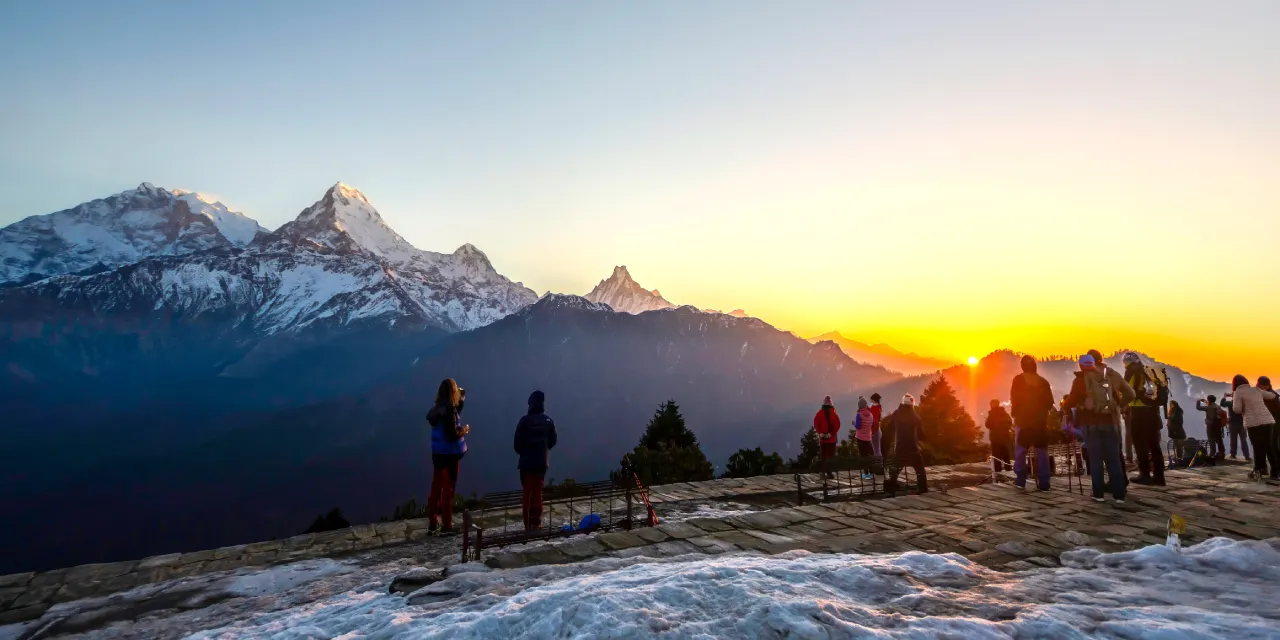
Overview : POON HILL TREK
Poon Hill trek is one of the most well-liked short treks in Nepal. This trek may be approached from several directions and completed in different time frames by incorporating other beautiful trails. Poon Hill trek route lies north of Pokhara Valley just below the Annapurna Mountain (8,091 m) the 10th highest peak of the world.
Considered a simple hike in Nepal, it provides a relatively low-altitude, breathtaking perspective of the Central Himalayas. From Dhaulagiri (8,167m) and Tukuche (6920m) to Nilgiri (66,940m), Annapurna South, Annapurna I (8,091m), Hiunchuli (6,441m), and Tarke Kang (7,193m), Poon Hill (3,200m) provides the most amazing sunrise view over the Himalayas.
Dotted along the trail are beautiful local villages which provide the insights of the local people. You will also have the chance to tour the Gurung tribe’s museum and old village well preserved. Spring times are even more beautiful as the trails are covered with a vibrant rhododendron forest with breathtaking vistas of Annapurna and Dhaulagiri.
In six days, our Poon Hill trek program combines two well-known mountain viewing locations. Starting at the well-known Poon Hill viewpoint, which is 3,200 meters high, and continuing east past the village of Landruk, which is home to terraced rice fields, a rhododendron forest, and local farming, until arriving at Australian Camp. This is another great spot from where you will enjoy the breath-taking sweeping views of the Annapurna and Dhaulagiri Mountain ranges.
Poon Hill Trek: Highlights
- Striking views of the Central Himalayas Annapurna and Dhaulagiri Mountain ranges
- Mesmerizing views of the sunrise over the Himalayas from the Summit of Poon Hill (3,210m)
- Amazing Sunset views from Australian Camp (2,060m)
- Walk through nature beautiful rhododendron forest, bamboo groves, terraced rice fields, small streams and different species of birds
- Experience the peaceful, serene villages and the insights of locals
- Visit the Gurung Museum and old Gurung village well preserved.
POON HILL: Trek Routes
The trek route to Poon Hill with Australian Camp can be done from different directions. Ours is a usual route which starts from Hille village which is a drive of around 2 hrs from Pokhara. From there we walk to village of Tirkhedunga in an ascending order for lunch. Then we tackle toughest part by climbing the steep stone staircase believed to be around 3300 steps to a Magar village of Ulleri for an overnight stay. This section is the most challenging part in the entire trek route. After spending the night in Ulleri next day our destination is Ghorepani which is a gradual ascend order passing through local villages, rhododendron forest. Morning hike up to Poon Hill (3,200m) to get a mesmerizing view of the sunrise over the sunrise. This is around 01 hour hike up early morning for viewing sunrise with the snowy peaks turning into golden color. Then continue eastward towards Tadapani with some gentle up then descending gradually to Tadapani for an overnight stay. Morning view from can also be magnificent. From here we continue our trek on an easy trail to second largest Gurung Village of Ghandruk which provides excellent view of Annapurna South. Here you can also explore old village and museum of the Gurung tribe. Have lunch then descend down steeply in a stone staircase then a little bit of climb to Landruk for overnight stay. From Landruk our trek goes to Australian Camp through mix trail some part in a jeep trail where there is not much of traffic and other part in a proper trek trail. Australian Camp is another great viewpoint for the mountains – next morning we hope to get some fantastic panoramic of the Himalayas (Weather permitting). After walk to Kande and then drive to Pokhara.
POON HILL: Challenge to Consider
- Since whole of Annapurna region is on a road construction project so some section of the trek will be on the Jeep trail with not much traffic.
- During season time i.e. April you will encounter quite a lot of crowds on the trail
- Because of the busy season getting accommodation can be a problem so early booking is recommended.
- Weather can play foul as trekking in the Himalayas is mostly to see those gigantic snowy peaks. Even during the recommended season, the weather sometimes can go wrong making the trip without the view of the Himalayas.