


Bhutan Packing List: What to Pack for Every Month & Itinerary
Introduction
Packing for Bhutan is different from packing for most trips. A single day can move you from a warm valley town to a cool mountain pass, and from a busy market to the quiet interior of a monastery. Add in walking-heavy itineraries, including the climb to Tiger’s Nest, and it’s easy to see why generic packing lists fall short here.
The good news is that you don’t need any expedition gear. Most travelers do fine with a few adaptable layers, comfortable walking shoes, and a handful of essentials specific to Bhutan. This guide breaks down exactly what to bring, month by month, region by region, and activity by activity. Also, what to leave at home.
If you’re still deciding when to go, our “Best Time to Visit Bhutan” guide covers that. Once your dates are set, this is where you plan what goes in the bag. And if you’re browsing our Bhutan tour packages, everything below applies directly to the Glimpse of Bhutan, Bhutan Spiritual Tour, and Magical Bhutan Tour itineraries.
So, What Should You Pack for Bhutan?
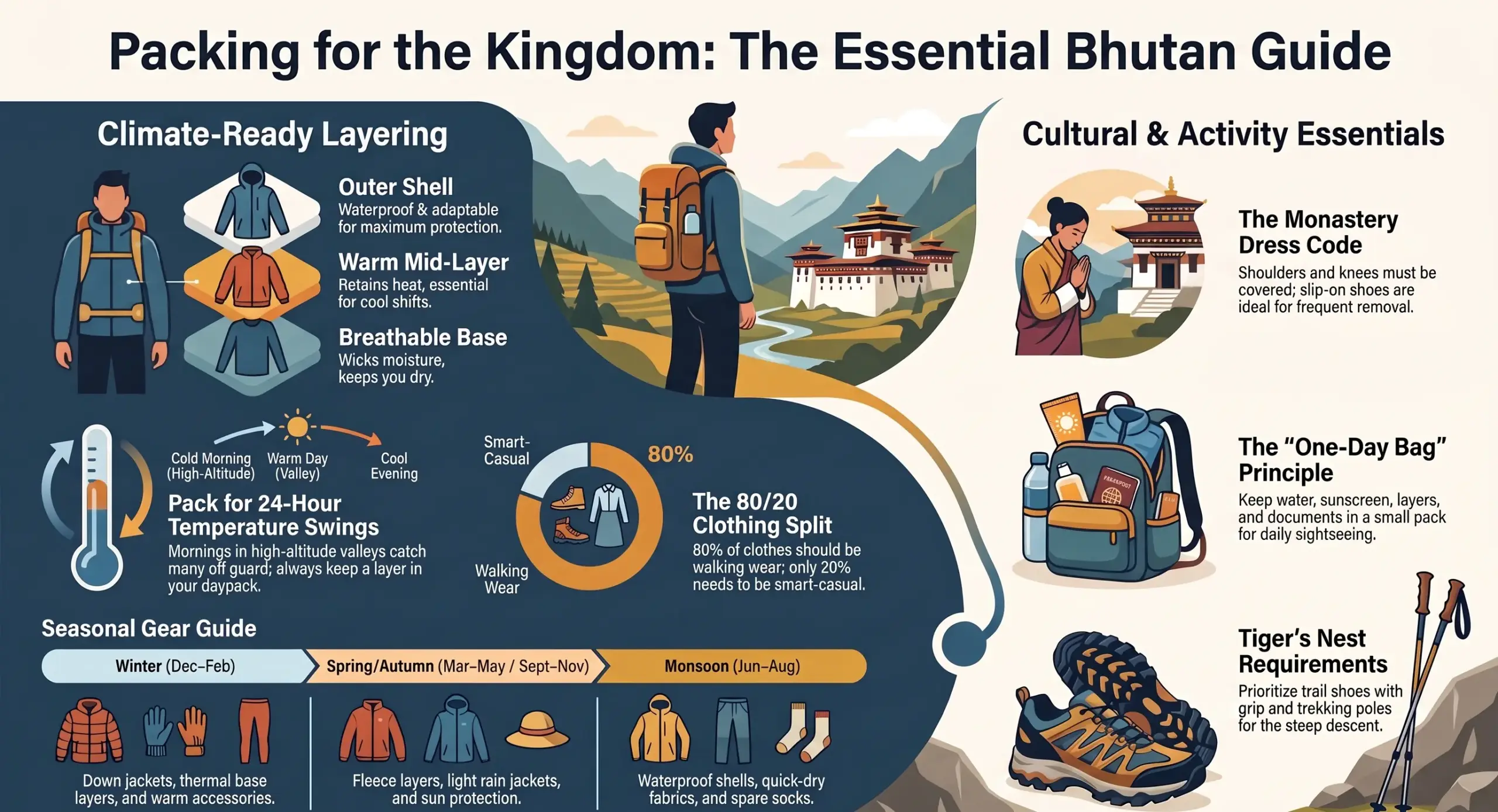
Pack breathable layers so you can add or remove through the day. These include a warm mid-layer, a light waterproof shell, comfortable walking shoes, sun protection, and modest clothing for monastery visits. Bring your travel documents, a universal adapter, and any personal medication, since pharmacy options outside Thimphu and Paro are limited. Exact clothing weight depends on your travel month and the regions on your itinerary.
Bhutan Packing Quick Reference
| Month | What to Pack |
| January | Down jacket, thermal base layers, warm hat, gloves |
| February | Insulated jacket, thermals, warm socks |
| March | Fleece, light rain jacket, layering pieces |
| April | Light layers, sun hat, light rain jacket |
| May | Rain jacket, quick-dry clothing, light layers |
| June | Waterproof shell, quick-dry fabrics, dry bag |
| July | Waterproof shell, quick-dry fabrics, spare socks |
| August | Rain jacket, quick-dry clothing, light footwear |
| September | Light fleece, light rain jacket |
| October | Fleece or light down jacket, light layers for daytime |
| November | Insulated jacket, thermals for mornings and evenings |
| December | Down jacket, thermal layers, warm accessories |
This table is just a starting point. The month-by-month section below goes deeper, including region-specific notes.
Before You Start Your Bhutan Packing: Know Your Trip
Before building a packing list, it helps to answer five questions. What you need depends less on “Bhutan” in general and more on your specific trip:
- Which month are you traveling in? This determines your clothing weight more than anything else.
- Which regions are on your itinerary? Paro, Thimphu, Punakha, and Bumthang each call for small adjustments.
- What activities are included? A Tiger’s Nest hike, a festival visit, and a photography-focused trip each shift your gear list slightly.
- How long is your trip? A 6-day tour needs less rotation than a 10-day one.
- What’s your accommodation style? Farmhouse stays and boutique lodges both work with the same core packing list, so this mostly affects comfort extras, not requirements.
The Bhutan Packing Rule
Pack for changing temperatures, respectful temple visits, comfortable walking, and light daily travel. If an item doesn’t serve one of those four purposes, it’s probably safe to leave it at home.
The Layering Rule: Pack three adaptable layers: a breathable base layer, a warm mid-layer, and a lightweight waterproof outer layer. This combination works across most Bhutan itineraries and months, letting you adjust as temperatures shift through the day.
Bhutan Packing List by Month
- January & February:
Bring a down jacket or a heavily insulated coat, thermal base layers, a warm hat, and gloves. Mornings and evenings are cold across most itineraries, including in valley towns, so pack for indoor comfort too. Many guesthouses rely on space heaters rather than central heating.
- March:
A fleece and a light rain jacket cover most days. Layering pieces works well since afternoons warm up while mornings stay cool, so plan for at least one clothing change during the day rather than a single outfit.
- April:
Light layers with a light rain jacket handle most conditions. A sun hat earns its space in your bag as the daytime sun grows stronger, and sunglasses are worth adding at this point in the year, too.
- May:
Pack a rain jacket and quick-dry clothing. Light layers still matter for cooler mornings, though you’ll likely shed them by midday. A compact umbrella is a useful addition for short showers, and quick-dry fabrics mean less time waiting for laundry to dry overnight.
- June, July & August:
A waterproof shell and quick-dry fabrics are essentials for this period. Pack a dry bag for electronics, spare socks, and quick-dry footwear where possible, since regular sneakers can stay damp for a full day of touring.
- September:
A light fleece and a light rain jacket are usually enough. Early autumn mornings are cool, but afternoons are comfortable in most regions, making this one of the easier months to pack light for.
- October:
A fleece or light down jacket handles most mornings, with lighter layers for daytime.
- November:
Pack an insulated jacket and thermal layers for mornings and evenings.
- December:
A down jacket, thermal layers, and warm accessories (hat, gloves, scarf) are recommended across all regions. Pack for indoor warmth here too, since heating varies between hotels and guesthouses.
Bhutan Packing List by Place
- Paro & Thimphu:
These two towns anchor most itineraries, and packing needs stay fairly standard here across the year. So, the layering system above covers most days. Two adjustments are worth making regardless of the month:
- Keep a light layer in your daypack even in warmer months, since mornings here catch many visitors off guard, particularly if you’re heading toward Tiger’s Nest before the sun is fully up.
- Pack a light scarf, which doubles as both a layer and a monastery-visit cover-up, handy given how often both towns appear on cultural itineraries.
- Punakha:
Punakha sits at a lower elevation and runs noticeably warmer than Paro or Thimphu. Pack lighter clothing here than you would elsewhere on the same trip, and in the June–August window, bring extra quick-dry layers, since the lower elevation means higher humidity than in the higher valleys.
- Bumthang:
Bumthang is the coolest of the four regions, especially in the evenings. If it’s on your itinerary, pack an extra insulated layer beyond what the rest of your trip requires. This matters most in the January–February and November–December windows, when temperatures here drop further than in Paro or Thimphu after sunset.
How Much Should You Pack?
Rather than a generic checklist, here’s a practical guide based on trip length, using our most common itinerary lengths as a reference:
| Trip Length | Shirts | Trousers | Layers | Footwear |
| 6 days (e.g., Glimpse of Bhutan) | 4 quick-dry shirts | 2 walking trousers | 1 fleece, 1 waterproof shell | 1 walking shoe, 1 optional evening shoe |
| 10 days (e.g., Bhutan Spiritual Tour, Magical Bhutan Tour) | 6 quick-dry shirts | 3 walking trousers | 1 fleece, 1 waterproof shell | 1 walking shoe, 1 sandal or evening shoe |
The 80/20 Packing Rule: For a typical Bhutan cultural tour, around 80% of your clothing should be comfortable walking wear, while only 20% needs to be slightly smarter attire for dinners or cultural performances.
Laundry is available at most hotels, so you rarely need to pack for every day individually.
Bhutan Packing by Activity
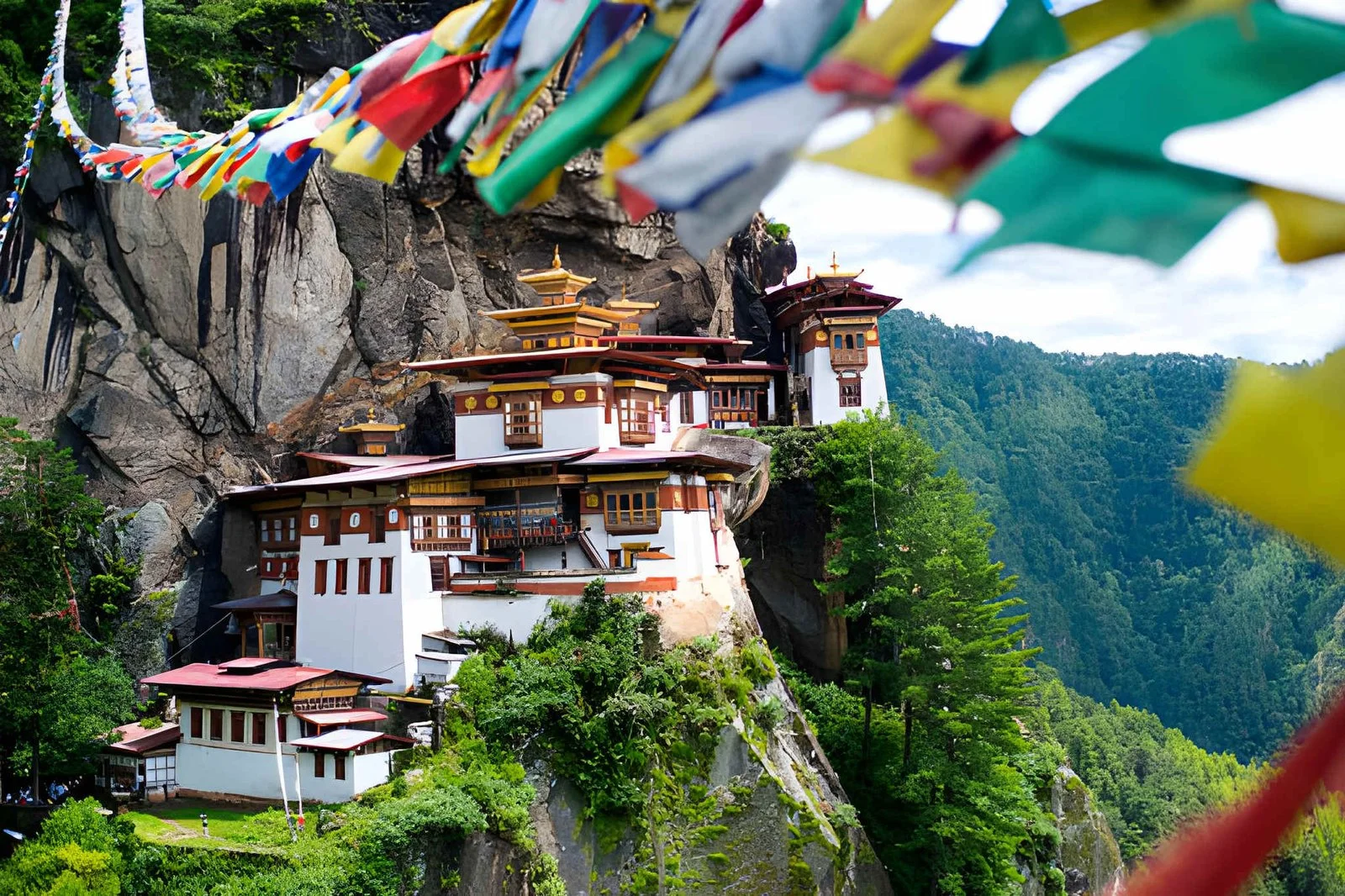
What should you pack for the Tiger’s Nest hike?
- Comfortable walking or trail shoes, a refillable water bottle, sun protection, and a light layer are enough for most visitors.
- Trekking poles are optional but useful on the descent, when knees tend to feel the trail more than on the way up.
- Keep your camera accessible, since the views partway up are a common stopping point, and pack a light rain layer regardless of the month. The trail’s elevation also means the weather can shift faster than in the valley below.
The One-Day Bag Principle: Keep everything you’ll need during the day, like water, sunscreen, a light layer, camera, and travel documents, in a small daypack, since you’ll spend much of each day sightseeing between stops rather than returning to your hotel.
What should you pack for cultural tours?
- Comfortable, modest clothing works best, since most days include dzong and monastery visits.
- Long trousers or skirts and shoulder-covering tops are more practical than shorts or sleeveless tops, which you’d otherwise need to change out of before entering religious sites.
- A pair of shoes that slip on and off easily also helps, since footwear comes off before entering most temple interiors.
What should you pack for a festival visit?
- Comfortable footwear matters most, since festival grounds involve standing and walking for extended periods, often on uneven courtyard stone.
- Bring sun or rain protection, depending on the month, and dress modestly, the same as you would for any monastery visit.
- A light cushion or shawl to sit on is a small but appreciated addition if your itinerary includes extended seated viewing.
- For festival dates and what to expect, see our Bhutan Festivals guide.
What should you pack for photography?
- Bring your camera body, extra batteries, spare memory cards, and a lens cloth for dust.
- A dry bag is worth packing during the monsoon months, and a padded insert or wrap protects gear on bumpier mountain roads.
- A power bank helps on longer touring days when charging isn’t convenient, particularly if you’re shooting video as well as stills.
What should families pack?
- Kids’ medication, snacks, and a small activity or two for longer drives are the main additions.
- Wet wipes are useful throughout the trip, and an extra layer for children is worth packing even in warmer months, since indoor spaces can run cooler than expected.
- A lightweight stroller works in Thimphu and Paro town areas but isn’t practical on uneven monastery paths or the Tiger’s Nest trail.
Bhutan Packing: Cultural Etiquette To Remember
What should you wear when visiting monasteries?
→ Shoulders and knees should be covered, and shoes should be removed before entering. This isn’t just a courtesy guideline. It also reflects genuine local practice, and guides will often remind visitors before entering a dzong or temple. Packing one long-sleeve top and one pair of long trousers that you’re comfortable wearing repeatedly solves this for the whole trip.
Should you carry a scarf?
→ Yes, a light scarf works as a layer during cool mornings and as a quick cover-up if you’re wearing something less modest between temple visits.
Can you take photos inside temples?
→ Photography is often restricted inside temple interiors, though exteriors and courtyards are usually fine. Ask your guide before photographing anything inside a shrine room.
Bhutan Packing: Documents, Electronics, Health & Footwear
- Documents: Passport, visa confirmation, travel insurance details, flight confirmations, and a copy of each are stored separately from the originals. Keeping a digital copy on your phone as a backup is worth the extra minute, in case a physical copy is misplaced mid-trip.
- Electronics: A universal adapter (Bhutan uses Type D/G/F sockets depending on the building), a power bank, and your camera or phone charger. A local SIM or eSIM is easy to arrange in Paro or Thimphu if you need data, so it’s not necessary to buy one before you arrive. Charging outlets are generally available at hotels, though power banks are still worth packing for long touring days between stops.
- Health: Personal medication in original packaging, a small first-aid kit, sunscreen, and lip balm. Altitude affects most visitors mildly at best, but higher UV exposure at elevation catches many people off guard. Also, pack sunscreen even on cool or cloudy days, and reapply more often than you would at sea level. Dry air at higher elevations also means lip balm and a small moisturizer are worth packing, even outside winter months. A reusable water bottle is genuinely useful, since refill stations and boiled water are common at hotels, cutting down on single-use plastic during your trip.
What shoes do you need in Bhutan?
| Activity | Recommended Footwear |
| Cultural touring | Comfortable walking shoes |
| Tiger’s Nest hike | Trail or walking shoes with grip |
| Evenings at hotels | Sandals |
| Multi-day treks (add-on itineraries) | Trekking boots |
Hiking boots aren’t necessary for standard cultural itineraries. Trail or walking shoes with a reasonable grip handle the Tiger’s Nest hike and most sightseeing days comfortably.
What NOT to Pack for Bhutan
- Expedition-grade gear: Unnecessary unless you’ve added a high-altitude trek to your itinerary
- A large hard-shell suitcase: A duffel or soft-sided bag is easier to manage between stops
- Multiple heavy jackets: One good mid-layer and one shell cover nearly every scenario
- Excess formal clothing: Bhutan’s cultural tours require modest dress, not dressing up
- A week’s worth of toiletries: Hotels typically provide basics, and Paro and Thimphu have well-stocked pharmacies and shops
Can You Buy Essentials in Bhutan?
Yes, for most basics. Paro and Thimphu have pharmacies and shops carrying sunscreen, toiletries, and over-the-counter medication. Prescription medication is harder to source reliably, so bring your own supply. Bottled water, snacks, and basic clothing items are also easy to find in these two towns, though options thin out in more rural stops like Bumthang.
Luggage Guide
A soft-sided duffel bag or a mid-size rolling suitcase both work well, since most transfers involve loading and unloading from a vehicle rather than long carries. A soft-sided bag is easier for drivers and hotel staff to fit into smaller vehicle trunks on mountain roads, which is a small but real practical advantage over a rigid hard-shell case.
A small daypack is essential for daily sightseeing and the Tiger’s Nest hike. Packing cubes help keep layers organized, especially if temperatures shift through your trip and you’re adding or removing items daily. Separating clean and worn clothing into different cubes also makes laundry hand-offs at hotels quicker.
If you’re flying domestically within the region before or after your Bhutan leg, it’s worth checking baggage weight limits in advance, since regional carriers often have lower allowances than international ones.
Common Bhutan Packing Mistakes
- Packing only warm clothes and getting caught out by a warm afternoon
- Wearing brand-new shoes on the trip instead of breaking them in beforehand
- Underestimating the sun at altitude, even on cool or overcast days
- Ignoring monastery dress codes, leading to last-minute scrambling for a cover-up
- Overpacking formal wear that never leaves the suitcase
- Bringing a giant trekking backpack for what’s actually a cultural touring itinerary
What Most Travelers Forget
Lip balm, a portable charger, a headlamp for early starts, ziplock bags for damp clothing, a small reusable shopping bag, and a few small cash denominations for local markets and monastery donations.
From Our Guides
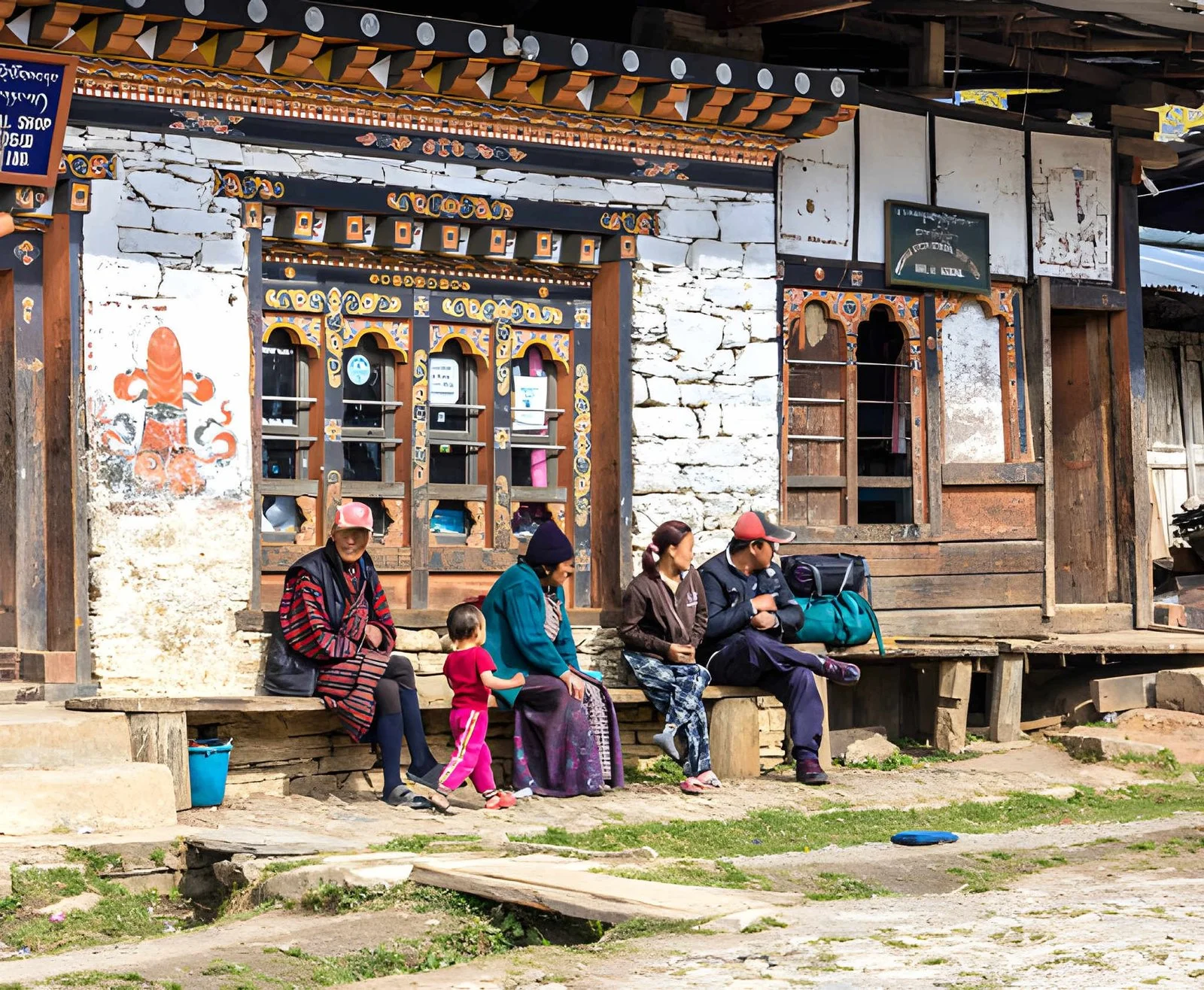
Our guides consistently notice the same small oversights. Even sunny mornings in Paro can turn cool once you’re higher up near Tiger’s Nest, so a light layer in your daypack saves a return trip to the vehicle. Comfortable walking shoes are more useful than heavy mountaineering boots for most itineraries, including the hike itself. And carrying small denominations of cash makes local markets and temple donations easier to navigate.
Final Checklist
- Clothing: Base layers, fleece or mid-layer, waterproof shell, modest tops and trousers, one smart-casual outfit
- Footwear: Walking shoes, sandals
- Documents: Passport, visa confirmation, travel insurance, flight confirmations, document copies
- Electronics: Universal adapter, power bank, camera, and charger
- Health: Personal medication, sunscreen, lip balm, small first-aid kit
- Accessories: Scarf, hat, sunglasses, and reusable water bottle
- Extras: Ziplock bags, headlamp, small cash denominations
Planning the Rest of Your Trip
Pack light, pack in layers, and pack according to your itinerary, not just the season. Once your bag is sorted, the rest of your Bhutan trip comes together quickly.
Planning your Bhutan journey? Our Glimpse of Bhutan, Bhutan Spiritual Tour, and Magical Bhutan Tour itineraries each come with pre-departure guidance tailored to your travel dates, regions, and activities, so you’ll know exactly what to pack before you leave.
Continue planning:
Frequently Asked Questions
What should I pack for a trip to Bhutan?
A typical Bhutan packing list should include layered clothing, comfortable walking shoes, a lightweight waterproof jacket, sun protection, a reusable water bottle, travel documents, prescription medication, and a universal power adapter. If you’re visiting monasteries such as Tiger’s Nest Monastery, pack modest clothing that covers your shoulders and knees. Your exact clothing needs will depend on the season and the regions you plan to visit.
What should I pack for Bhutan in October and November?
October and November are among the best months to visit Bhutan, with cool mornings, warm afternoons, and clear Himalayan views. Pack lightweight layers, a fleece or insulated jacket for early mornings, comfortable walking shoes, sunglasses, sunscreen, and a light hat.
What should I pack for Bhutan in May?
May is generally warm during the day but can bring occasional afternoon showers. Lightweight breathable clothing, a light rain jacket, quick-drying trousers, comfortable walking shoes, sunscreen, and insect repellent are good choices. Even in spring, mornings and evenings in places like Paro and Thimphu can feel cool, so carrying an extra layer is advisable.
Do I need hiking boots in Bhutan?
Not for most travellers. Comfortable walking shoes or trail shoes are suitable for cultural tours and popular hikes, including the trail to Tiger’s Nest Monastery. Hiking boots are recommended only if you’re joining multi-day trekking routes or high-altitude adventures where rough terrain and changing weather require additional ankle support.
Can I wear shorts in Bhutan?
Yes, you can wear shorts in casual settings, particularly around hotels and towns. However, when visiting monasteries, dzongs, and other religious sites, it’s important to wear clothing that covers your shoulders and knees as a sign of respect for Bhutanese culture and local customs.
Do I need a rain jacket for Bhutan?
Yes. A lightweight waterproof jacket is useful throughout the year, especially if you’re travelling during the monsoon season (June to August) or the shoulder months of May and September, when brief showers are common. Even outside the rainy season, mountain weather can change quickly, making a packable rain jacket a practical addition.
What type of power adapter do I need in Bhutan?
Bhutan commonly uses Type D, F, and G electrical sockets, although the type may vary depending on the hotel or building. Bringing a universal travel adapter is the easiest way to ensure your devices can be charged throughout your trip.
Can I buy toiletries and medicine in Bhutan?
Yes. Basic toiletries, personal care items, and common over-the-counter medicines are readily available in Paro and Thimphu. However, if you rely on prescription medication or have specific medical needs, you should bring enough supplies for your entire trip, as specialised medicines may not always be available.
Should I carry cash while travelling in Bhutan?
Yes. Although many hotels, restaurants, and shops in Paro and Thimphu accept card payments, carrying some cash is useful for small purchases, local markets, tips, and optional monastery donations. Keeping smaller denominations is particularly convenient when travelling outside the main towns.
What size bag is best for a Bhutan trip?
For most 6–10 day Bhutan tours, a suitcase or duffel bag of 50–65 litres, along with a small daypack for daily sightseeing, is more than sufficient. Larger expedition-style backpacks are generally unnecessary unless your itinerary includes multi-day trekking or mountaineering.