


Things to Do & Places to Visit in Paro, Bhutan
Introducing Paro
For most travelers, Paro is the first place in Bhutan they set foot in. It’s also the place from which they leave the kingdom. It’s easy to let it become a blur between the airport and the road east. You spend a night before Thimphu or a night after Punakha, letting it become a place you pass through rather than a place you visit.
But that would be a huge mistake.
Paro is home to Tiger’s Nest, but it also has a real town in a wide, working valley, with rice terraces, riverside farmhouses, dzongs, and a scattering of temples older than most countries.
Say “Paro” and people usually mean one of three things: the compact town itself, the broader Paro Valley that surrounds it, or the district that contains them both. Knowing the difference matters, because it changes where you should expect to find things and how much time you’ll actually need.
This guide covers what Paro is, how to get there, what’s genuinely worth your time, how to plan your days, and how the destination fits into a wider Bhutan trip.
About Paro, Bhutan
Where Is Paro?
Paro sits in western Bhutan, in a broad valley carved by the Paro Chhu (Paro River). It’s roughly an hour-and-a-half drive from Thimphu, the capital. It’s the kind of landscape that photographs like a cliché and still catches you off guard in person. The terraced rice fields on the valley floor, whitewashed farmhouses with dark timber trim, and forested ridgelines climbing toward the Himalayas on every side give Paro a charm you’ll never forget.
Because Paro is home to the country’s only international airport, it’s also the practical starting point for almost every Bhutan itinerary, which is exactly why so many visitors underrate it. It’s not just where your trip begins. It’s one of the places your trip should include.
Paro Town vs. Paro Valley
It’s worth being precise about this early on, because many travellers are confused by it.
Paro town is small. It consists of a single main street, a cluster of shops, cafés, and guesthouses, and is easy to walk end to end in twenty minutes. It’s the commercial and social center of the district, and a genuinely pleasant place to wander for an hour.
Paro Valley is much bigger and stretches well beyond the town in every direction. Most of Paro’s headline attractions, including the Tiger’s Nest, Drukgyel Dzong, and Kyichu Lhakhang, sit outside the town itself, scattered across the valley floor.
If you only explore the town, you’ll miss almost everything that makes Paro worth the trip. Think of the town as your base, and the valley as the destination.
Paro Elevation & Altitude
Paro sits at roughly 2,250 meters (7,382 feet) above sea level. It is high enough that some visitors notice it, particularly if they’ve flown in directly from somewhere near sea level. It’s a comparable altitude to Thimphu (slightly higher, at around 2,320 meters), so if your itinerary moves between the two, you won’t be dealing with a meaningful altitude shift.
One distinction worth making clearly: Paro’s elevation is not Tiger’s Nest’s elevation. The monastery sits far higher, at around 3,120 meters, and the hike up gains several hundred meters from the valley floor. Don’t assume that the hike will feel easy just because Paro is easy. Give yourself a day in Paro before attempting Tiger’s Nest. You can go for a visit to Rinpung Dzong or walk around the town to acclimatize before the climb.
How to Get to Paro
Flying to Paro International Airport
Paro is home to Bhutan’s only international airport. Surprisingly, it’s also one of the most talked-about airports in the world for reasons unrelated to terminal design.
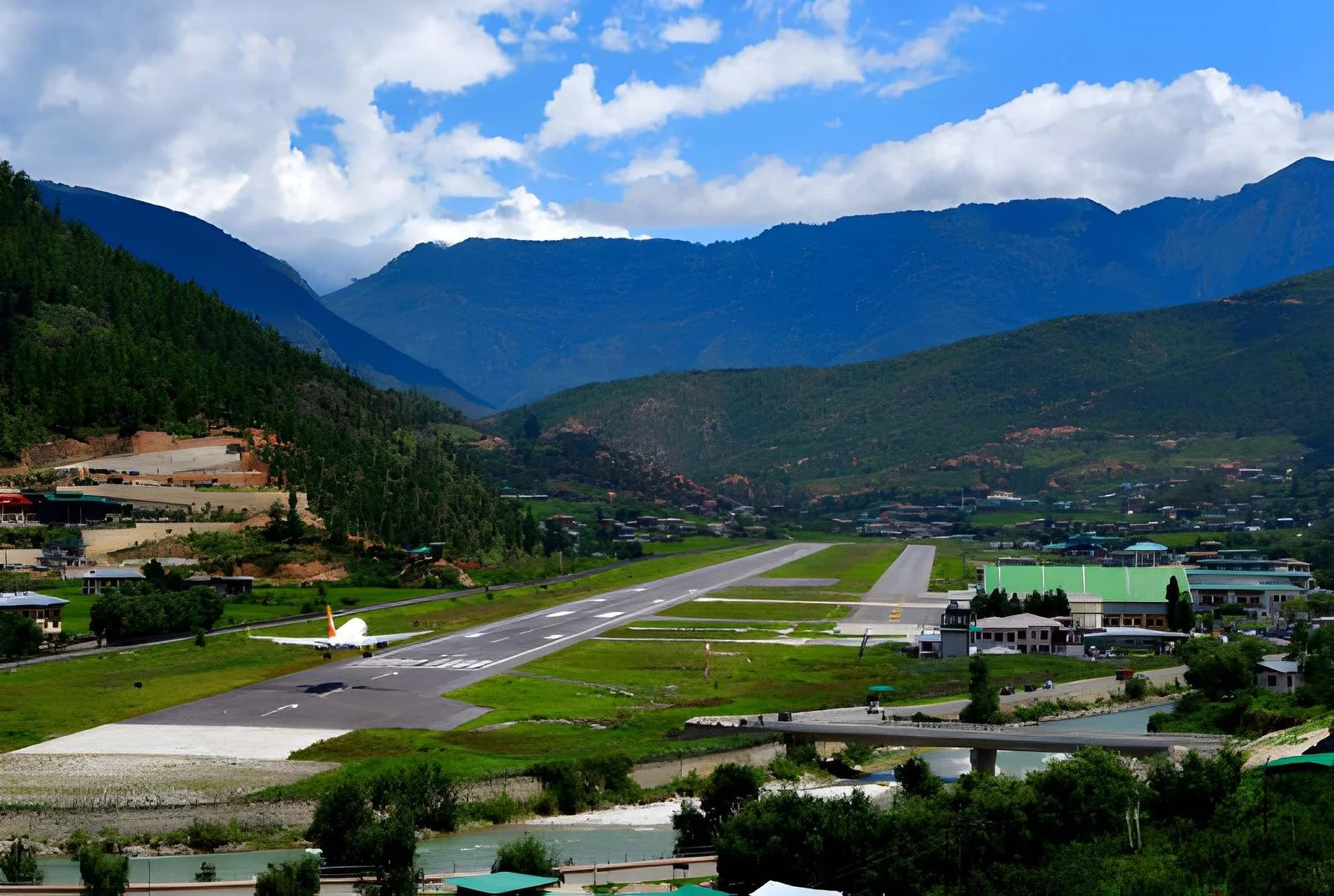
The valley is narrow, and the surrounding peaks are high, so the approach requires visual flying through mountainous terrain. Pilots have to perform a dramatic, low, winding descent, which is genuinely one of the more memorable ways to arrive anywhere.
Flights are operated by Bhutan’s two national carriers, connecting Paro to regional hubs including Kathmandu, Delhi, Kolkata, Bangkok, Dhaka, and Singapore. These flights are also more weather-dependent than at most airports due to the terrain. Clear morning skies are typical, which is why so many Bhutan flights are scheduled early in the day.
International visitors should have their entry documentation arranged before traveling; if you haven’t looked into that yet, our Bhutan visa guide walks through what’s required.
Getting From Paro Airport to Paro Town
The airport sits at a short drive of well under half an hour in most cases. If you’re traveling with a licensed operator (the standard practice for visiting Bhutan), your guide and driver will typically be waiting at arrivals to take you directly to your accommodation. Independent taxis are also available, though most visitors arrive as part of an organized itinerary rather than needing to arrange transport on the spot.
Traveling to Paro by Road
Paro connects by road to the rest of western Bhutan. It’s about 90 minutes to Thimphu, a longer but manageable drive to Haa Valley over Chele La, and onward routes toward Punakha and central Bhutan. Roads are well maintained but winding, so distances on a map tend to take longer than they look.
Best Things to Do in Paro
Not every attraction in Paro deserves equal time. Some are genuinely unmissable; others are worth adding if you have the days; and a few are best saved for travelers who want to go further off the well-trodden route. Here’s how I’d prioritize them.
Don’t Miss
Hike to Tiger’s Nest Monastery
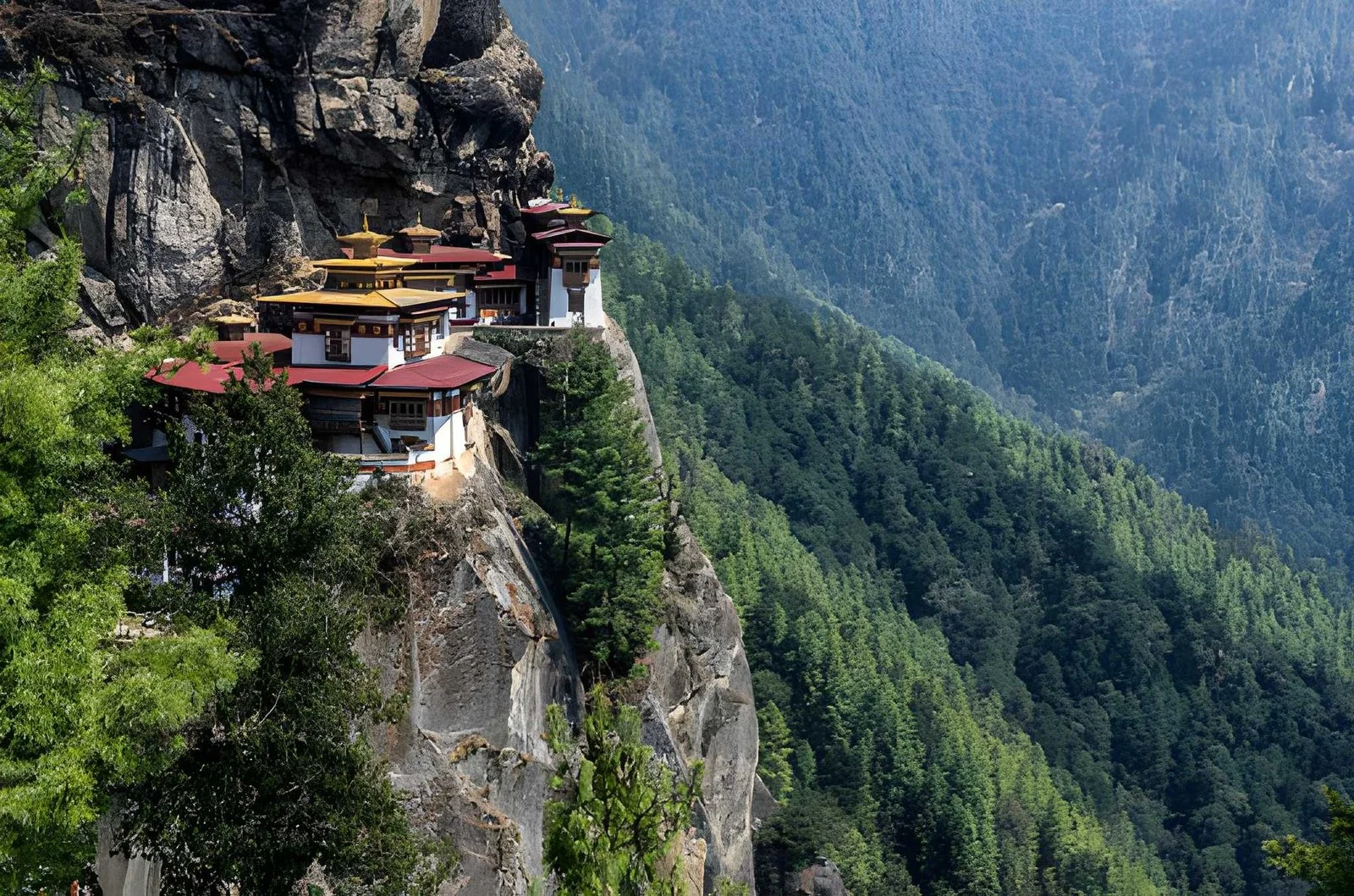
Paro Taktsang (or Tiger’s Nest) is the reason most people put Paro on their itinerary, and it earns the reputation. The monastery clings to a granite cliff several hundred meters above the valley floor, and reaching it means a genuine hike.
It involves a few hours up, through pine forest, past a halfway teahouse with the trail’s first clear view of the monastery, and up again to the entrance itself. It’s demanding enough that you should give it a full day rather than squeezing it in, but it’s well within reach of anyone reasonably fit and willing to go at their own pace.
We won’t repeat the full trail breakdown here. If you’re planning to make the hike yourself, read our complete guide to the Tiger’s Nest hike for route details, difficulty, preparation, and what to expect along the way.
Rinpung Dzong
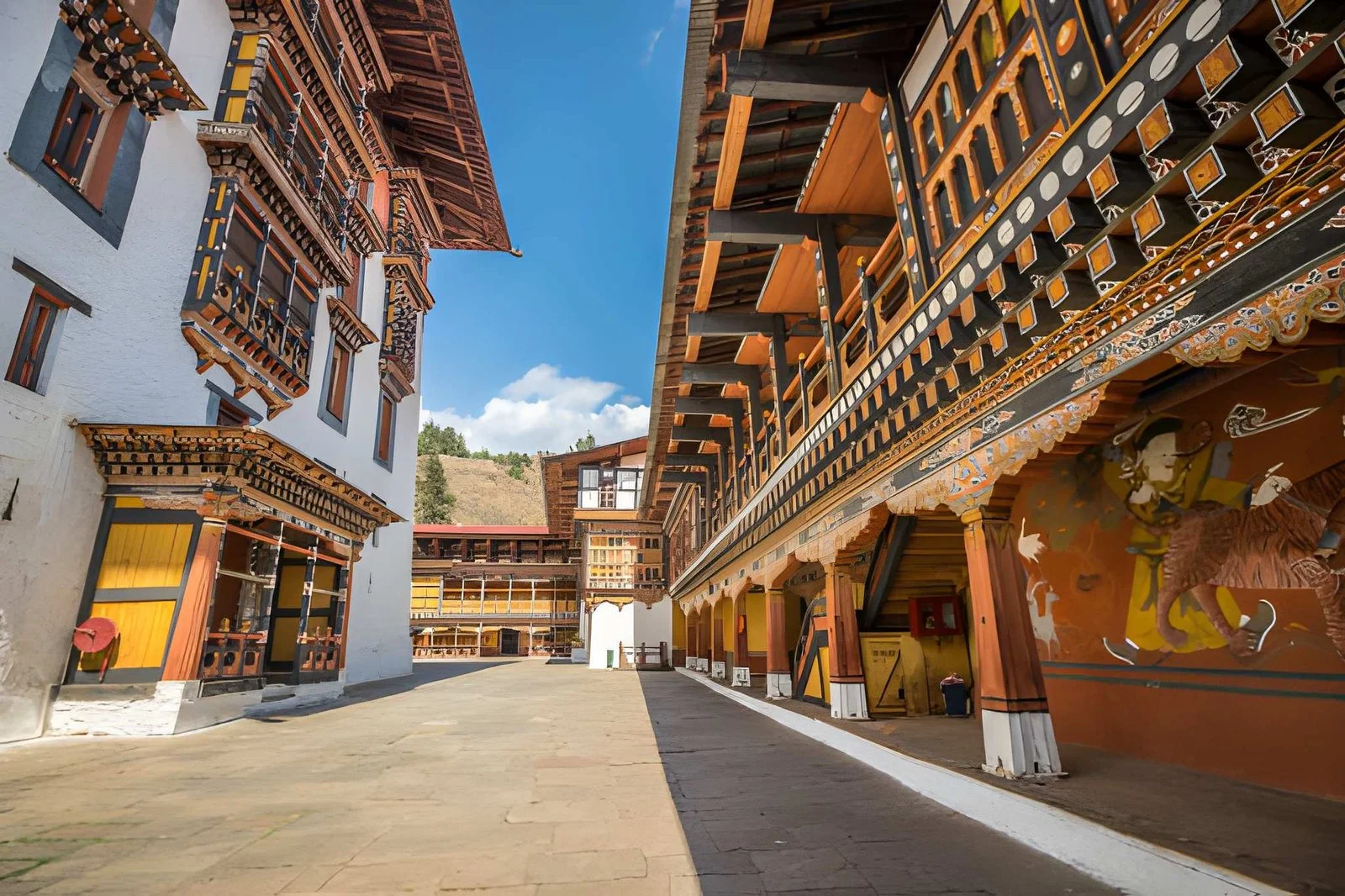
Also known as Paro Dzong, Rinpung Dzong is a 17th-century fortress-monastery that still functions as both a religious and administrative center today. You’ll find monks and government offices operating side by side within its walls.
It sits on a hill above town, and its whitewashed walls and traditional woodwork are a good introduction to Bhutanese dzong architecture before you see more of it elsewhere in the country. It’s also the site of Paro Tshechu, one of Bhutan’s most important annual festivals, held here each spring. If festival timing matters to your trip, our Bhutan festival calendar has full dates.
National Museum of Bhutan at Ta Dzong
Just above Rinpung Dzong sits Ta Dzong. It’s an unusual round, conch-shell-shaped building originally constructed in 1649 as a watchtower to protect the dzong below. In 1968, it was converted into the National Museum of Bhutan.
You may see it referred to by either name, or simply as “the Paro museum,” but they’re all the same building. Inside, you’ll find centuries of Bhutanese thangkas, ceremonial masks, weapons, and religious artifacts, along with genuinely good views back down over the valley from its upper floors.
Walking Paro Town
Don’t underestimate the value of just wandering. Paro’s main street is lined with traditionally painted shopfronts, small cafés, and family-run guesthouses. It’s an easy, unhurried way to get a sense of everyday Bhutanese life between the bigger sights. It won’t take long, but it’s worth building into your schedule rather than treating it as an afterthought.
Worth Adding
Kyichu Lhakhang
Kyichu Lhakhang is one of Bhutan’s oldest temples, dating to the 7th century. It’s a quieter, more contemplative stop than the dzongs, offering a small, atmospheric complex with courtyard trees and centuries of continuous use as an active place of worship.
Drukgyel Dzong
Further north in the valley, Drukgyel Dzong is a ruined fortress that once guarded Bhutan’s border against Tibetan invasions. Partly restored after decades as a picturesque ruin, it offers clear views of Mount Jomolhari on a good day. It’s a worthwhile stop if you have a bit more time and an interest in Bhutanese history.
For Extra Time and for the More Adventurous
If you have days to spare, or you’re the kind of traveler who wants Bhutan to mean more than temples and photographs, this is where Paro gets more interesting.
Chele La
The highest motorable pass in Bhutan at nearly 4,000 meters, Chele La sits on the road between Paro and Haa Valley. On a clear day, it delivers some of the best mountain views accessible without a multi-day trek. You can see prayer flags strung across a high, cold pass with the Himalayas laid out in every direction.
Beyond the main sights
The wider Paro Valley rewards slower exploration: farmhouses, rice terraces, small village temples that are worth stumbling into anyway. This is also where Paro’s identity as more than a cultural stopover starts to show. The valley isn’t just a base for sightseeing. It’s also a genuine starting and ending point for some of Bhutan’s best-known trekking routes, including the Druk Path and the approach toward Jomolhari.
You don’t need to commit to a multi-day trek to feel that; even a short walk into the valley’s edges gives a sense of why Paro works as well for hikers as it does for temple visits.
How Many Days Do You Need in Paro?
Most travelers spend somewhere between two and four nights in Paro, but how you use that time depends on your priorities. Here’s a realistic breakdown:
One Day in Paro
If you only have a day, focus on the town itself: Rinpung Dzong, the National Museum at Ta Dzong, and a walk down the main street. It’s a satisfying introduction, but you’ll leave knowing you haven’t seen everything.
Two Days in Paro
With two days, split it cleanly: one day for the town and its cultural sights, and a full second day for the Tiger’s Nest hike. Don’t try to combine the hike with anything else. It deserves the whole day, including time to rest afterward.
Three Days or More
With three days or more, you can add the wider valley properly with Kyichu Lhakhang, Drukgyel Dzong, a drive or hike up to Chele La, and slower time in the valley itself. This is also the version of a Paro visit that makes the most of the season, since Chele La and valley walks are far more rewarding in clear conditions than in mist or rain.
Best Time to Visit Paro
Paro Weather by Season
Spring (March–May) is one of Paro’s best seasons, with rhododendrons in bloom, clear pre-monsoon skies, and daytime temperatures generally in the mid-teens to low twenties Celsius. It’s also when Paro Tshechu takes place, so expect the town to be busier than usual.
Summer/Monsoon (June–August) brings the heaviest rain of the year, with clouds that frequently obscure mountain views and trails that can turn muddy. It’s the quietest season for visitors, and while there’s a genuine appeal to seeing the valley lush, pack for rain and expect some flexibility around outdoor plans.
Autumn (September–November) is generally considered Paro’s best season for clarity and trekking, with clear skies after the monsoon, mild temperatures, and the visibility of surrounding peaks at its sharpest. This is peak season, so book accommodation and permits well ahead.
Winter (December–February) is cold, especially at night, but brings some of the clearest mountain views of the year along with far fewer visitors. If you’re prepared for the temperature, it’s a quiet, dramatic time to be in the valley.
When Is the Best Time to Visit Paro?
If you have to choose, aim for spring or autumn. Both offer a strong balance of clear weather, comfortable temperatures, and good hiking conditions. Autumn edges ahead for visibility, while spring edges ahead if you want to time your trip around Paro Tshechu.
Paro’s ideal season also depends on how it fits into the rest of your Bhutan trip. So, for a full month-by-month breakdown across the country, see our guide to the best time to visit Bhutan.
Where to Stay in Paro
Staying in Paro town puts you within walking distance of restaurants, cafés, and the main street. This is a good choice if you’re only in Paro briefly or want convenience over scenery.
Staying in the Paro Valley, further from the town center, generally means more space, quieter surroundings, and often better mountain views.
It can be a good fit if you’re spending several days here and want a slower, more immersive base. Options across the valley range from simple guesthouses to some of Bhutan’s best-known luxury resorts, so there’s flexibility whichever way you lean.
Paro Travel Tips
- Altitude: Paro’s elevation is moderate, but give yourself an easy first day if you’ve flown in directly or before you’ll be attempting Tiger’s Nest.
- Dress code: Cover shoulders and knees when visiting dzongs and temples, and expect to remove shoes at certain thresholds.
- Footwear: Sturdy, broken-in shoes matter more than anything else you pack, particularly for the Tiger’s Nest hike.
- Photography: Photography is often restricted inside temples and dzong interiors. So, always check before shooting, and don’t photograph monks or ceremonies without asking.
- Transport: Most international visitors travel with a licensed guide and driver as part of their itinerary, which covers most day-to-day transport questions.
- Currency: Bhutan’s currency is the ngultrum (BTN), pegged to the Indian rupee, which is also widely accepted.
- Connectivity: Wi-Fi is available in most hotels and cafés in town; a local SIM or eSIM is worth arranging if you want reliable connectivity in the valley.
- Weather: Mountain weather changes quickly. Try to pack layers even in the warmer months.
- Respect local customs: Dzongs and monasteries are active religious sites, not museums. Move quietly, follow your guide’s lead, and don’t touch statues or artifacts.
Paro in a Bhutan Itinerary
Because of the airport, Paro is where nearly every Bhutan trip begins or ends, but it also fits naturally into a wider route through the country. From Paro, most itineraries continue east toward Thimphu, then on to Punakha, and for longer trips further still to Phobjikha Valley and Bumthang.
How that looks in practice depends on how much time you have and what you’re prioritizing:
If you have around a week, our Glimpse of Bhutan tour combines Paro with Thimphu and Punakha, including a full visit to Tiger’s Nest. This is a solid, well-paced introduction to western Bhutan.
For a deeper trip, the Magical Bhutan tour extends the same route further east through Gangtey and Bumthang before returning via Punakha, giving you central Bhutan’s valleys and monasteries alongside Paro’s highlights.
If your interest leans more toward Bhutanese Buddhist culture and spiritual practice specifically, our Bhutan Spiritual tour builds a route around that theme, with Paro as both starting and closing point.
And for travelers looking to combine Bhutan with neighboring Himalayan destinations, our Nepal, Bhutan and Tibet tour is worth a look.
For a broader sense of how Paro sits within Bhutan as a whole, contact Far Out Nepal today and book a tour with us.
Why Paro Is Worth Visiting
By now it should be clear that Paro is a lot more than the place you land.
It’s a working valley with centuries of Buddhist history built into its dzongs and temples. It’s also a town small enough to explore in an afternoon and rich enough to reward it, and a landscape that ranges from rice terraces to a nearly 4,000-meter mountain pass within a single day’s drive.
While Tiger’s Nest is, fairly, the headline, the rest of Paro holds up their end just as well. Paro is an accessible hiking place, offers genuine cultural depth, and is a starting point for anyone who wants their Bhutan trip to include real mountains, not just views of them from a hotel window.
Treat Paro as a destination in its own right, not a stopover, and it more than earns the extra day.
Frequently Asked Questions
Is Paro worth visiting in Bhutan?
Yes. Paro is well worth visiting, even beyond the famous Tiger’s Nest. The valley is home to important sites such as Rinpung Dzong, the National Museum, and Kyichu Lhakhang, while Paro town offers traditional Bhutanese architecture and an easygoing atmosphere. Its surrounding mountains and rural landscapes also make it a good base for hiking and exploring.
What is Paro, Bhutan famous for?
Paro is best known for Tiger’s Nest Monastery (Paro Taktsang), the dramatic cliffside monastery overlooking the valley. It is also home to Paro International Airport, Rinpung Dzong, and the National Museum of Bhutan, and is one of the country’s most important cultural and historical destinations.
How many days do you need in Paro?
Two days is enough to see Paro’s major highlights, including Paro town, Rinpung Dzong, the National Museum, and Tiger’s Nest. Three days or more gives you time to explore the wider Paro Valley, visit sites such as Kyichu Lhakhang and Drukgyel Dzong, or take a trip toward Chele La.
Is Paro or Thimphu better to visit?
Neither is objectively better; they offer very different experiences. Paro is the better choice for mountain scenery, historic sites, traditional architecture, and access to Tiger’s Nest, while Thimphu offers a more urban experience with Bhutan’s capital, markets, museums, and modern Bhutanese life. If your itinerary allows, visiting both gives you a much better introduction to the country.
What is the altitude of Paro, Bhutan?
Paro sits at roughly 2,200–2,300 meters (about 7,200–7,500 feet) above sea level. The elevation is noticeable for some visitors arriving from lower altitudes, although it is considerably lower than many of Bhutan’s trekking routes. The Tiger’s Nest trail climbs substantially higher than Paro town.
How far is Paro Airport from Paro town?
Paro International Airport is only a short drive from Paro town, with the journey generally taking around 10–15 minutes depending on your accommodation and road conditions. The airport is located within the Paro Valley, making it particularly convenient for travelers beginning or ending a Bhutan itinerary.
Can you visit Tiger's Nest from Paro?
Yes. Tiger’s Nest is located in the Paro Valley and is easily visited as a day trip from Paro town. The trailhead is roughly a 20–30 minute drive from town, while the hike itself takes most of a day for most visitors. For detailed information on the route, difficulty, and preparation, see our [Tiger’s Nest hike guide].
What is the best time to visit Paro?
Spring (March–May) and autumn (September–November) are generally the best times to visit Paro, with pleasant conditions for sightseeing and hiking and better chances of clear mountain views. Autumn is particularly good for visibility, while spring brings warmer weather and flowering landscapes.
Is Paro safe to visit?
Paro is generally considered a safe destination for travelers, with low levels of crime. As anywhere, visitors should take normal precautions with valuables and follow local customs, particularly when visiting monasteries, temples, and dzongs. Mountain activities also require appropriate preparation and attention to weather and trail conditions.