

Is the Cultural Tour or the Spiritual Tour A Better Way to Explore Bhutan?
Introduction
Bhutan’s culture and spirituality are deeply intertwined. A cultural tour and a spiritual tour can include visits to many of the same dzongs, monasteries, and valleys. What changes is the purpose behind the visit, the activities built into each day, and how deeply you engage with what you’re seeing.
This guide compares the two experiences so you can decide which better matches what you want from your time in Bhutan. If you want an expert opinion or to book a tour to Bhutan immediately, contact Far Out Nepal now.
Bhutan Cultural Tour vs Spiritual Tour at a Glance
| Dimension | Cultural Tour | Spiritual Tour |
| Main purpose | Explore Bhutanese heritage and identity | Engage more deeply with Bhutan’s Buddhist traditions |
| Primary interests | History, architecture, festivals, arts, food, local life | Buddhism, sacred sites, meditation, reflection |
| Monasteries & dzongs | Viewed through cultural and historical significance | Experienced through religious and spiritual significance |
| Activities | Sightseeing, museums, festivals, craft experiences, village visits | Monastery visits, meditation, spiritual practice, reflection |
| Pace | Sightseeing-oriented | Tends to be more reflective |
| Best suited to | Culture and history travelers, first-time visitors wanting a broad introduction | Travelers with a particular interest in Buddhism and contemplative experiences |
| Overall experience | Broad exploration of Bhutan | Deeper, more focused spiritual immersion |
| Can they overlap? | Yes | Yes |
The short answer: neither is inherently better.
Choose based on whether you want to explore Bhutan primarily through its culture and heritage, or engage more deeply with its Buddhist and spiritual traditions. A cultural tour is about learning to understand Bhutan. A spiritual tour is about learning to connect with Bhutan.
We won’t go into detail about cost, duration, or visa requirements. Both tour types run on the same Bhutan tourism framework, so those aren’t meaningful differentiators. It’s about what you’ll actually spend your days doing, and why.
What Does a Bhutan Cultural Tour Focus On?
A Bhutan cultural tour is built around understanding the country in broad terms through its history, architecture, festivals, and everyday rhythms. It’s less a checklist of monuments and more an introduction to how Bhutanese life actually works.
Bhutanese History and Heritage
Cultural itineraries lean into Bhutan’s history: how the country was unified under the Zhabdrung Ngawang Namgyal in the 17th century, how its dzongs doubled as forts and seats of regional government, and how that history still shapes Bhutanese identity today.
Visits to dzongs and historic sites are framed around what they meant to the nation. Learn about the battles fought, borders defended, and governance established, not only what they mean religiously. Sites like Punakha Dzong or Rinpung Dzong in Paro are as much a lesson in Bhutanese statecraft as they are architectural landmarks.
Architecture, Arts and Traditional Crafts
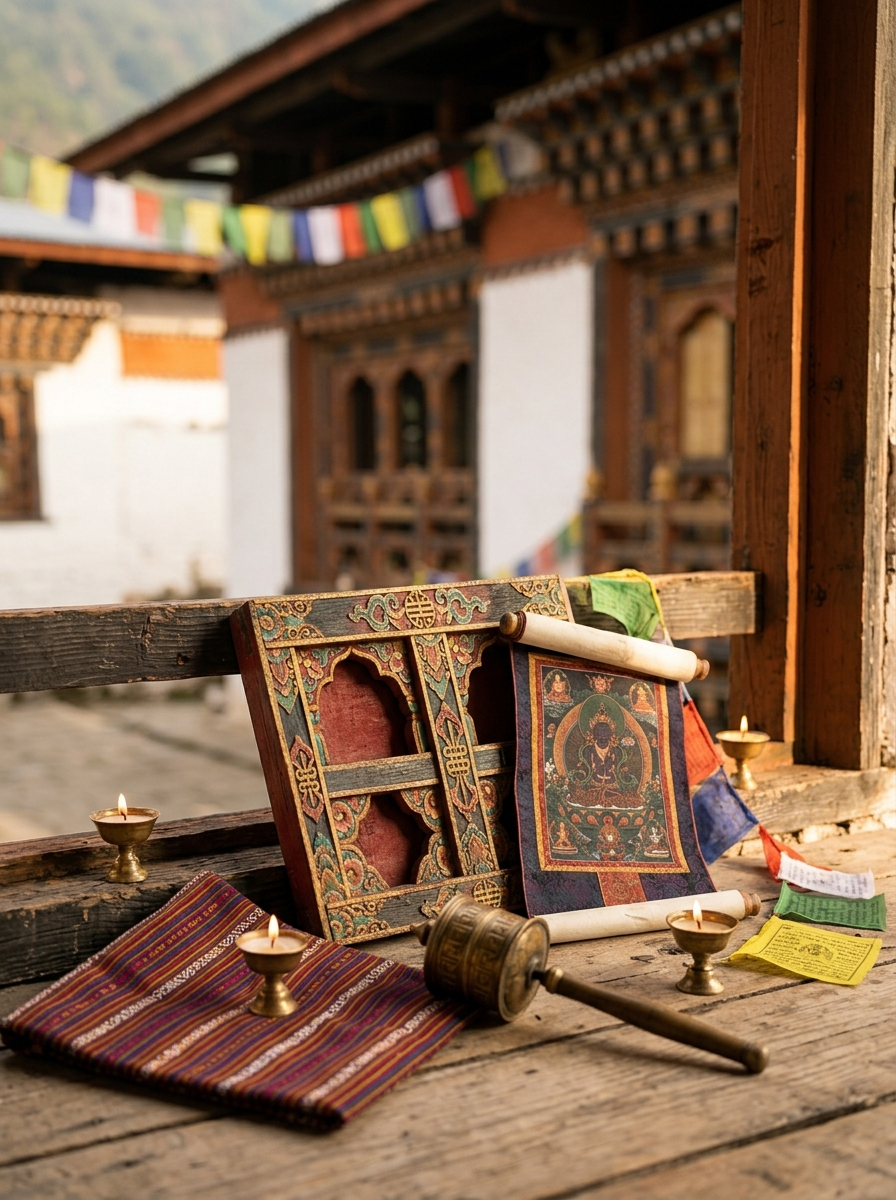
Bhutan’s traditional architecture, like the whitewashed walls, the carved wooden windows, the roofs without a single nail, is a major draw for cultural travelers. You can expect visits built around dzongs and monasteries as architectural and artistic achievements, alongside stops at textile workshops, thangka painting schools, and handicraft markets.
Festivals, Food and Local Traditions
Culture in Bhutan isn’t only what’s carved into a wall or painted on a scroll, but also about what’s happening in the street. Tshechu festivals, with their masked dances and community gatherings, sit at the center of most cultural itineraries. So do dishes like ema datshi (chili and cheese), traditional dress, and the customs of everyday Bhutanese life, which round out the picture of a living culture rather than a museum piece.
What the Experience Feels Like
A cultural tour feels like a broad introduction to a country, not a narrow deep dive into a single theme. You’ll move through valleys, cities, and villages, picking up context on history, art, food, and daily life along the way. It’s the natural starting point if this is your first trip to Bhutan and you want to understand the country as a whole before focusing on any one part of it.
What Does a Bhutan Spiritual Tour Focus On?
A Bhutan spiritual tour narrows the focus toward the country’s Buddhist heritage. Expect more time at sacred sites, more emphasis on meditation and reflection, and itineraries built around Bhutan’s living Buddhist traditions rather than its history in general.
The Experience Is About More Than Visiting Monasteries
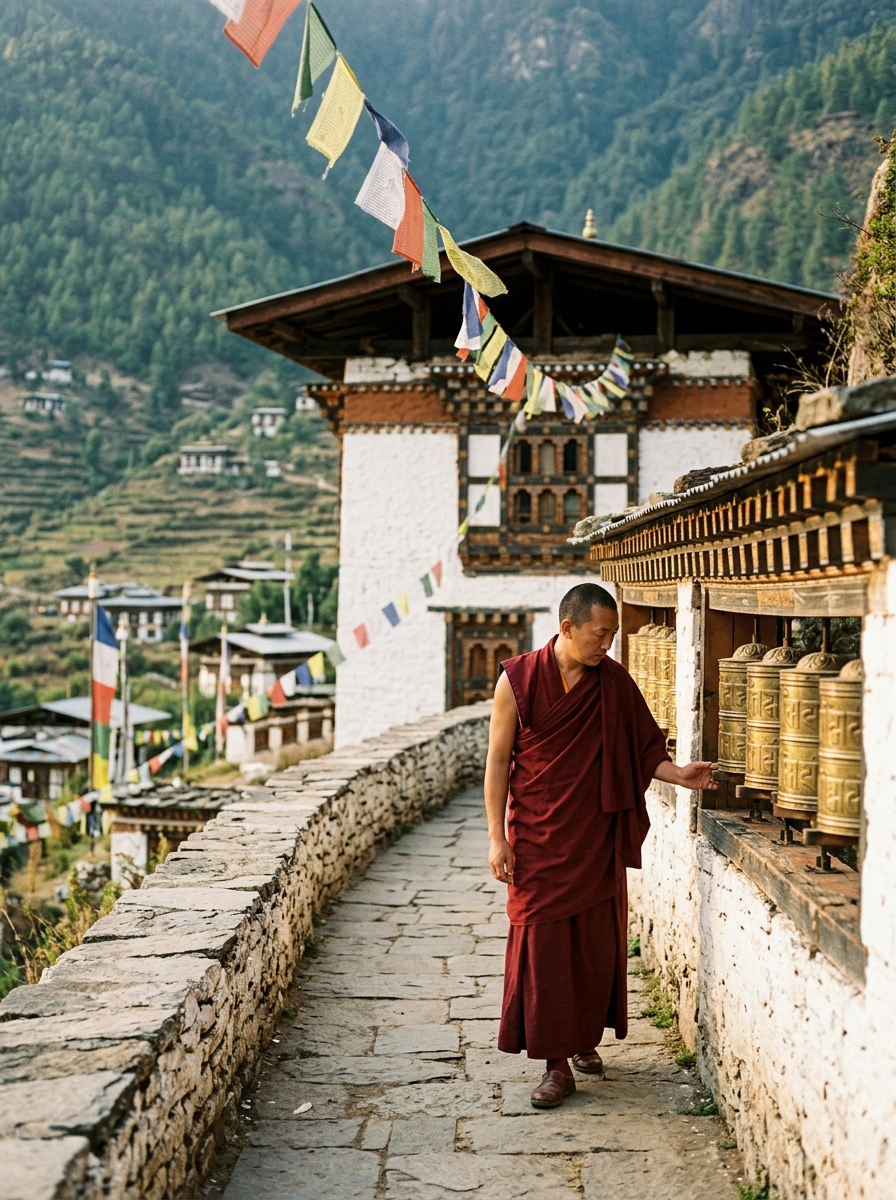
It’s tempting to describe a spiritual tour as simply “more monasteries,” but that undersells it. The difference isn’t really about which buildings you enter, but how you engage with them once you’re there. A spiritual tour builds in time for guided meditation, conversations with monks, and quiet reflection at sites that a cultural itinerary might visit more briefly. It’s a slower, more intentional way of encountering the same Buddhist heritage that runs through Bhutanese life.
If you’re interested specifically in the retreat side of spiritual travel, including extended meditation, structured practice, and deeper immersion, see our deeper guide to why a Bhutan spiritual retreat might be best for you.
Do Cultural and Spiritual Tours Visit the Same Places?
Often, yes. The distinction isn’t necessarily the destination. It’s the way the destination is experienced. Three examples make this clear.
Tiger’s Nest / Paro Taktsang
Bhutan’s most iconic landmark works both ways. On a cultural tour, Tiger’s Nest is approached as an architectural marvel. It’s a monastery clinging to a cliff 900 meters above the Paro Valley, and one of the country’s defining images.
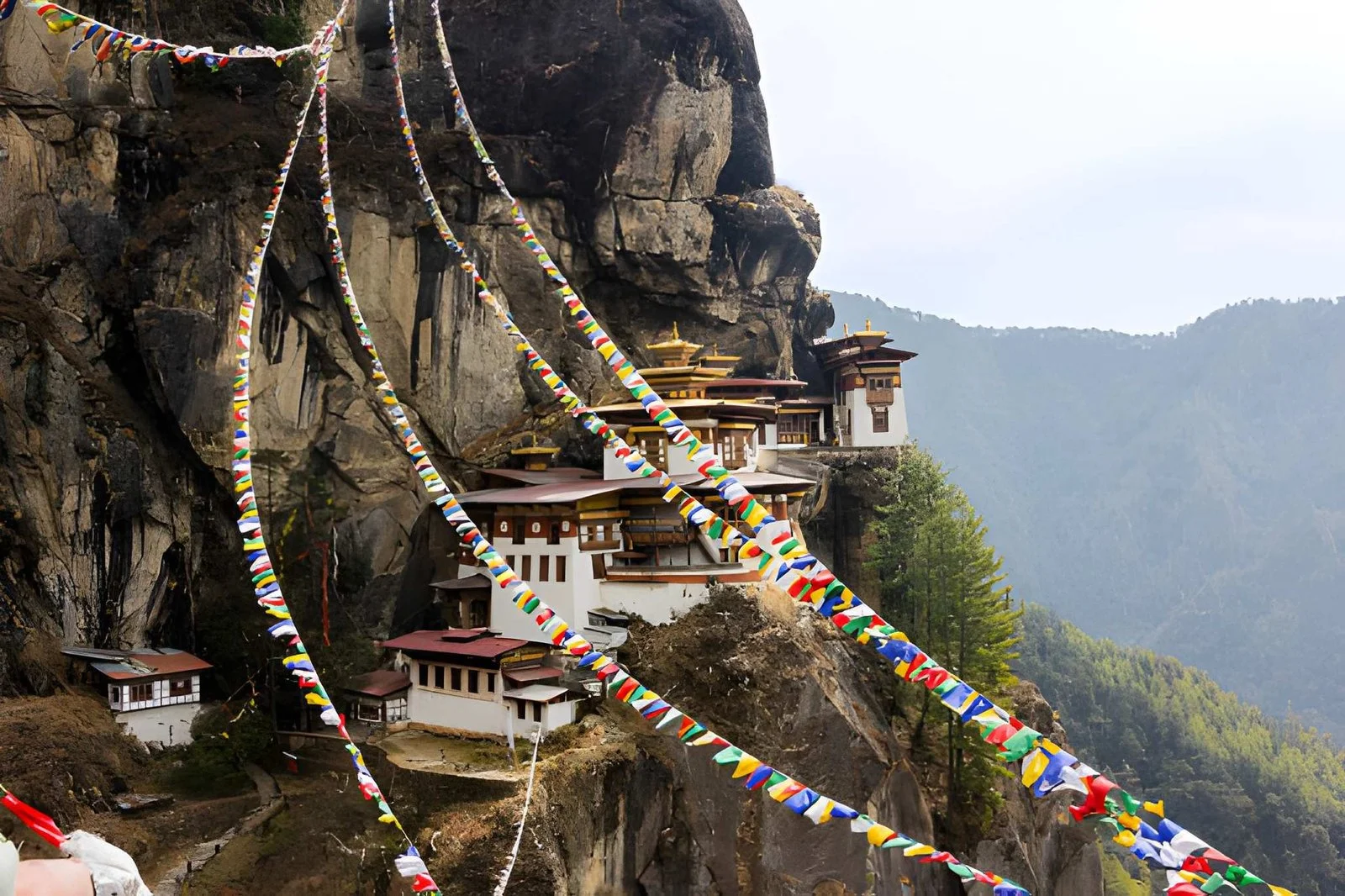
On a spiritual tour, the same hike carries different weight. It’s a pilgrimage to the site where Guru Rinpoche is said to have meditated after arriving on the back of a flying tigress. So, the climb itself becomes part of the spiritual experience rather than just the approach to a viewpoint.
Dzongs and Monasteries
The same pattern holds across Bhutan’s dzongs and monasteries generally. Punakha Dzong, for instance, can be visited as a masterpiece of Bhutanese architecture and a seat of historic political power, or as an active religious center where festivals and monastic traditions still take place today. Neither reading is wrong; they’re just different lenses on the same building.
Festivals
Even Bhutan’s festivals carry this dual nature. A cultural traveler experiences a Tshechu through its costumes, dances, music, and sense of community celebration. A spiritual traveler experiences the same festival through the religious stories the dances depict and the ritual significance behind them. Same event, different layer of meaning.
Bhutan Cultural Tour vs Spiritual Tour: The Key Differences
Purpose of the Journey
A cultural tour is oriented around understanding Bhutan as a whole. A spiritual tour is oriented around engaging more deeply with one part of that whole, the Buddhist traditions.
What You’ll Spend Your Time Doing
Cultural days tend to be full of sightseeing: dzongs, museums, markets, village walks, festival visits, one destination flowing into the next with a guide filling in the historical and architectural context along the way.
Spiritual days build in more stillness: a guided meditation session in the morning, unhurried time at a monastery, a conversation with a monk about Buddhist philosophy, and an afternoon left deliberately open for reflection rather than going for another attraction.
The difference shows up less in where you go each day and more in how much of the day is left unstructured on purpose.
Breadth vs Depth of Experience
This is the clearest way to frame the difference. A cultural tour trades depth for breadth, so you’ll see more facets of Bhutan across a shorter amount of time at each one. A spiritual tour trades breadth for depth, so fewer themes, but more time spent engaging with each.
Sightseeing vs Reflection
Neither itinerary is purely one or the other, and it’s worth avoiding that stereotype. But the general emphasis holds. Cultural tours prioritize seeing and understanding; spiritual tours prioritize slowing down and experiencing.
How You Experience Bhutanese Buddhism
Buddhism sits at the intersection of both tour types, which is exactly why the comparison isn’t a clean binary. A cultural traveler will still encounter Buddhism constantly. It’s woven into Bhutan’s architecture, art, and daily life. The difference is that a spiritual traveler is there specifically to engage with it, rather than encountering it as part of a broader cultural picture.
Which Bhutan Tour Is Right for You?
Choose a Cultural Tour If…
- You want a broad introduction to Bhutan
- History and architecture interest you
- You enjoy festivals, local traditions, and everyday customs
- Food, crafts, and local life matter to your trip
- You want to understand Bhutanese society as a whole
- This is your first trip to Bhutan
Choose a Spiritual Tour If…
- Buddhism is a major interest for you.
- You want deeper engagement with Buddhist traditions, not just a passing look
- Meditation and reflection appeal to you
- Sacred sites interest you beyond their historical value
- You’re looking for a more contemplative pace of travel
Choose a Blend of Both If…
You don’t have to pick a single lane. Because Bhutanese culture and Buddhism are so closely intertwined, a well-designed itinerary can lean into both. You can experience broad cultural exploration alongside dedicated time for reflection and spiritual practice, rather than forcing a strict choice.
Can You Experience Both Culture and Spirituality on One Bhutan Trip?
Yes, and this is worth stating plainly rather than leaving it as an afterthought. A single Bhutan itinerary can include cultural sightseeing, traditional experiences, dzongs, festivals, Buddhist heritage sites, and dedicated spiritual practice, because in Bhutan these things were never really separate to begin with.
The question isn’t whether you’ll encounter both. It’s which one you want to be the central focus of your journey.
That also means you don’t need to be Buddhist to take a spiritual tour. Bhutan’s spiritual tours are generally designed for curious travelers rather than practicing Buddhists. Meditation sessions are typically beginner-friendly, monastery visits are open and explanatory rather than exclusive, and the goal is reflection and understanding rather than religious observance.
So, Which Bhutan Tour Should You Choose?
Choose cultural if you want to understand Bhutan’s history, heritage, traditions, and everyday culture.
Choose spiritual if you want to explore Bhutan’s Buddhist traditions more deeply, drawn toward meditation, sacred places, and reflection.
Choose both if you want a broader Bhutan experience that gives equal weight to cultural discovery and spiritual heritage.
Whichever direction fits, Far Out Nepal’s Bhutan Spiritual Tour is built for travelers seeking the deeper, more reflective side of Bhutan. Our Magical Bhutan Tour and Glimpse of Bhutan itineraries are designed around broader cultural exploration.
Planning best timed around Bhutan’s seasons or festivals? See our guides to the best time to visit Bhutan and Bhutan’s festival calendar. And if Tiger’s Nest is on your list either way, our guide to the Tiger’s Nest hike covers what to expect.
Frequently Asked Questions
Is a Bhutan cultural tour or spiritual tour better for first-time visitors?
A Bhutan cultural tour can be a good starting point for first-time visitors because it offers a broad introduction to the country’s history, architecture, traditions, festivals, and way of life. However, if Buddhism and spiritual experiences are your main interests, a spiritual tour can be equally suitable for a first visit.
Can I experience both culture and spirituality on a Bhutan tour?
Yes. Bhutanese culture and Buddhism are deeply interconnected, so most Bhutan itineraries include elements of both. The main difference is the emphasis: a cultural tour gives greater attention to heritage, traditions, and local life, while a spiritual tour places more emphasis on Buddhist traditions, sacred sites, meditation, and reflection.
Do I need to be Buddhist to join a Bhutan spiritual tour?
No. You do not need to be Buddhist or have previous experience with meditation or Buddhist practices. A spiritual tour can be suitable for travelers from any background who are interested in learning about Bhutan’s Buddhist traditions and experiencing its sacred places from a deeper perspective.
Do Bhutan cultural and spiritual tours visit the same places?
Often, yes. Both types of tours can include important sites such as Tiger’s Nest, monasteries, temples, and dzongs. What differs is the focus of the experience. A cultural traveler may be more interested in a site’s history, architecture, and heritage, while a spiritual traveler may focus more on its Buddhist significance and contemplative aspects.
Which Bhutan tour should I choose: cultural or spiritual?
Choose a cultural tour if you want to explore Bhutan’s history, architecture, traditions, festivals, arts, and everyday culture. A spiritual tour may be a better fit if you have a particular interest in Buddhism, meditation, sacred sites, and contemplative experiences. If both appeal to you, a well-designed Bhutan itinerary can combine cultural exploration with spiritual experiences.