

Why A Spiritual Retreat to Bhutan Should Be Next On Your List?
Bhutan as the Spiritual Destination
Many travelers are drawn to Bhutan because of its reputation as one of the world’s most spiritual destinations. But a Bhutan spiritual retreat isn’t always what people imagine. Some experiences focus on meditation and monastery visits, while others emphasize mindful travel, cultural immersion, and quiet reflection. Before choosing a retreat, it helps to understand what Bhutan actually offers and what sets it apart from other spiritual travel destinations.
We’ve watched travelers arrive at this question from very different starting points. Some are dealing with burnout and want a genuine break from routine. Others are at a transitional point in life and are seeking space to reflect. Some are simply curious about Buddhist culture and want more than a surface-level introduction. And some are tired of sightseeing-heavy trips and want a journey that actually means something. If any of that sounds familiar, we believe the Bhutan Spiritual Tour is the right pick for you.
What Is a Bhutan Spiritual Retreat?
A Bhutan spiritual retreat is a style of travel built around reflection, cultural immersion, and connection to Buddhist tradition, rather than sightseeing for its own sake.
It isn’t one fixed product. Depending on the traveler, it might include monastery visits, quiet time in sacred valleys, guided cultural encounters with monks and locals, or simply a slower pace that leaves room for personal reflection.
A Bhutan spiritual retreat suits travelers looking for a slower, more intentional journey shaped by living Buddhist culture, sacred landscapes, and mindful experiences.
This is not a yoga-and-spa wellness break or a formal monastic training program. Most travelers who choose this kind of trip aren’t seeking intensive spiritual training. They’re seeking a deeper, more meaningful alternative to a standard sightseeing itinerary, with space to actually process the experience rather than rush through it.
The core philosophy behind this style of travel is simple: presence over pace. Instead of moving from landmark to landmark on a tight schedule, a spiritual retreat in Bhutan builds in room to sit with a place, a conversation, or a moment of quiet, rather than photographing it and moving on. That doesn’t mean the itinerary is empty.
It means the itinerary is designed around reflection as much as sightseeing. It’s less about seeing Bhutan and more about experiencing it, which can be a meaningful distinction once you’re actually there.
What makes Bhutan distinctive isn’t a single retreat center or program; it’s that spiritual life is woven into the country itself, from its villages to its national policy
What Makes Bhutan Spiritually Distinctive?
Plenty of destinations market themselves as “spiritual.” Bhutan’s case is different, and it’s worth being specific about why, rather than making the claim and moving on.
- Buddhism here is lived, not staged for tourists.
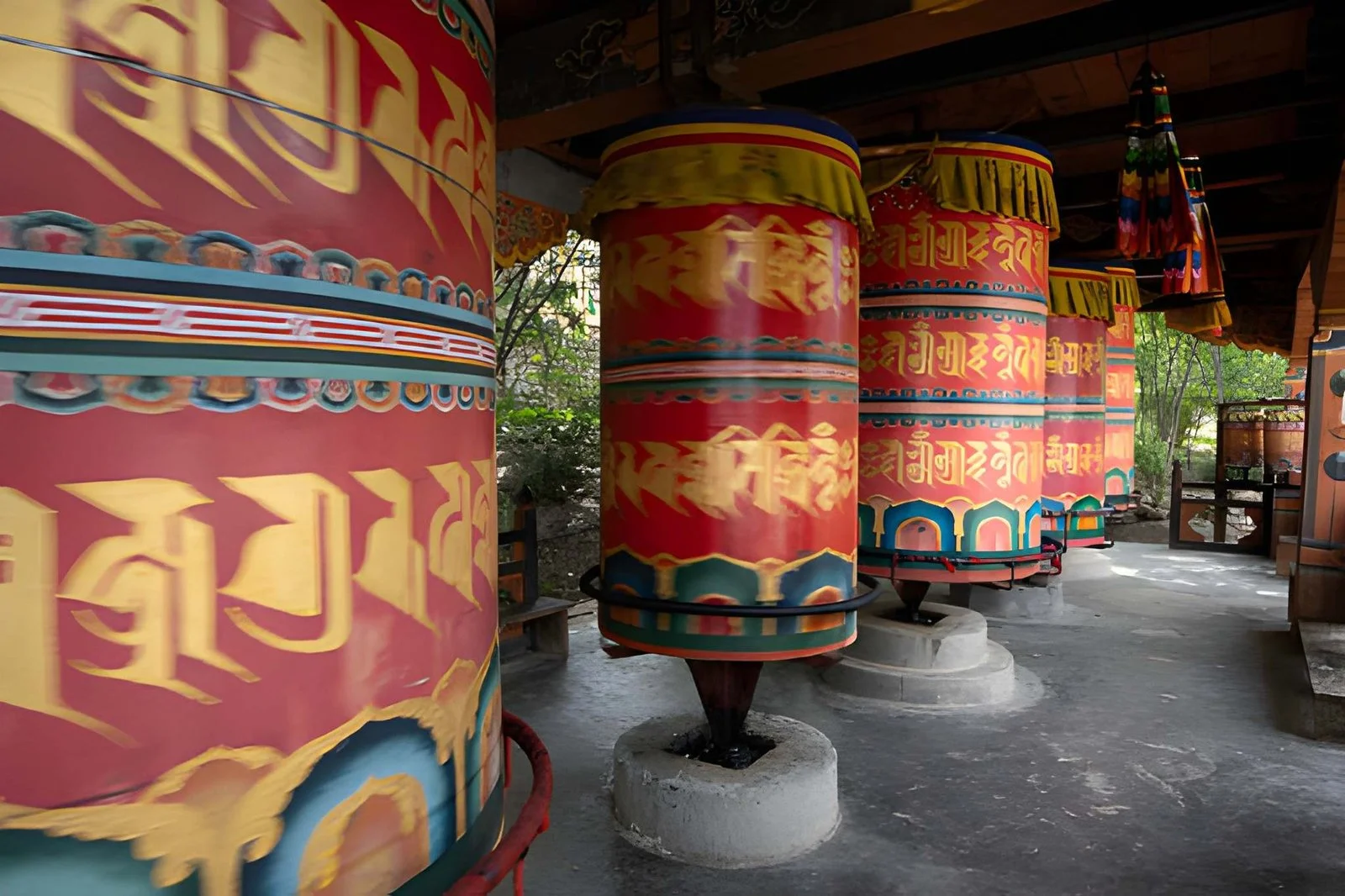
Bhutan follows Vajrayana Buddhism, practiced primarily through the Drukpa Kagyu and Nyingma schools. It shapes daily life here well beyond festivals or retreat centers. Prayer flags mark ridgelines because families put them there, not because a tour operator arranged them. Villagers visit local monasteries as part of ordinary life, not as a special occasion. Guru Rinpoche, the figure credited with bringing Buddhism to Bhutan, is woven into local stories and sacred geography
Spiritual practice in Bhutan isn’t packaged into a program you opt into for a week. It’s the backdrop everyone already lives inside, which is a different thing entirely from a retreat center built to simulate that feeling.
- Gross National Happiness is a policy, not branding.
It’s easy to hear “Gross National Happiness” and assume it’s a tourism slogan, but it isn’t. It’s a governing philosophy that has shaped decisions around growth, education, healthcare, and environmental protection for decades in Bhutan.
It also directly informs how the country approaches tourism itself. That context matters here: a country that has built policy around wellbeing tends to protect the conditions (quiet, unspoiled landscapes, & intact culture) that make spiritual travel meaningful in the first place.
- Low-volume tourism has kept its spiritual sites intact.
Bhutan’s high-value, low-impact tourism policy deliberately limits visitor numbers rather than maximizing them. The practical effect is visible on the ground: monasteries, valleys, and sacred sites haven’t been diluted by mass tourism the way many other spiritual destinations have.
Sites like Tiger’s Nest remain active places of pilgrimage and prayer, with monks and local worshippers still present, not just a backdrop for photos. Trails to remote monasteries stay quiet rather than crowded. That’s the direct outcome of a tourism model designed around preservation rather than volume.
None of this makes Bhutan objectively “more spiritual” than anywhere else. That’s not a claim any destination can honestly make, and we won’t make it here.
What it does mean is that a spiritual retreat in Bhutan draws on something structural rather than marketed. It’s the living tradition practiced daily rather than performed seasonally, the governing philosophy built around wellbeing rather than growth alone, and the tourism model that has actively protected both.
Other destinations may offer meditation programs, retreat centers, or Buddhist heritage sites. Bhutan’s difference is that the spirituality here was never separated from everyday life to begin with.
Who Is a Bhutan Spiritual Retreat Best For?
This kind of trip isn’t the right fit for everyone, and it helps to know that going in.
It tends to suit:
- Travelers recovering from burnout who need a genuine break from a demanding routine, not just a change of scenery.
- People at a personal transition point, like a career change, a loss, or a milestone birthday, who are looking for a space to think without distraction.
- Culturally curious travelers who are interested in Buddhism and Bhutanese life but don’t need or want prior religious knowledge to engage with it.
- Solo travelers who are genuinely comfortable with quiet, unhurried days rather than constant activity.
- Mindfulness-minded travelers who want substance and reflection over a checklist of landmarks.
- First-time spiritual travelers who aren’t sure this style of trip is for them yet, and want to test it without committing to something intensive.
It’s probably not the right fit for:
- Travelers primarily seeking a luxury spa vacation with minimal cultural engagement
- Fast-paced sightseeing itineraries built around covering as many landmarks as possible
- Adventure-focused travelers whose priority is trekking, physical challenge, or activity rather than reflection
If you recognize yourself in the first list more than the second, a spiritual retreat style of travel is worth exploring further.
And if you land somewhere in between, wanting both cultural depth and a fuller travel experience, that’s common too and can be arranged by Far Out Nepal with your own custom Bhutan itinerary.
Different Ways to Experience Spiritual Bhutan
Spiritual travel in Bhutan isn’t one experience. It takes several forms, and most trips blend more than one rather than committing to a single path. Understanding these paths individually makes it easier to figure out which combination is right for your own trip, rather than assuming a “spiritual retreat” automatically means one specific thing.
- Meditation Experiences:
Some travelers build part of their trip around meditation: guided sessions, quiet time in monastery courtyards, or meditative walks through pine forests and sacred valleys. Bhutan isn’t structured around long, formal silent-retreat programs the way some dedicated meditation destinations are. This isn’t a place built around weeklong silent sits.
What it does offer is shorter, guided meditation experiences woven into a broader itinerary, often led by local guides with genuine knowledge of Buddhist practice rather than imported instructors. We’ll cover this path in far more depth in a dedicated guide to meditation retreats in Bhutan.
- Monastery Visits.
Visiting active monasteries like Tango, Cheri, or Kurjey Lhakhang lets travelers witness monastic life, prayer, and ritual firsthand. These aren’t staged demonstrations for visitors; they’re functioning religious sites where monks live, study, and pray daily.
Fully immersive monastery stays, where a traveler lives alongside monks for an extended period, are limited and generally not available as a standard tourist offering. Day visits, by contrast, are widely accessible and often the highlight of a spiritual itinerary.
- Sacred Pilgrimage Sites.
Bhutan’s sacred geography, including the cliffside monasteries, hidden temples, and valleys tied to figures like Guru Rinpoche, gives spiritual travel a physical, place-based dimension that’s hard to replicate elsewhere.
Tiger’s Nest is the best-known example, perched on a cliff face above Paro, but it’s one of dozens of sacred sites scattered across the country, many far less visited.
- Wellness & Mindful Travel.
Some travelers are drawn less to formal Buddhist practice and more to slow travel, nature, and stepping away from daily stress, like digital detox, traditional hot stone baths, unhurried valley walks, and simply having fewer decisions to make each day.
This overlaps with spiritual travel but comes from a different motivation: rest and recalibration rather than religious or cultural depth. Both are valid reasons to visit, and many trips genuinely blend the two.
- Festival-Based Spiritual Experiences.
Bhutan’s tshechus with the masked dances, ritual ceremonies, and community gatherings held at dzongs and monasteries are spiritual practices made public and communal, not performances staged for visitors. Timing a trip around one adds a layer of lived culture that a quiet retreat alone can’t replicate, since it puts you in the middle of an entire community’s spiritual life rather than observing it from the outside.
Our Bhutan Festivals guide covers timing, etiquette, and which festivals suit which kinds of travelers.
Bhutan Spiritual Retreat vs. Bhutan Spiritual Tour
These terms get used interchangeably in casual conversation, but they describe genuinely different experiences. So, picking the wrong framing can lead to a mismatched itinerary and a disappointing trip. A retreat and a tour aren’t better or worse than each other; they’re built for different priorities.
| Spiritual Retreat | Spiritual Tour | |
| Focus | Personal reflection, inward-facing | Guided cultural exploration, outward-facing |
| Pace | Flexible, unhurried | Structured itinerary |
| Core activities | Meditation and mindfulness may be included | A broader mix of heritage, culture, and sightseeing |
| Scope | Smaller, experiential focus | Comprehensive travel experience |
| Best suited to | Travelers prioritizing introspection | First-time visitors wanting a fuller picture of Bhutan |
In practice, most travelers don’t pick one or the other in isolation, but combine both. A well-designed spiritual tour builds in the reflective, unhurried elements of a retreat, while giving structure and cultural breadth that a pure retreat doesn’t attempt to cover.
This is especially useful for first-time visitors to Bhutan, who often want the depth of a retreat experience but also want to see enough of the country to understand it properly, not just one quiet corner of it.
If you’re weighing the two, our Bhutan Spiritual Tour is built around exactly this blend, with the pacing and reflective space of a retreat inside a fuller itinerary.
What Can You Realistically Expect?
Trust matters more here than excitement, so it’s worth being direct about both sides.
You can expect:
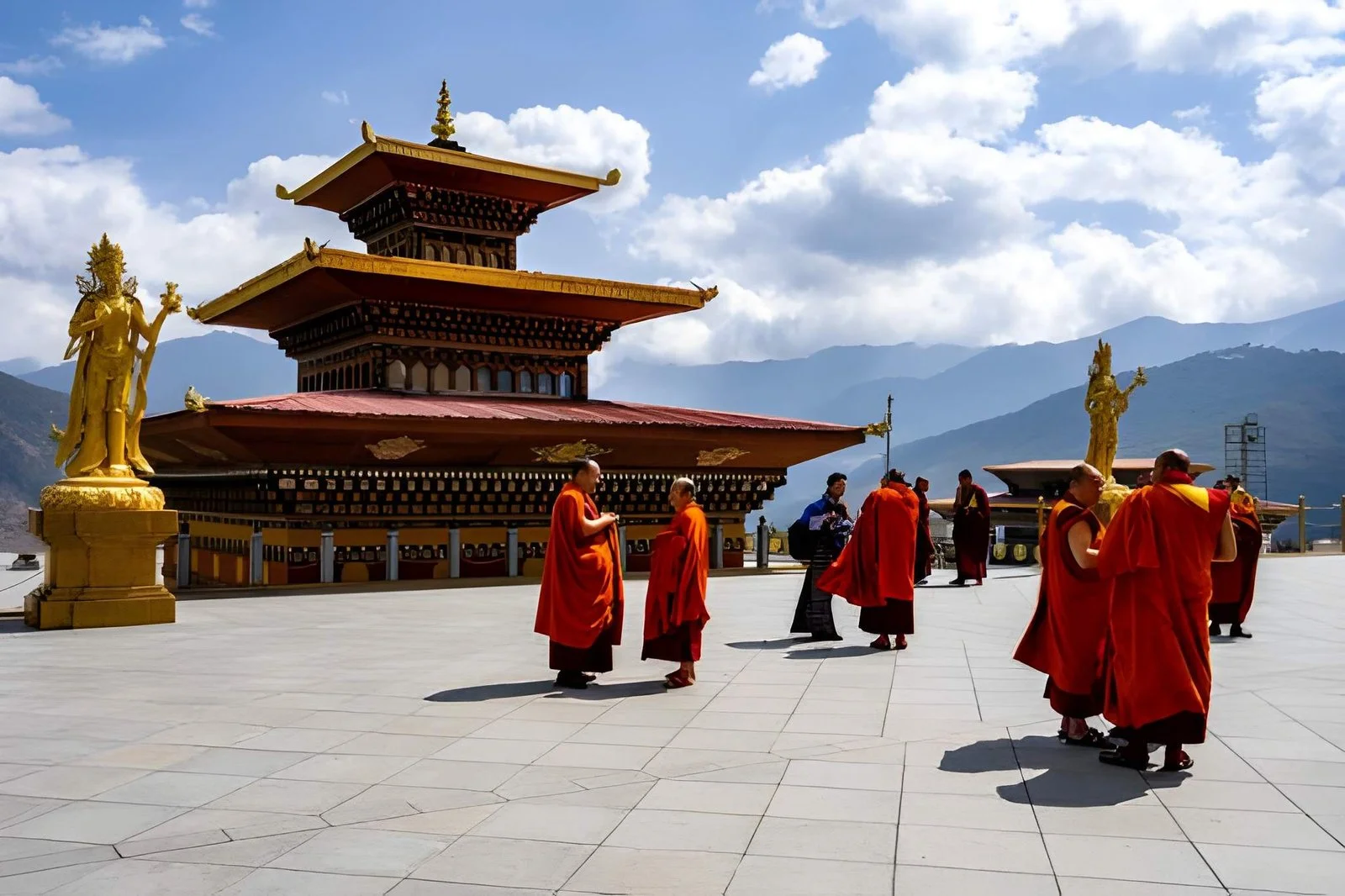
- Active, living monasteries and sacred sites, not recreated or staged versions of them
- Quiet mountain valleys with genuine space for reflection, away from crowds
- Prayer ceremonies and rituals, where it’s appropriate and respectful to observe
- Meaningful cultural immersion built around real community life, not performances arranged for visitors
- Scenic walks through forests, ridgelines, and sacred landscapes are woven into the itinerary, not treated as filler
- Time deliberately built in for personal processing, not just movement from one site to the next
You shouldn’t expect:
- Intensive monastic training or ordination-style programs
- Guaranteed overnight monastery stays, since these are limited and not a standard part of most tourist itineraries
- Silent retreats at every stop. Bhutan isn’t structured around continuous formal silence the way some dedicated meditation destinations are
- Instant personal transformation. Meaningful travel creates the conditions for change; it doesn’t manufacture it on a fixed schedule, and it’s worth going in with realistic expectations on that front
Myth vs. reality, quickly:
| Myth | Reality |
| Every retreat involves living in a monastery | Most experiences combine monastery visits with guided cultural travel |
| You have to be Buddhist to participate | Visitors from any background can take part respectfully |
| Spiritual retreats are only about meditation | Many focus on cultural immersion, sacred places, and mindful travel more broadly |
How to Choose the Right Spiritual Experience in Bhutan
Rather than starting from a package, start from what you’re actually looking for. Ask yourself which of these pulls you most:
- Meditation: You want structured practice, guided sessions, and quiet reflection time built into most days
- Culture: You’re drawn to living Buddhist tradition, community life, and understanding how spirituality shapes everyday Bhutan
- Nature: Sacred landscapes and unhurried walks through forests and valleys matter more to you than formal ritual
- Wellness: You want slow travel, rest, and stress relief more than intensive spiritual or religious practice
- Pilgrimage: Visiting specific sacred sites, following the path of figures like Guru Rinpoche, is the actual point of the trip for you
Most travelers land on a mix rather than a single answer, and that’s normal. It’s exactly why retreat and tour elements so often get combined rather than treated as separate products.
Use this as a starting point for a conversation with a tour operator who can shape an itinerary around your actual priorities, not a rigid category to lock yourself into before you’ve even started planning.
Practical Things to Know Before You Go
A few essentials worth knowing early, without turning this into a full planning guide:
- When to go: Spring and autumn offer the clearest mountain views and align with most major festival dates, making them the strongest windows for a spiritually-focused itinerary.
→ See our Best Time to Visit Bhutan guide for a full seasonal breakdown.
- What to pack: Layering matters more than volume, given Bhutan’s shifting mountain climate, and modest clothing is worth prioritizing for monastery visits.
→ Our Bhutan Packing List covers this in detail, month by month.
- Sustainable Development Fee: Bhutan’s tourism model includes a daily SDF that goes directly toward conservation, healthcare, and education. It’s part of the structural reason the country’s sacred sites and landscapes remain as protected as they are.
- Cultural etiquette and dress code: Modest dress and respectful, quiet conduct are expected at monasteries and other religious sites. It’s simple to follow once you know the basics, and your guide will walk you through specifics on site rather than leaving you to guess.
- Guides: A licensed local guide is required for most travel in Bhutan and is genuinely useful for spiritual travel specifically. Many of the cultural and religious nuances of a monastery visit or ceremony aren’t things you’d pick up on your own.
Ready to Begin Your Spiritual Journey in Bhutan?
If a slower, more intentional trip built around sacred monasteries and cultural immersion sounds like what you’re looking for, explore our Bhutan Spiritual Tour or talk to us about shaping an itinerary around your interests and pace.
Not every traveler arrives ready to book. If you’re still deciding whether this style of trip is right for you, that’s exactly what this guide was for, and it’s worth revisiting the “who this is for” and decision framework sections above before you commit. When you are ready to move forward, we’re happy to talk through what a spiritually-focused itinerary could look like for you specifically, rather than fitting you into a fixed package.