

Tag: lobuje
How Hard Is It to Climb Lobuche East Peak Realistically?
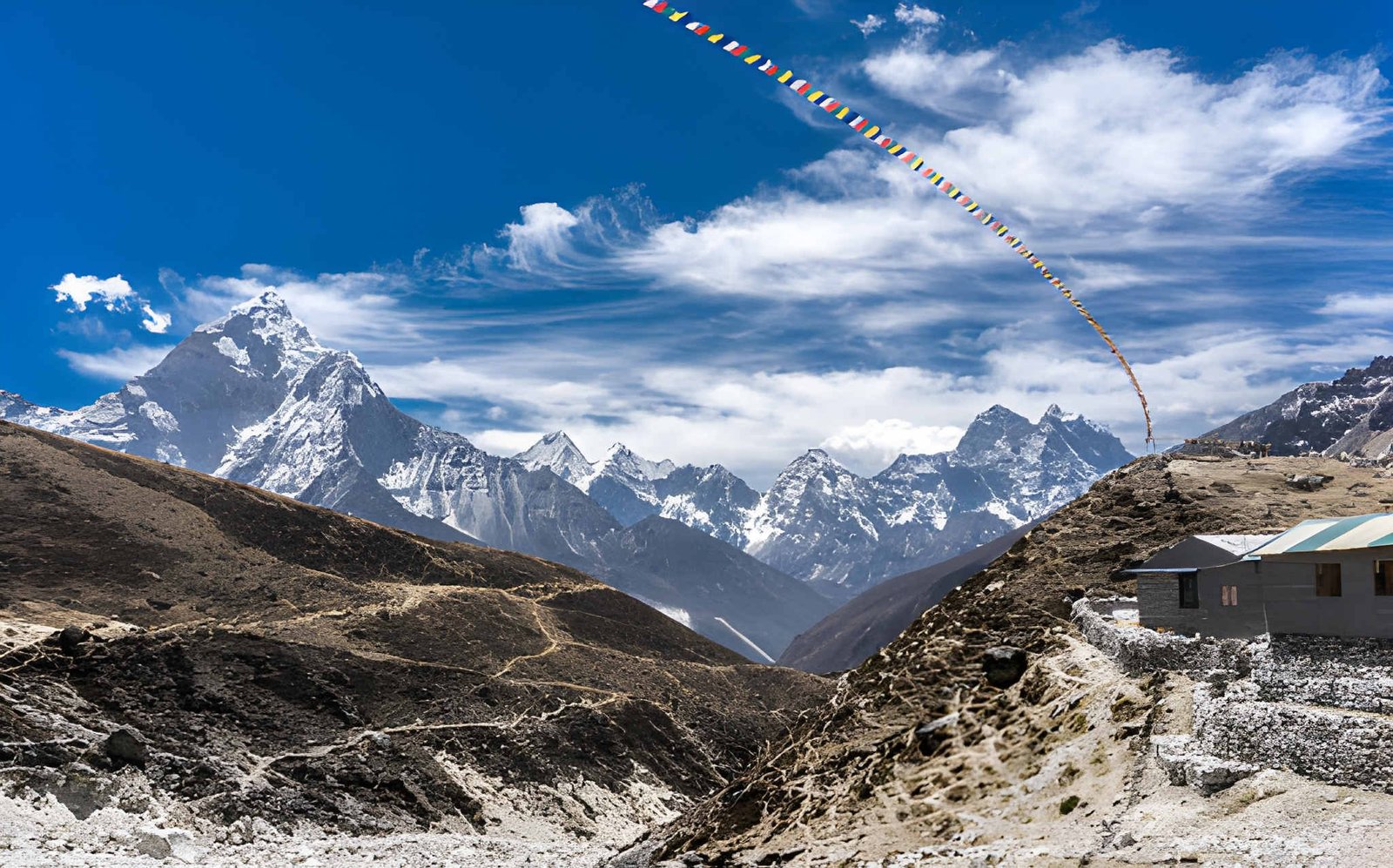
An Overview of Lobuje East Peak
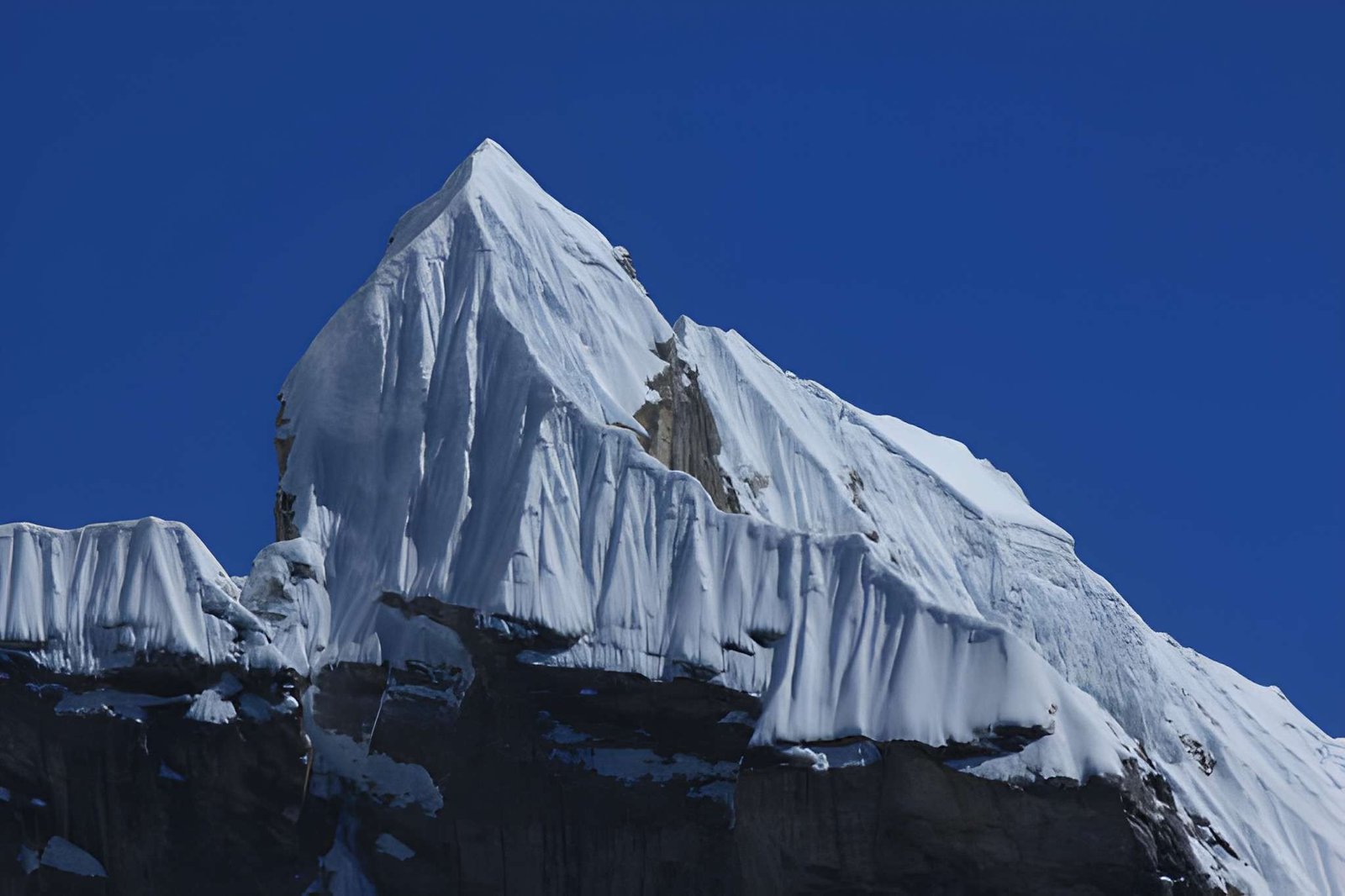
Lobuche East Peak sits at 6,119 metres in Nepal’s Khumbu region. This makes it close enough to Everest Base Camp that many climbers add it as a side objective. But “close to EBC” does not mean easy. Every year, fit and motivated climbers underestimate this mountain and pay for it on summit day.
This guide breaks down the Lobuche East difficulty honestly: what it actually feels like on your body, your lungs, and your mind at 5 am in the dark. Lobuche (sometimes spelled Lobuje) is a peak that looks approachable on paper and earns your respect on the ground.
Lobuche East Height and Altitude in Context
- Summit elevation: 6,119m / 20,075 ft
- High Camp elevation: 5,200–5,400m / 17,060–17,717 ft
- Oxygen at the summit: approximately 47% of sea level
- Minimum acclimatization recommended: 12–14 days on approach before summit attempt
Every 1,000 metres above 3,000m meaningfully reduces aerobic capacity. By the time you reach high camp, you are already operating at significantly reduced output before you take a single step toward the summit.
If you are looking to actually climb the Lobuche East, visit our main Lobuche East Peak climbing page to book your next peak climbing adventure now →
How Difficult Is Lobuche East Peak?
Lobuche East Peak is a moderately difficult trekking peak, graded PD+ under the Alpine Grading System. Here is what that means in practice:
- The climb is physically demanding and altitude-heavy, not extremely technical
- Most climbers ascend the fixed rope sections using a jumar and basic crampon technique
- Summit day runs 8–12 hours from high camp, starting before midnight
- With proper acclimatization, training, and a guide, it is achievable for fit trekkers with no prior summit experience
That said, “achievable” is not the same as “easy.” The altitude alone puts Lobuche East in a category that demands serious preparation.
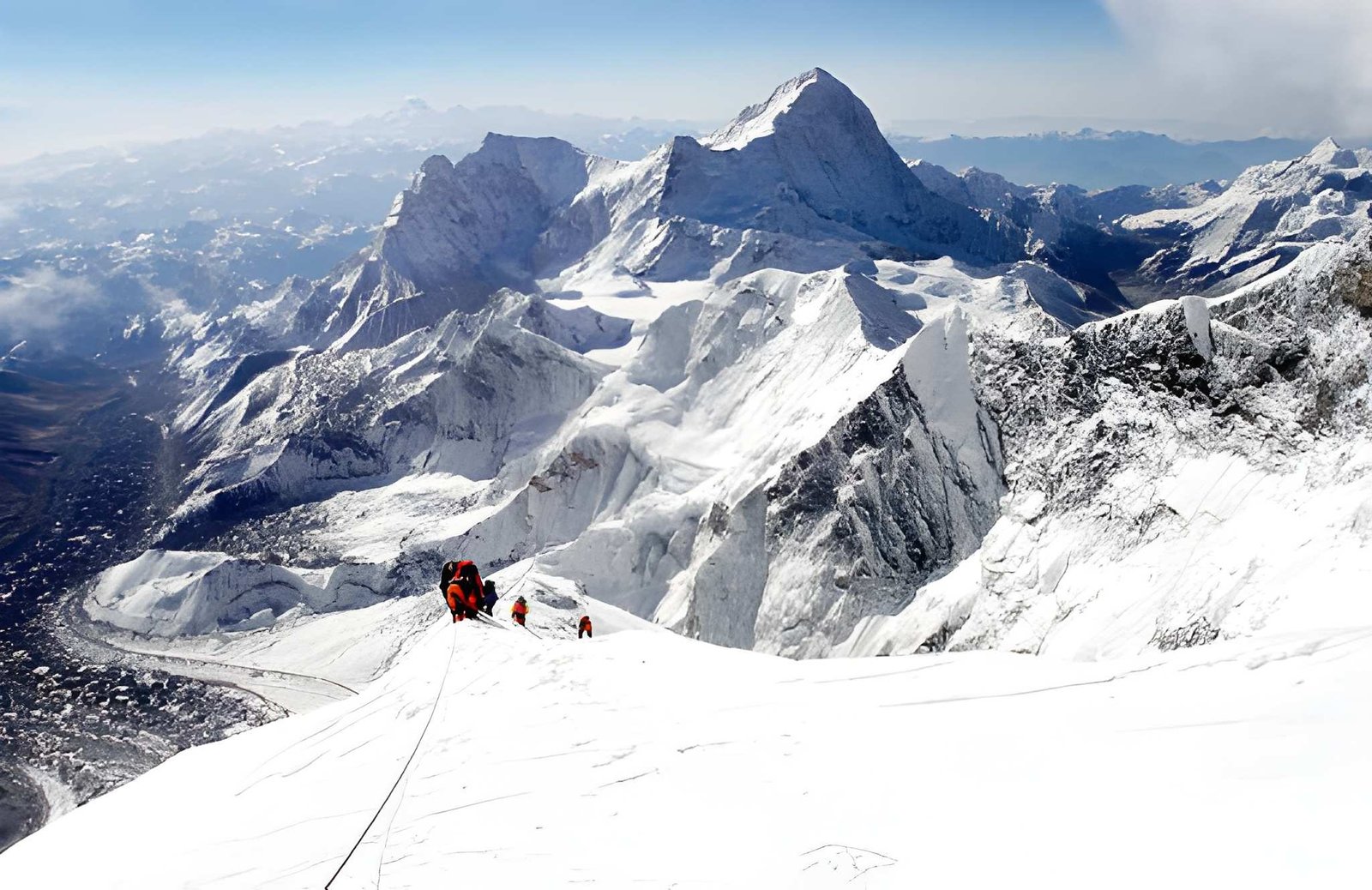
What Does “Moderately Difficult (PD+)” Actually Mean?
Most often, you see Lobuche East rated as PD+ without explanations. That number means nothing to someone planning their first Himalayan climb. Here is what it actually translates to.
What PD+ Means in Plain Terms?
The Alpine Grading System runs from F (Facile, easy) through PD, AD, D, TD, and ED. PD+ sits just above the entry-level range. In real terms:
- It is not a casual trek. You cannot walk to the summit in hiking boots.
- It is not extreme mountaineering. You do not need years of technical climbing experience.
- It sits in the middle ground: demanding enough to require mountaineering gear and real fitness, accessible enough that guided, well-prepared beginners can summit.
Think of it this way: a Himalayan trekking peak is a step above a high-altitude trail and a step below a genuine alpine expedition. Lobuche East is toward the harder end of that trekking peak category.
What a 45–50° Slope Actually Feels Like?
The crux of the Lobuche East climb is a steep slope near the summit, typically around 45–50°. That number might sound abstract, so here is a reference point: a standard staircase runs at about 35–40°. The Lobuche East summit headwall is steeper than a staircase, covered in snow and ice, and you are climbing it at over 6,000 metres above sea level.
The good news: this section is short, and fixed ropes are in place throughout the season. You ascend with a jumar, not free-climbing. The difficulty is real, but the systems are designed to get guided climbers through safely.
Breaking Down Lobuche East Difficulty
Lobuche East’s difficulty is not one thing. It has three distinct layers, and understanding which one will challenge you most is the key to honest preparation.
| Factor | Difficulty Level | What It Means for You |
| Altitude | High | Thin air forces slow movement and drains energy fast |
| Physical Endurance | High | Long summit day on a fatigued body |
| Technical Climbing | Moderate | Fixed ropes and crampons, which are manageable with guidance |
Altitude: The Hardest Part of Lobuche East
This needs to be said clearly: altitude is the primary difficulty of Lobuche East, not the technical climbing.
At 6,119 metres, the available oxygen is roughly 47% of what you breathe at sea level. Your body is working nearly twice as hard to do anything. Even walking, thinking, and staying warm feels tough. The symptoms creep up: a persistent headache, legs that feel heavier than they should, and a sleep that never quite feels restful.
Most summit failures on Lobuche East do not happen because the technical sections are too hard. They happen because climbers reach high camp already depleted by altitude and cannot physically push through an 8-hour summit push on half the normal oxygen. Acclimatization is not optional here; it is the climb.
Physical Endurance: Long and Demanding Days
Even before the technical sections, Lobuche East demands sustained physical output over multiple weeks of trekking. Approach days run 5–7 hours of walking at altitude. Summit day starts between midnight and 2 am and runs 8–12 hours round-trip from high camp.
Cold compounds everything. Pre-dawn temperatures at summit altitude can drop to -15°C or lower. Your core is fighting to stay warm while your legs fight the slope and your lungs fight the altitude. Physical conditioning before the trip, not just on it, is the difference between people who summit and people who turn around.
Technical Difficulty: Manageable With the Right Support
This is where Lobuche East earns its reputation as accessible. The technical sections: glacier approach, crampon walking, & fixed rope headwall, are manageable for a physically fit person who has received basic mountaineering training.
You will need to know how to use crampons, operate a jumar on a fixed line, and move between anchor points. Most guided peak expeditions include a training day at base camp for exactly these skills. The gear does significant work on the technical sections. What it cannot do is compensate for altitude unpreparedness or poor fitness.
What Lobuche East Actually Feels Like on Summit Day
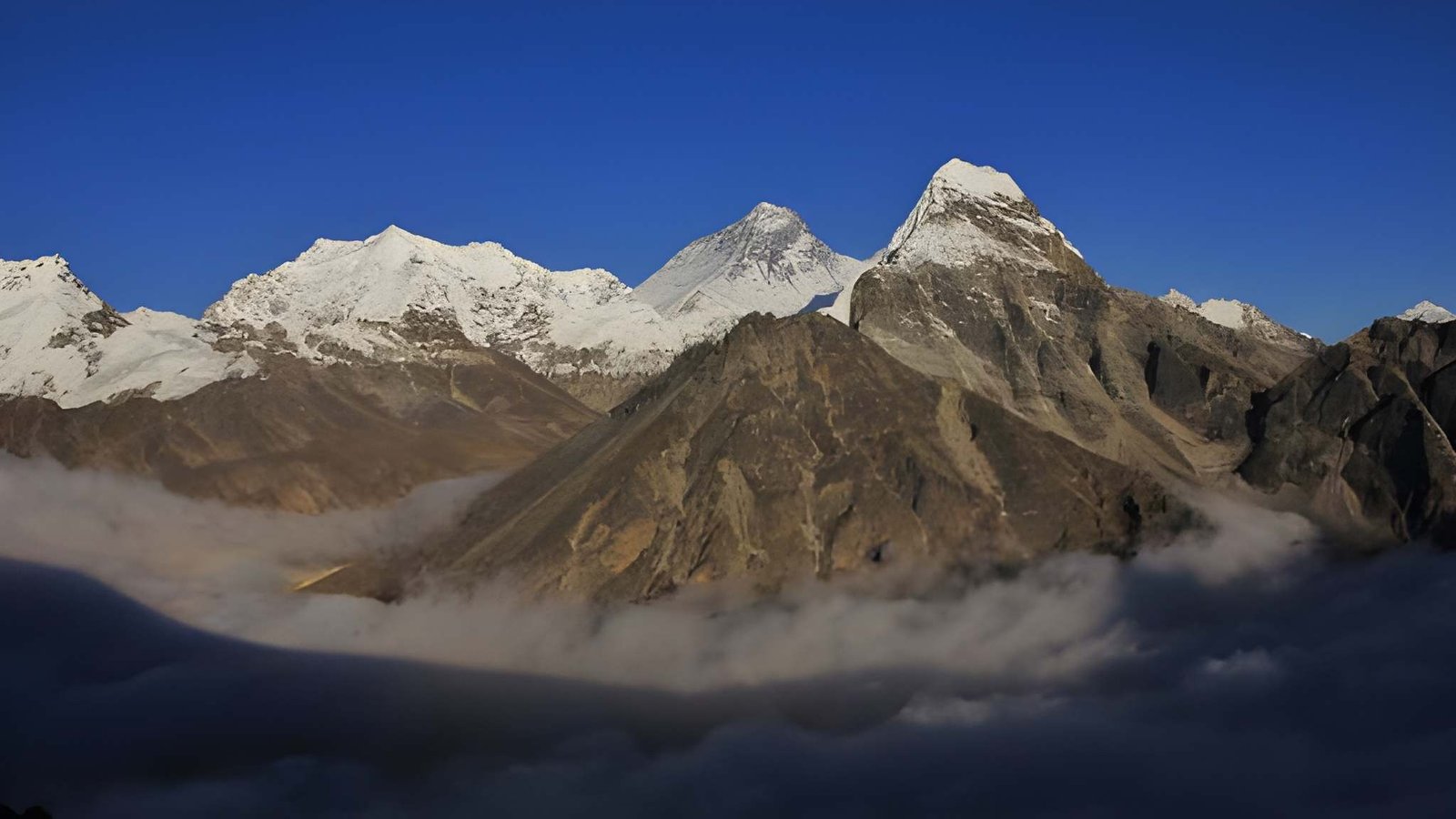
You leave High Camp in total darkness, typically between midnight and 2 am. It is cold in a way that registers in your chest, not just on your skin. The headlamp pool is your entire world as you see the ice, rock, and the back of the person ahead of you.
The early section is a slog. Every step costs more than it should at altitude. Your breathing is audible. Your pace is slower than you expect. The mental challenge begins here, before the technical sections even arrive: convincing yourself that slow and steady is still progress.
The fixed rope sections require focus at a point when your brain is operating on reduced oxygen. Climbers describe a narrowing of attention, thinking about just the next metre of rope, the next anchor, the next breath.
The summit ridge delivers some of the most dramatic views in the Himalaya: Everest, Lhotse, Nuptse, and Pumori are all visible from a single vantage. The descent back to high camp is where exhaustion fully arrives, and where most accidents on alpine climbs happen.
Who Will Find Lobuche East Hard?
Based on our Lobuche peak climbing expeditions with a lot of trekkers, here are the groups we have categorized on the basis of fitness and experience.
Trekkers with No Altitude Experience
If your highest point is a 4,000-metre pass, Lobuche East is a serious step up. The body’s response to altitude changes significantly above 5,000 metres, which is not a linear progression. This group needs a longer acclimatization schedule and should consider Kala Patthar as a preparatory altitude marker before committing to a summit attempt.
Fit Trekkers with EBC or Similar Experience
This is the natural target audience for Lobuche East. People who have walked the EBC trail have already acclimatized through the approach villages. The key question is summit-day fitness: 10 hours of sustained output at altitude is a different demand from multi-day trekking.
Experienced Trekkers or Amateur Climbers
The technical sections will feel manageable. The altitude and endurance demands remain real regardless of experience level. Lobuche East does not become easy; it becomes more predictable.
Is Lobuche East Difficult for Beginners?
Yes, but “difficult” does not mean impossible with proper preparation. Lobuche East has a meaningful success rate for guided first-time climbers who arrive fit, acclimatized, and realistic about the challenge.
The non-negotiables for beginners: a minimum of 2–3 weeks on the approach for proper acclimatization, a qualified climbing guide (not a trekking guide), and pre-trip training that includes cardiovascular conditioning and weighted hiking.
For a full breakdown of what beginners need to prepare for Lobuche East, read our complete beginner’s guide to Lobuche East Peak climbing.
Lobuche East vs Other Peaks: A Quick Difficulty Reference
| Peak | Altitude | Alpine Grade | Vs. Lobuche East |
| Mera Peak | 6,476m | PD | Easier: more trekking, less technical |
| Island Peak | 6,189m | PD | Slightly easier: shorter technical sections |
| Lobuche East | 6,119m | PD+ | The reference point |
| Ama Dablam | 6,812m | TD | Significantly harder with a genuine technical climb |
The headline: Lobuche East is harder than both Mera and Island Peak, and that difficulty gap is larger than the altitude numbers suggest.
Where the Difficulty Happens: Route Overview
Understanding the route structure helps locate where the Lobuche East climb difficulty is actually concentrated.
Lobuche Village to Base Camp (4,950m): A straightforward approach following the EBC trail. No technical gear required.
Base Camp to High Camp (5,400m): A 3–4 hour climb over rocky moraine and glacier. Crampons may be used here depending on conditions. This is where your body gets its first real taste of what the altitude feels like under load.
High Camp to Summit (6,119m): The summit push. This section contains the fixed rope headwall, the steep snow slopes, and the exposed summit ridge. It is the shortest section in distance and the hardest section in every other measure.
The route follows the Southeast Ridge as the standard line. Most guided groups fix ropes from high camp through the technical sections above.
How to Make Lobuche East Easier
No preparation eliminates the difficulty. But the right approach significantly improves your summit odds.
Acclimatize properly. Build in rest days at Namche Bazaar (3,440m) and Dingboche (4,410m). Do not rush the approach to hit an arbitrary schedule.
Train before you arrive. Three to four months of cardiovascular conditioning and weighted hiking build the base that the summit day requires. The trek alone is not enough preparation.
Climb with a qualified guide. A certified Himalayan climbing guide manages route conditions, weather windows, and the technical sections. He also knows when to call a turn-around. This is not a mountain to navigate with an underqualified team.
Is Lobuche East Worth the Challenge?
For the right person with the right preparation, genuinely yes.
Lobuche East delivers something most trekking peaks do not: a real mountaineering experience at one of the most visually dramatic locations on earth. Standing on that summit ridge with Everest, Lhotse, and Nuptse in your eyeline is not a view you forget.
The difficulty is real. The altitude will test you, the summit push will push you, and the descent will remind you that mountains ask for everything. But that is precisely what makes the summit mean something.
Visit our main Lobuche East Peak climbing page for full itinerary options, permit information, and guided expedition details.
A Realistic Guide For Beginners to Climb the Lobuje East Peak
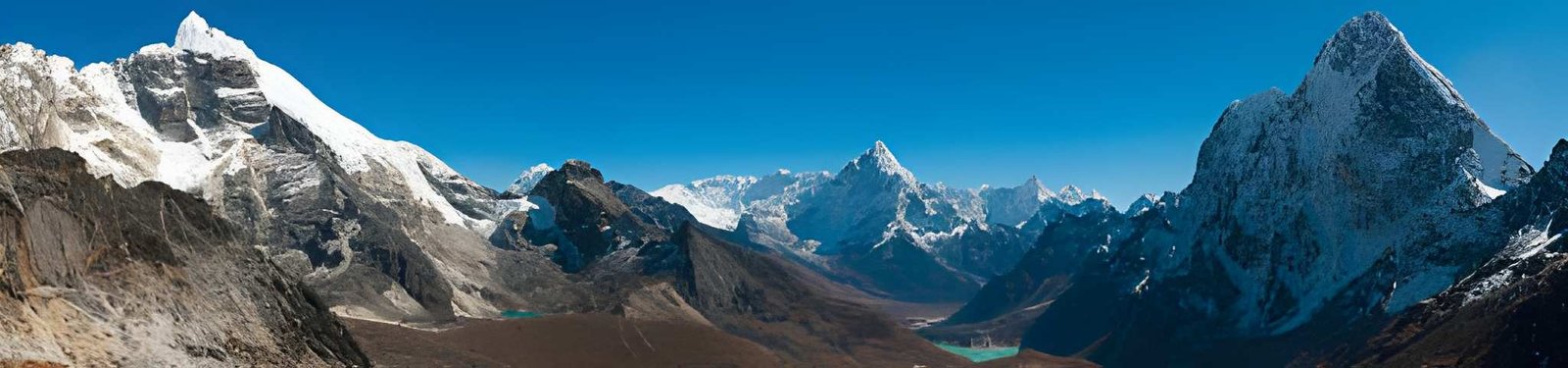
Can Beginners Climb Lobuche East Peak?
Well, the simple answer is yes. But it’s not for the beginners you might be thinking of.
Lobuche East Peak (6,119m), or commonly referred to as Lobuje East Peak, is scalable for beginners who have solid physical fitness with some prior high-altitude trekking experience, or those who climb with a certified guide. It is not suitable for complete beginners with zero trekking experience, regardless of fitness level.
That distinction matters. While its labeled as “Easy to manage with few preparations,” there are also 45–50° ice slopes and mandatory fixed ropes en route. That contradiction is exactly why you might be confused about the difficulty level.
You can check out our main page on the Lobuje East Peak Climb after finishing this blog to learn about the itinerary and bookings.
What Kind of Beginner Can Actually Climb Lobuche East?
“Beginner” covers a wide range. Here’s how to honestly place yourself.
Not recommended: Complete beginners with no trekking experience
If your longest hike has been a day trail and you’ve never spent consecutive days walking at elevation, Lobuche East is too large a jump. The issue isn’t even technical climbing. It’s the cumulative physical and altitude stress across 18–19 days. Your body simply won’t have the reference points to recognise early warning signs of altitude sickness, exhaustion, or overexertion.
Possible with preparation: Fit people with no altitude experience
If you’re physically strong (regular runner, hiker, or gym-goer) but have never trekked above 3,500m, this is doable. You should have the right preparation and genuine commitment to acclimatization though. You’ll also need to treat the trek-in seriously, not as a warm-up. Your biggest risk isn’t the summit day; it’s underestimating how altitude compounds fatigue over two weeks.
Ideal candidate: Trekkers with EBC or comparable experience
If you’ve completed the Everest Base Camp trek, the Annapurna Circuit, or any multi-week trek above 4,000m, you already have the most important foundation. You know what your body does at altitude, you understand long trekking days, and the technical elements of Lobuche East, like crampons, fixed ropes, and harness, are learnable skills that guides teach on-route.
This is the beginner profile Lobuche East is genuinely built for.
Are You Ready for Lobuje? A Quick Self-Check
Before going further, run through this honestly:
- Have you completed a multi-day trek of 10+ days?
- Have you trekked above 4,000m before?
- Can you hike 6–8 hours consecutively with a daypack?
- Are you comfortable in cold, exposed conditions?
- Are you free of significant cardiovascular or respiratory issues?
If you answered yes to four or five, you’re a strong candidate. If you answered yes to two or three: possible, but you need structured preparation first. If you answered yes to one or fewer: Lobuche East is not your next step.
How Hard Is Lobuche East Peak for Beginners?
There are three distinct difficulty layers, and they’re definitely not the same.
Physical difficulty
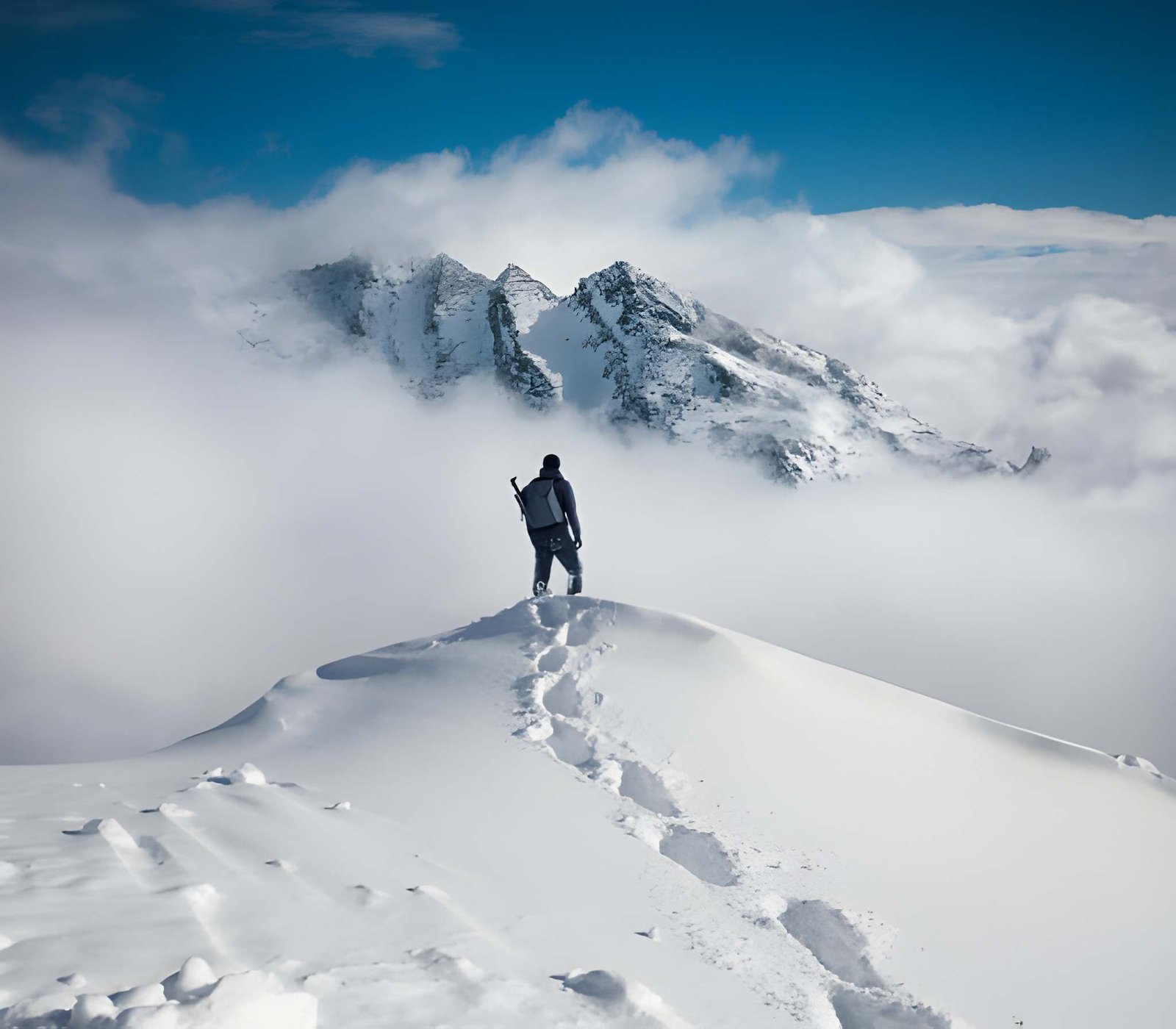
The summit push is 8–10 hours round-trip from high camp. But the real physical challenge is the 12 days of trekking before you even reach base camp. By the time you begin the climb, your body is already running on accumulated fatigue. Strong cardiovascular endurance is what carries you through, not gym fitness.
Altitude (the real challenge)
At 6,119m, altitude is the primary objective hazard, not the ice slope. Acute Mountain Sickness (AMS), High Altitude Pulmonary Oedema (HAPE), and High Altitude Cerebral Oedema (HACE) are real risks above 5,000m. The itinerary should build in acclimatization days at Namche Bazaar and Dingboche, specifically to manage this. Skipping or rushing acclimatization days is the single most common reason climbers turn back.
Technical difficulty
The Nepal Mountaineering Association grades Lobuche East as PD — Peu Difficile, or moderately difficult in alpine grading. The summit route involves a steep snow and ice slope of approximately 45–50°, fixed rope sections, crampon use, and rappelling on descent. These are real mountaineering techniques, but they are teachable.
Guides conduct practical training at base camp before the summit push. Most first-timers find the technical elements manageable. It’s actually the altitude and endurance that test them.
“In my experience guiding this route, the section between high camp and the summit ridge is where climbers feel it most. It’s not because it’s technically extreme, but because altitude is making the climb difficult at that point. Our itinerary is designed to trek to EBC first, so that trekkers can adjust to the altitude. That design makes a measurable difference.” – Mr Sunir Gurung, Owner of FarOutNepal.
When Lobuche East Is Not the Right Choice
This matters more than any encouragement section. Do not attempt Lobuche East if:
- You have no multi-day trekking experience whatsoever
- You’ve shown strong sensitivity to altitude on previous treks (severe headaches, vomiting above 3,500m)
- Your aerobic fitness is poor, i.e., you can’t sustain 5–6 hours of uphill walking
- You’re expecting a trekking-only experience with a short summit scramble at the end
- You cannot commit to the full acclimatization schedule
If one or more of these apply, the honest recommendation is to do the Everest Base Camp trek first. It covers much of the same route, takes you to Kala Patthar, and gives you the single most useful data point for Lobuche East: how your body handles the Khumbu at altitude.
What Skills Do Beginners Need?
Less than you might think, but they do need to be learned, not improvised on summit day.
- Walking with crampons on snow and ice
- Using a climbing harness and attaching to a fixed rope with an ascender (jumar)
- Basic ice axe use for self-arrest
- Rope etiquette, like how to move efficiently on a fixed line with other climbers
The good news: All of these are taught during the pre-climb training session at Lobuche East Base Camp, near the summit day. You do not need to arrive with mountaineering experience. You need to arrive physically prepared enough to absorb and apply these skills under fatigue.
How Beginners Should Prepare for Lobuche East
Fitness preparation (start 3–4 months out)
Focus on cardiovascular endurance over strength. Long uphill hikes with a weighted pack (10–12kg), stair climbing, and sustained cardio sessions of 60–90 minutes simulate the demand better than gym workouts. The goal is the ability to move steadily uphill for 6+ hours, not peak athletic performance.
Mental preparation
Cold, disrupted sleep, sustained discomfort, and days where progress feels imperceptible, but these are normal parts of a high-altitude expedition. Trekkers who struggle most are often fit but mentally unprepared for how unglamorous the middle days of a Himalayan climb feel. Read accounts from people who’ve done it or enquire from our experienced guides, not just the summit photos.
A practice trek (strongly recommended)
If time allows, do a significant trek, like EBC, Annapurna Base Camp, or Manaslu Circuit, in the 12 months before your Lobuche East attempt. Nothing replaces actual days at altitude for calibrating your preparation.
Why Beginners Who Prepare Correctly Do Succeed
Lobuche East has a strong success rate among guided climbers precisely because the expedition structure is designed around beginner limitations. Our itinerary builds in multiple acclimatization days. Groups are kept small (typically 2–10 people). Sherpa support means load management is handled. The route uses fixed ropes throughout the technical section.
You are not being dropped on a mountain and asked to figure it out. You are joining a system that has been refined across hundreds of guided ascents.
The climbers who don’t summit are almost always those who arrived underprepared, whether physically or in their understanding of what altitude actually does to a body. That’s entirely within your control before you board the flight.
Is Lobuche East a Good First Mountain Compared to Others?
| Peak | Height | Technical Grade | Best For |
| Lobuche East | 6,119m | PD (moderate) | Trekkers with altitude experience. |
| Island Peak | 6,189m | PD | Similar profile, more crowded |
| Mera Peak | 6,476m | F (easy) | True beginners, less technical |
- If you want the least technical entry point, Mera Peak is the gentler option.
- If you want a genuine mountaineering experience that still sits within reach of a prepared beginner, Lobuche East is the stronger choice.
- Island Peak is comparable to Lobuche. The two are often discussed interchangeably, and the choice usually comes down to route preference and group availability.
Is Lobuche East Right for You?
Lobuche East Peak, also frequently searched as Lobuje East Peak, is one of the most accessible genuine mountaineering experiences in the Himalayas. It sits in a specific sweet spot: technical enough to be a real summit, structured enough to be achievable for a prepared beginner.
If you’ve done EBC or a comparable multi-week trek, you’re physically active, and you’re willing to prepare seriously over 3–4 months, this is likely within your reach.
If you’re starting from zero trekking experience, the honest path is: do EBC first, then come back to Lobuche East. That’s not a discouragement; it’s the route that actually gets you to the summit.
Ready to find out if you qualify? Explore our 21-day Lobuje East Peak expedition →